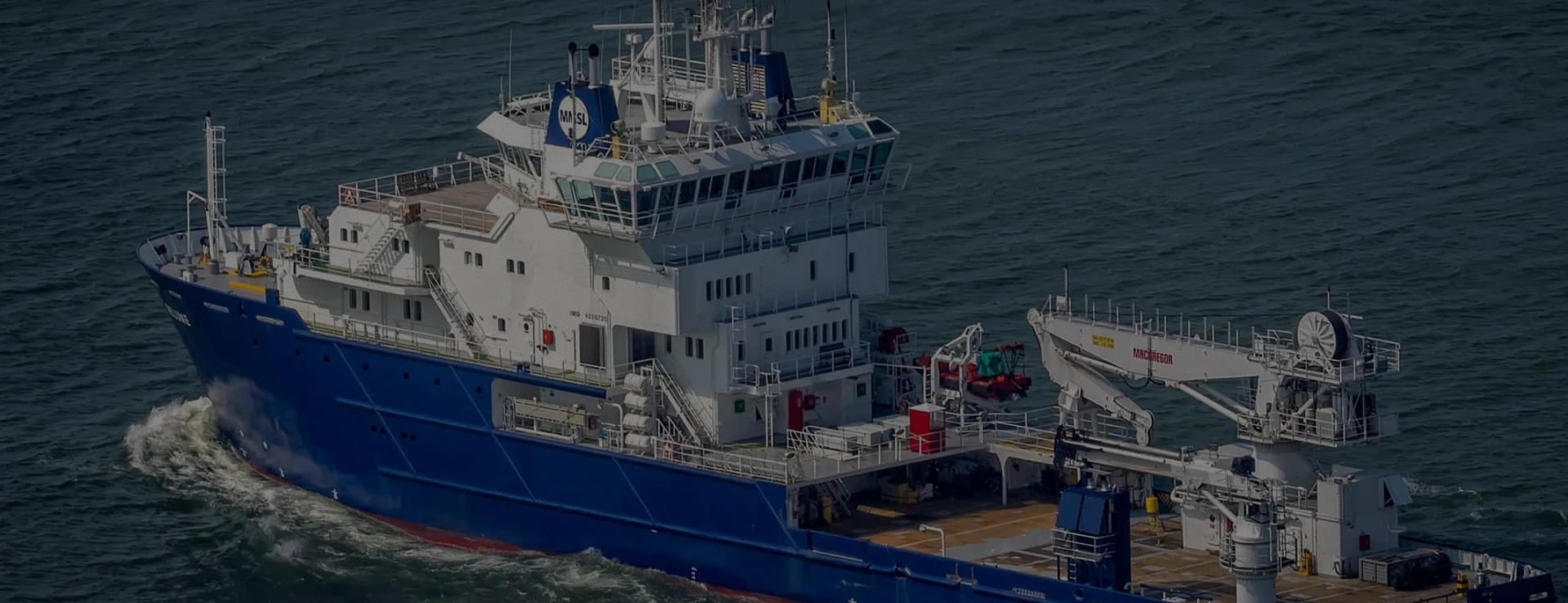
OSV Relume Propulsion Drive and Control Upgrade
MJR modernised OSV Relume’s propulsion drives and controls, retaining established operating interfaces while reducing obsolescence exposure and improving diagnostics and maintainability.
Project Overview
Modernising propulsion while retaining vessel controls
MJR Power & Automation carried out a propulsion drive and control retrofit on OSV Relume, an offshore support vessel. Both port and starboard propulsion drives were affected by obsolescence, creating a need to modernise the equipment while preserving the vessel’s established propulsion and control arrangements.
The work combined replacement drives and programmable logic controllers (PLCs) with upgraded control interfaces and improved diagnostics. Existing thruster, dynamic positioning and joystick interfaces were retained, alongside suitable cooling, braking and pipework infrastructure. This approach addressed ageing equipment without requiring wholesale replacement of the surrounding vessel systems.
Project significance
The retrofit reduced exposure to obsolete equipment and improved maintainability while retaining the operating interfaces used to control the vessel’s propulsion. Its operational value lay in modernising the drive and control equipment without discarding suitable supporting infrastructure.
The Challenge
Declining availability of propulsion spares
The ageing liquid-cooled propulsion drives were becoming difficult to maintain because replacement parts were increasingly unavailable. Obsolescence affected both port and starboard drives, so the requirement extended across both propulsion systems rather than a single item of equipment. The engineering task was to replace the obsolete drive and control equipment while accommodating the existing propulsion arrangements.
Compatibility with established vessel functions
Modernisation had to preserve existing thruster, dynamic positioning (DP) and vessel control functions, with DP and joystick compatibility identified as critical requirements. Replacing the drives alone would therefore not resolve the complete engineering requirement: the new equipment also had to work with the retained control interfaces. Existing cooling cabinets, braking equipment and pipework formed further integration boundaries wherever they remained suitable for retention.
Scope of Work
Drive replacement, control interfaces and diagnostics
MJR’s scope covered the obsolete propulsion drives and PLCs, their control interfaces and the operator information available locally and in the engine control room.
- Replace the obsolete propulsion drives and PLCs serving the port and starboard propulsion systems.
- Upgrade control interfaces and introduce improved diagnostics.
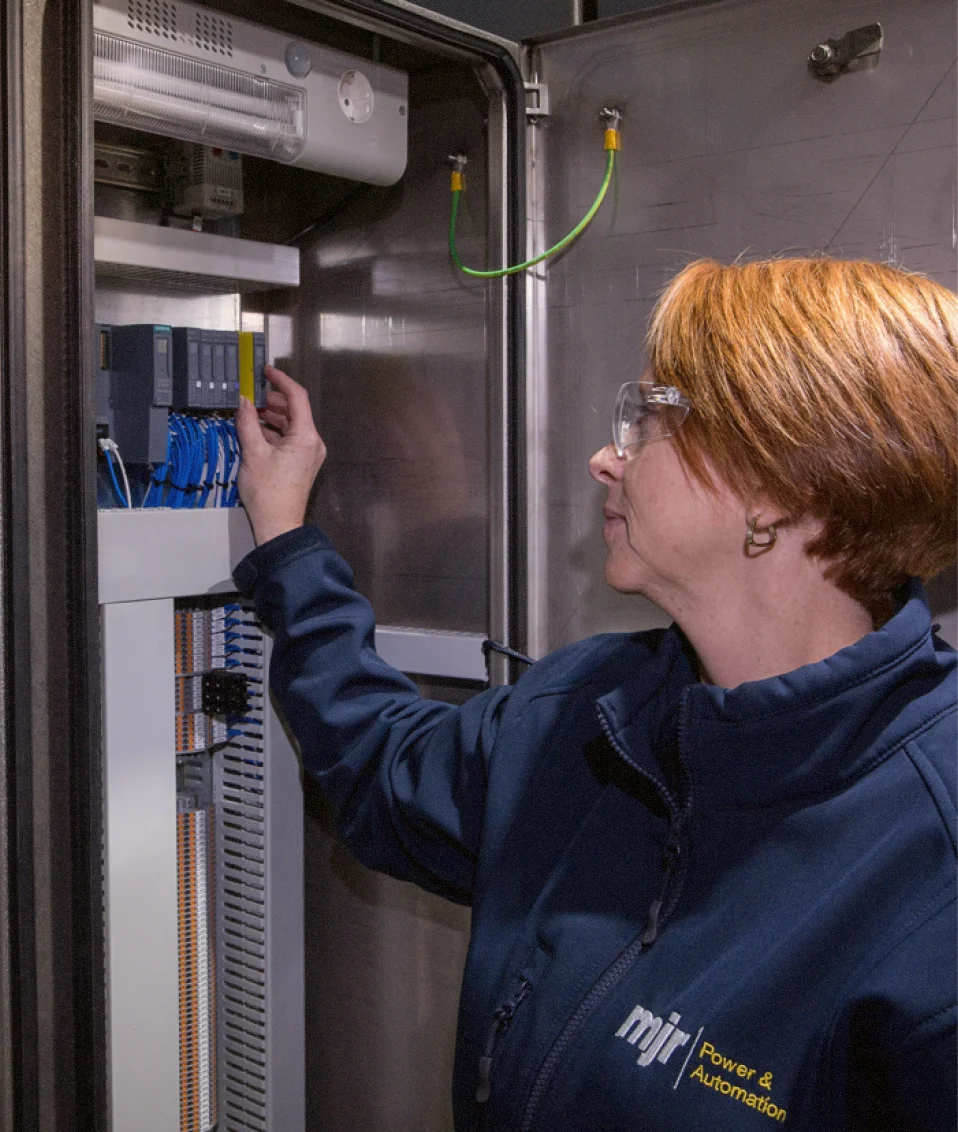
- Provide new local human–machine interfaces (HMIs) and 15-inch touchscreen displays in the engine control room, showing equipment status, faults and alarm history.
- Use PROFINET communications between the replacement PLCs and drives, with safety signals remaining hardwired.
- Retain existing thruster, DP and joystick interfaces, together with cooling cabinets, braking equipment and pipework where suitable.
Solutions Delivered
Replacing obsolete drives and PLCs
MJR replaced the obsolete propulsion drives and PLCs, addressing the equipment at the centre of the maintenance problem. The replacement combined drive modernisation with control-system renewal rather than treating them as separate requirements. This was relevant to both propulsion systems, where diminishing availability of replacement parts had made the ageing equipment increasingly difficult to maintain.
Networked drive control with hardwired safety signals
The replacement PLCs communicate with the drives using PROFINET, while safety signals remain hardwired and separate from those communications. This arrangement distinguishes the networked PLC-to-drive interface from the hardwired safety functions. Existing thruster, DP and joystick interfaces were retained, allowing the modernised equipment to remain part of the vessel’s established control arrangements.
Operator diagnostics and selective infrastructure retention
New local HMIs and 15-inch touchscreen displays in the engine control room provided equipment status, faults and alarm history. These information types help operators understand the current equipment condition and review recorded alarms when investigating a fault; the project also reported improved diagnostic capability.
Cooling cabinets, braking equipment and pipework were retained where suitable. Selective retention kept usable supporting infrastructure within the retrofit rather than extending replacement to every connected system. Together with the retained vessel control interfaces, this supported integration without major rewiring or infrastructure changes.
Delivery & Approval
Integration within the existing vessel infrastructure
The retrofit was integrated with the existing vessel systems while avoiding major rewiring or infrastructure changes. Its delivery therefore combined replacement drive and control equipment with retained operational interfaces and suitable cooling, braking and pipework infrastructure.
Control remained available from the bridge, engine control room and local drive panels. Retaining these operating locations preserved the vessel’s established points of control, while the new local HMIs and engine control room touchscreens provided equipment status, faults and alarm history.
Technical Summary
- Asset and application: OSV Relume, an offshore support vessel; propulsion drive and control retrofit.
- Equipment replacement: Port and starboard propulsion drives affected by obsolescence; obsolete drives and PLCs replaced by MJR.
- Cooling context: Original propulsion drives were liquid-cooled. Existing cooling infrastructure, including cooling cabinets, was retained where suitable.
- Drive communications: Replacement PLCs communicate with the drives using PROFINET.
- Safety interfaces: Safety signals remained hardwired, separate from PROFINET communications.
- Vessel control interfaces: Existing thruster, dynamic positioning and joystick interfaces retained.
- Operator displays: New local HMIs and 15-inch touchscreen displays in the engine control room provide equipment status, faults and alarm history.
- Supporting infrastructure: Existing braking equipment and pipework retained where suitable.
- Retained control locations: Bridge, engine control room and local drive panels.
- Retrofit integration: Integrated with existing vessel systems without major rewiring or infrastructure changes.
Project Outcomes
Reduced obsolescence exposure and improved maintainability
The upgrade reduced exposure to obsolete equipment and improved diagnostic capability and maintainability. Replacement of the ageing drives and PLCs addressed the equipment associated with the spare-parts availability problem, while the new operator interfaces made equipment status, faults and alarm history available locally and in the engine control room.
Modernised equipment with retained operational interfaces
Modern drives and controls were integrated with the existing propulsion arrangements while retaining operational interfaces. Control remained available from the bridge, engine control room and local drive panels, and suitable supporting infrastructure was retained. The integration also supported continued class compliance.
Gallery


Share your vessel, equipment and interface requirements with MJR.
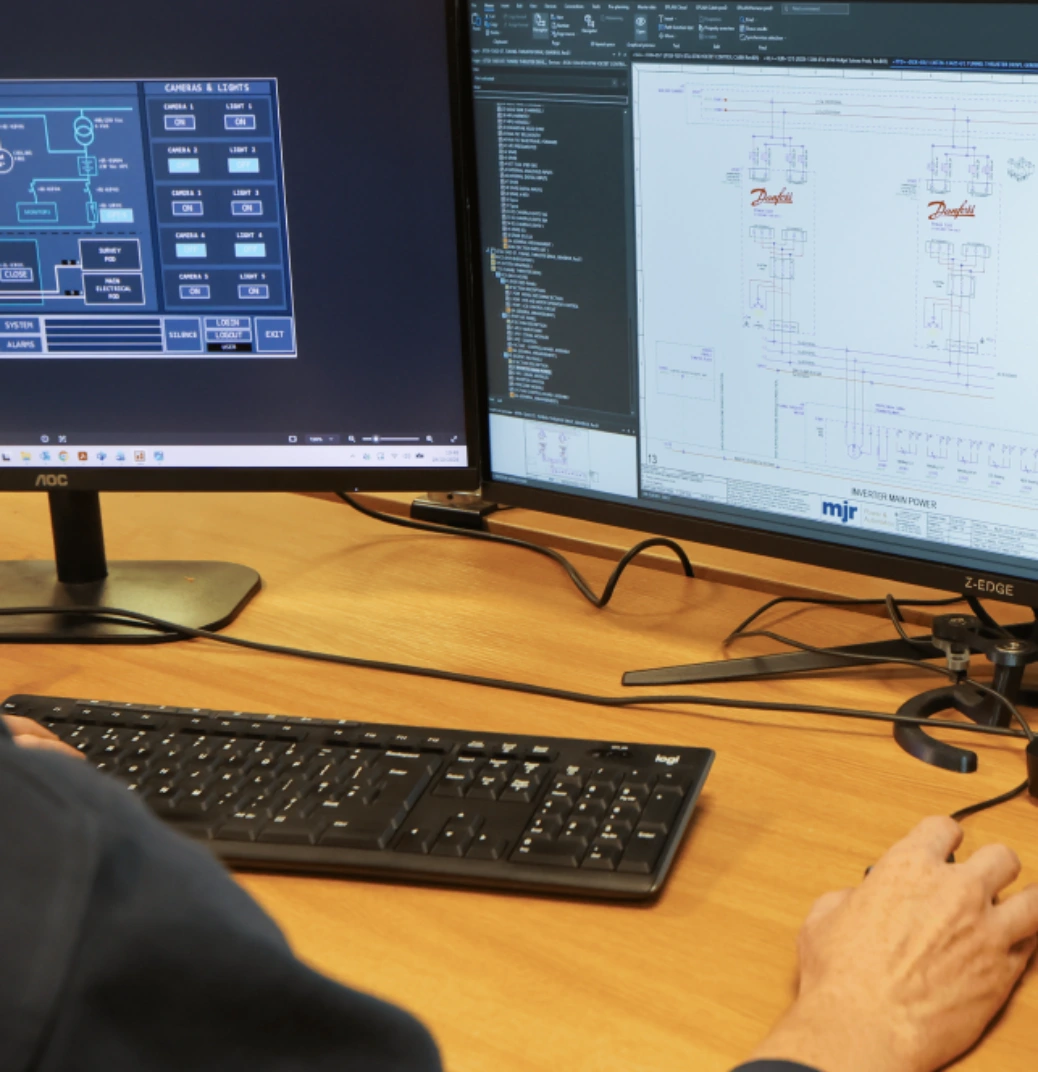
Marine electrical design, FEED studies, calculations and system engineering developed around vessel, offshore and project requirements.
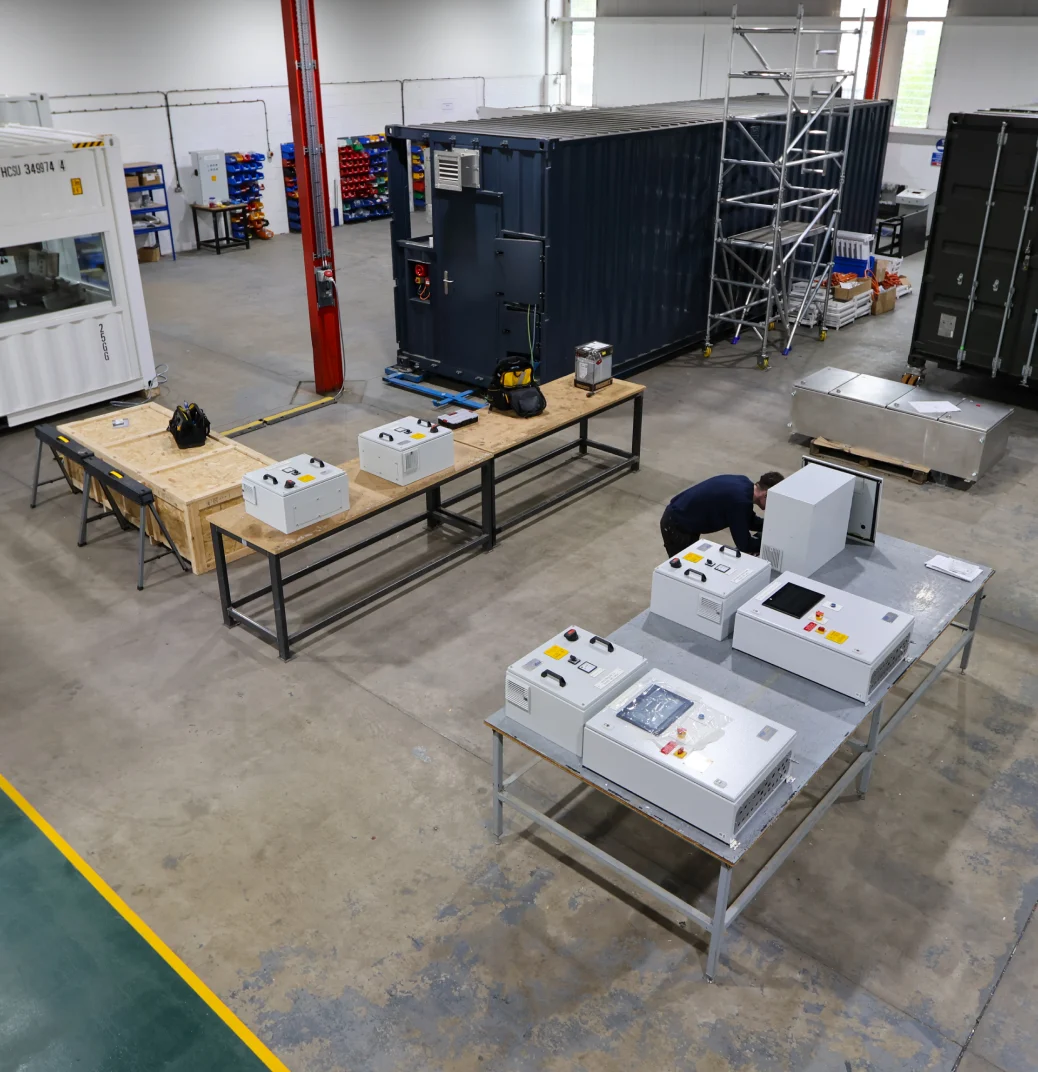
Integrated electrical power, switchboard, control and automation systems engineered, built and tested for demanding marine and offshore applications.
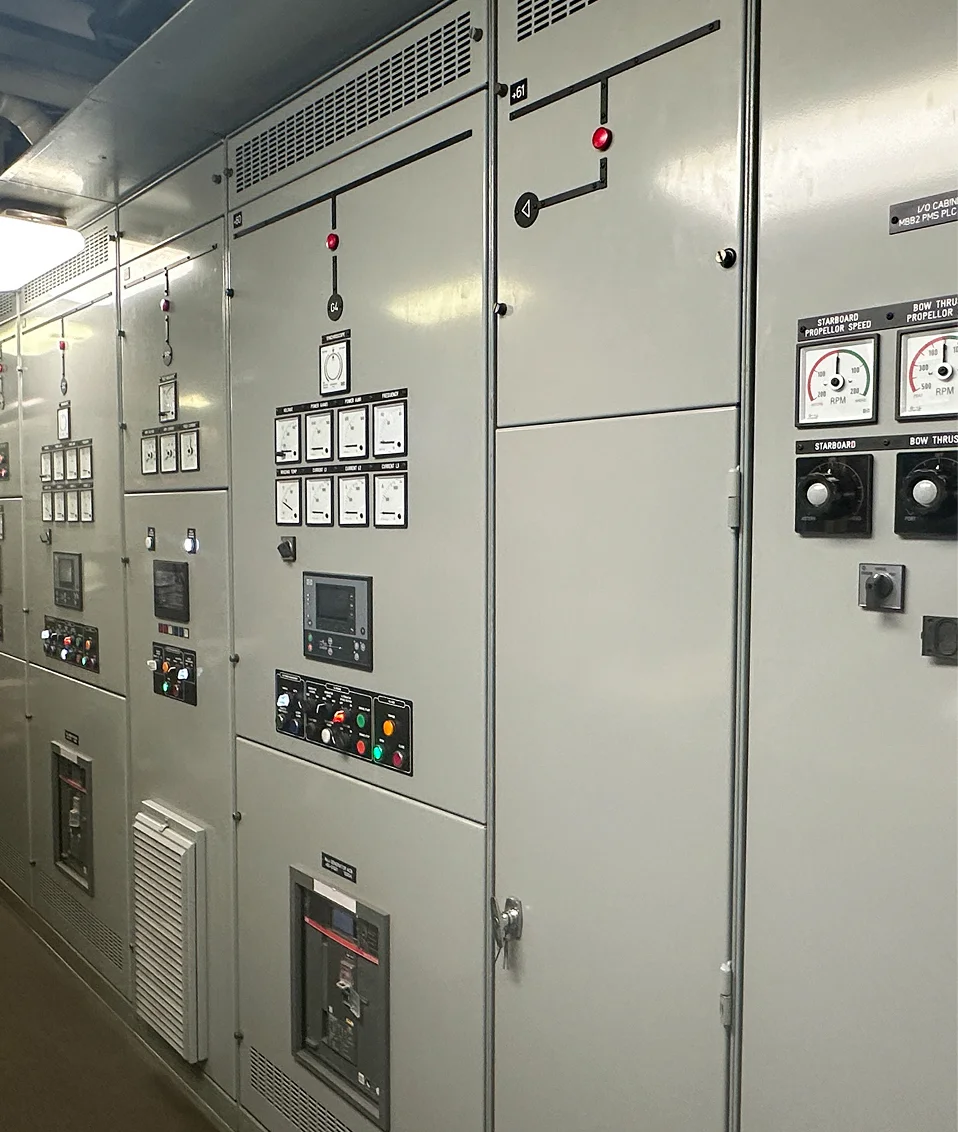
Marine power distribution systems covering generation, switchboards, power management systems, load sharing, protection and electrical distribution.
Marine automation systems integrating PLC, DCS, HMI, alarm monitoring, data logging, power management and vessel or offshore control.
Sectors we are Powering
Follow MJR project updates, company news and technical insight covering marine electrical engineering, automation, shore power, offshore vessel charging and vessel electrification.
Show how MJR designs, installs, commissions and supports product systems.
Relevant Project Experience
Explore MJR projects involving vessel automation, monitoring, control and power management across newbuild, retrofit and upgrade programmes.
Project questions
Questions and answers about OSV Relume Propulsion Retrofit.