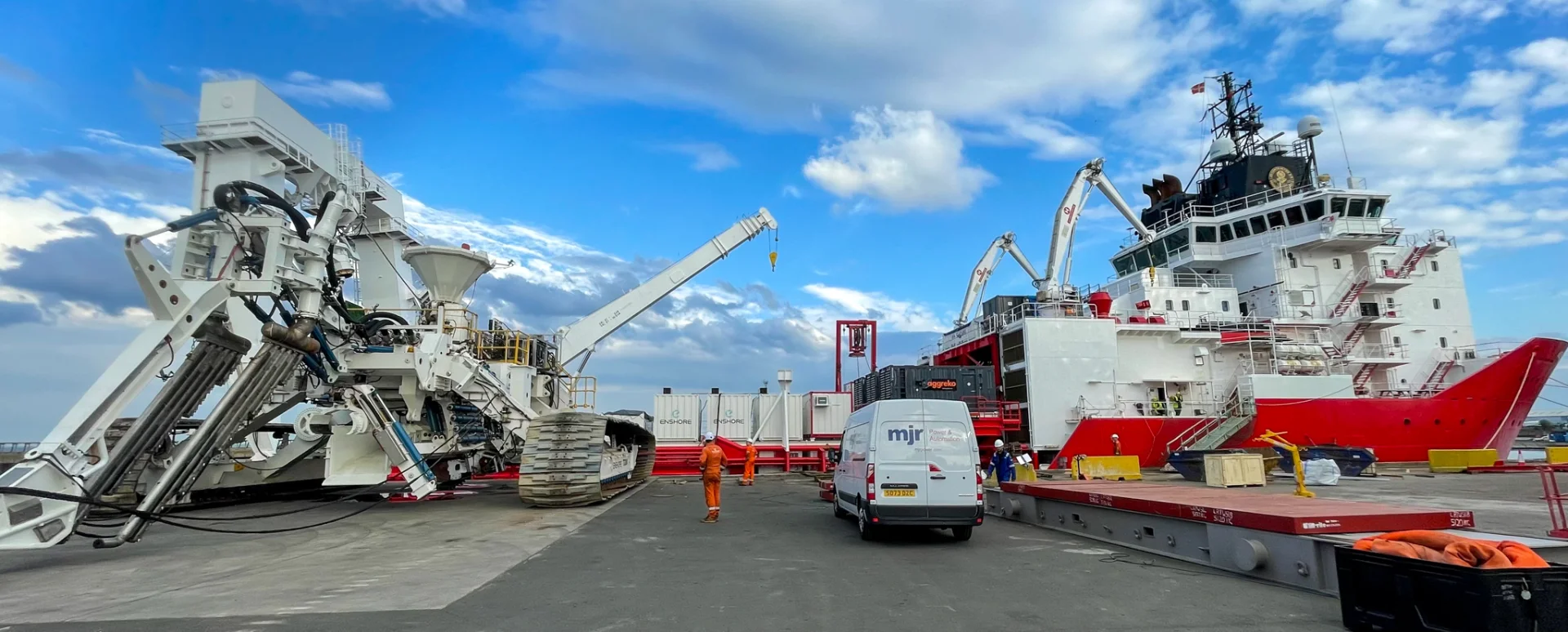
Offshore Construction & Subsea
Electrical power, automation and control for offshore construction equipment, subsea vehicles, cable and pipelay systems, trenchers and specialist handling equipment from engineering and build through to vessel mobilisation and commissioning.
Sector Overview
Power and Control for Equipment Working Above and Below the Waterline
Offshore construction vessels can carry some of the most electrically demanding equipment in the marine sector. Cable and pipelay systems, trenchers, ROVs, cranes, winches and deployment systems all place different demands on vessel power, drives, automation and control.
MJR engineers the electrical systems that connect this equipment to the vessel and allow it to operate as intended. Work includes subsea power and control systems, variable-speed drives, switchboards, containerised power packages, automation, active heave compensation and the installation and commissioning required to bring complete offshore spreads into service. MJR's capability covers ROVs, trenching vehicles, cable ploughs, carousel and tensioner systems, hydraulic power units, LARS and specialist offshore handling equipment.
Who MJR supports Offshore contractors, subsea operators, cable installation contractors, vessel owners, equipment manufacturers and project teams responsible for ROV, trencher, cable lay, pipelay, lifting, deployment and subsea intervention systems.
Sector Challenges
Integrating High-Power Equipment Without Compromising Vessel Operation
Offshore construction spreads do not operate independently of the vessel. Large drives, rapidly changing loads, regenerated power, control interfaces and restricted mobilisation windows all need to be considered before equipment is connected and put into service.
High Electrical Loads
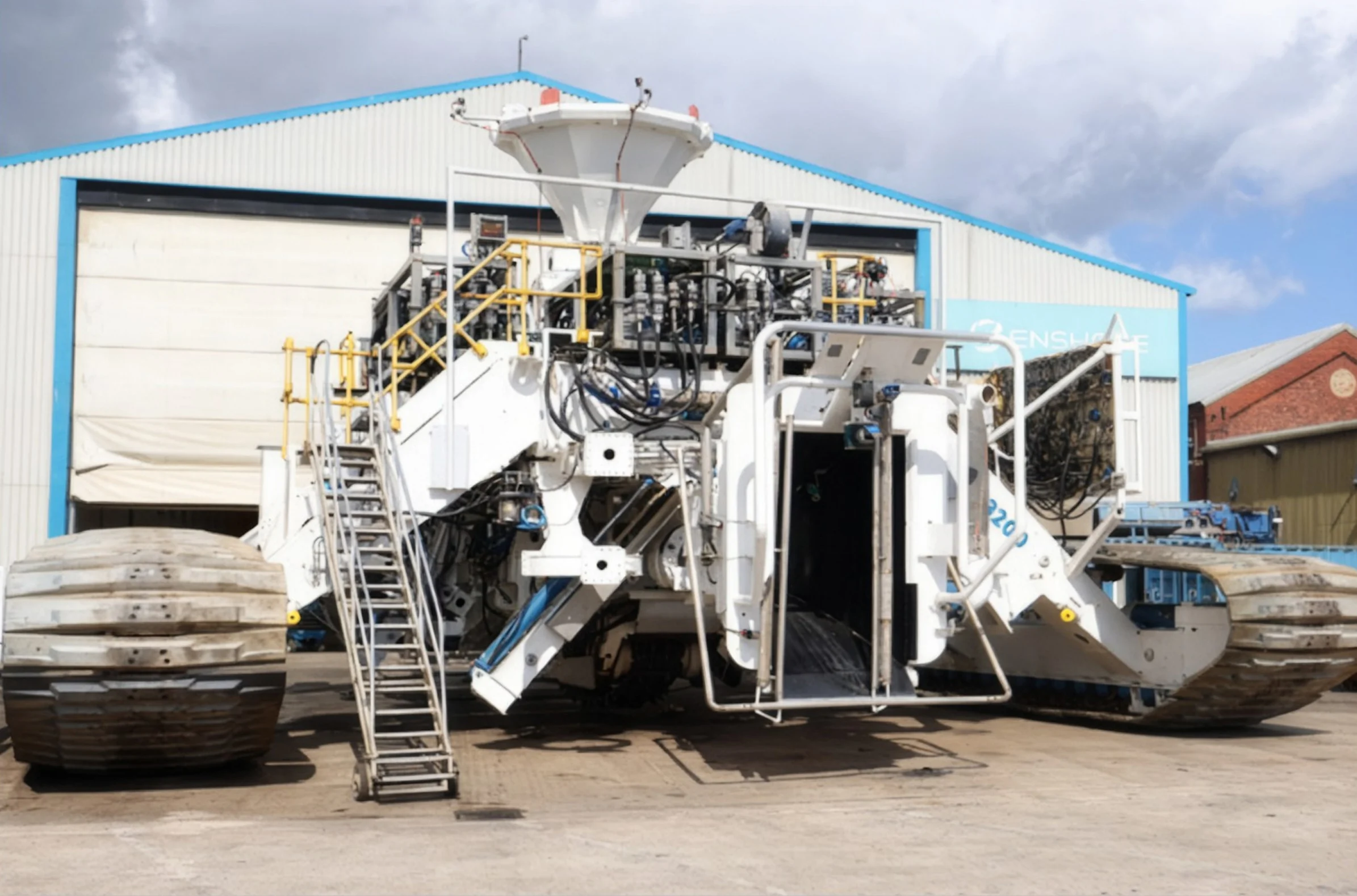
Trenchers, tensioners, carousels, pumps, winches and other deck equipment can demand significant power. Generation capacity, distribution, fault levels and load behaviour need to be understood before the spread is connected.
Vessel & Equipment Interfaces
Offshore equipment often combines machinery and control systems from several suppliers. Power, communications, safety signals and control interfaces need clear definition so the completed spread operates as one system.
Power Quality & Dynamic Loads
Large variable-speed drives and changing operating loads can affect harmonics, power quality and the wider vessel network. The electrical design needs to account for how equipment behaves during starting, operation, braking and regeneration.
Restricted Mobilisation Windows
Cable lay, trenching and construction spreads are often installed against fixed vessel schedules. Equipment preparation, cable engineering, testing and interface checks therefore need to be completed before mobilisation wherever possible.
Motion & Load Control
Subsea lifting, deployment and recovery equipment must deal with vessel motion as well as changing suspended loads. MJR's X-Wave™ system supports active heave compensation, constant tension and combined operating modes across subsea cranes, winches, ROV/AUV and trencher LARS and other offshore equipment.
Sector Benefits
Making Offshore Equipment Easier to Integrate, Mobilise and Support
A well-defined power and control architecture reduces uncertainty between the vessel and project equipment. MJR approaches the spread as a complete electrical system, considering supply, drives, control, interfaces, installation and testing together.
Reliable Vessel Integration
Electrical studies and interface engineering help establish how project equipment will connect to the vessel network and how high-power or changing loads will affect existing systems.
Faster Offshore Mobilisation
Containerised and pre-assembled systems can be built and tested in a controlled environment before delivery, reducing the amount of construction and commissioning work required onboard. MJR uses this approach for drive systems, subsea vehicle power and control, distribution and project-specific deck equipment.
Better Operational Visibility
Integrated PLC, SCADA and HMI systems provide operators with clear equipment status, alarms, interlocks and diagnostics across the offshore spread.
Easier Through-Life Support
Using maintainable drive, control and distribution architectures gives operators a clearer route for fault finding, maintenance, upgrades and replacement when equipment reaches obsolescence. MJR also provides repair and upgrade support for third-party offshore electrical equipment.
How MJR Supports the Sector
Engineering the Power, Control and Integration Behind Offshore Equipment
MJR's role can range from a single power or control package to the engineering, construction and mobilisation of a complete offshore equipment spread.
Subsea Power & Control Systems
Power and control engineering for ROVs, cable ploughs, trenchers, drilling equipment and other subsea machinery, including drives, switchgear, PLC control, instrumentation and vessel interfaces.
Modular Offshore Power
Containerised drive, switchboard, distribution and control systems that can be assembled and tested before mobilisation. Applications include subsea vehicles, jetting pumps, deck equipment spreads and temporary offshore power.
Motion Compensation
X-Wave™ control for active heave compensation and constant-tension applications including ROV and trencher LARS, subsea cranes, lift winches, lowering systems and other motion-sensitive offshore machinery.
Drives, Automation & Equipment Integration
Variable-speed drives, PLC and SCADA control, switchboards, hydraulic power-unit controls and equipment automation integrated with the vessel and wider project spread. MJR's automation capability specifically covers carousel, reel-drive and tensioner control, winches, LARS, ROVs, trenchers and subsea deployment systems.
Typical Applications
Electrical Systems for Offshore Construction and Subsea Equipment
MJR supports both vessel-mounted and modular project equipment, from individual subsea machines through to complete cable lay, pipelay and offshore construction spreads.
ROVs, Trenchers & Cable Ploughs
Power distribution, variable-speed drives, control systems, telemetry and topside interfaces for high-powered subsea vehicles and burial equipment.
Cable Lay & Pipelay Systems
Electrical systems for carousels, tensioners, reel drives, cable engines and associated handling equipment, including connection to vessel generation and distribution.
Cranes, Winches & Deployment Systems
Drive and control systems for subsea cranes, lift and traction winches, LARS, A&R equipment and motion-compensated lifting or deployment applications.
IMR, Drilling & Specialist Subsea Equipment
Power, automation and control for subsea drilling, inspection, maintenance, repair and intervention equipment where reliable topside-to-subsea integration is required.
Share your equipment, vessel power, drive, control and interface requirements with MJR.
The Questions We Get Asked Most
Practical answers for offshore contractors, vessel teams and equipment suppliers planning power, control, mobilisation or subsea equipment projects.