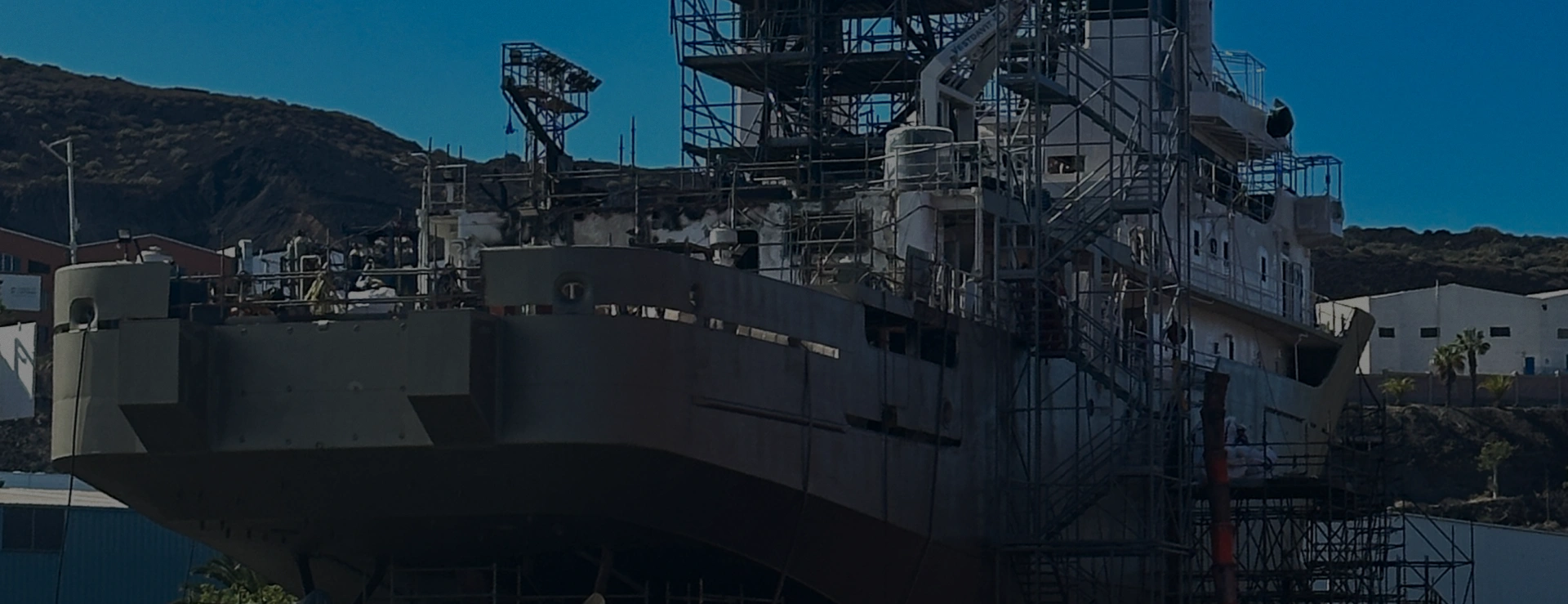
ABS-Approved Life Extension & Repowering of Specialist Research Vessel
ABS-Approved Life Extension & Repowering — Power, Propulsion, Automation and Control
Project Overview
ABS-Approved Life Extension & Repowering of Specialist Research Vessel
A turnkey electrical, propulsion and automation modernisation by MJR and ELSYS for the vessel supporting the only fully ocean-depth-rated manned submersible.
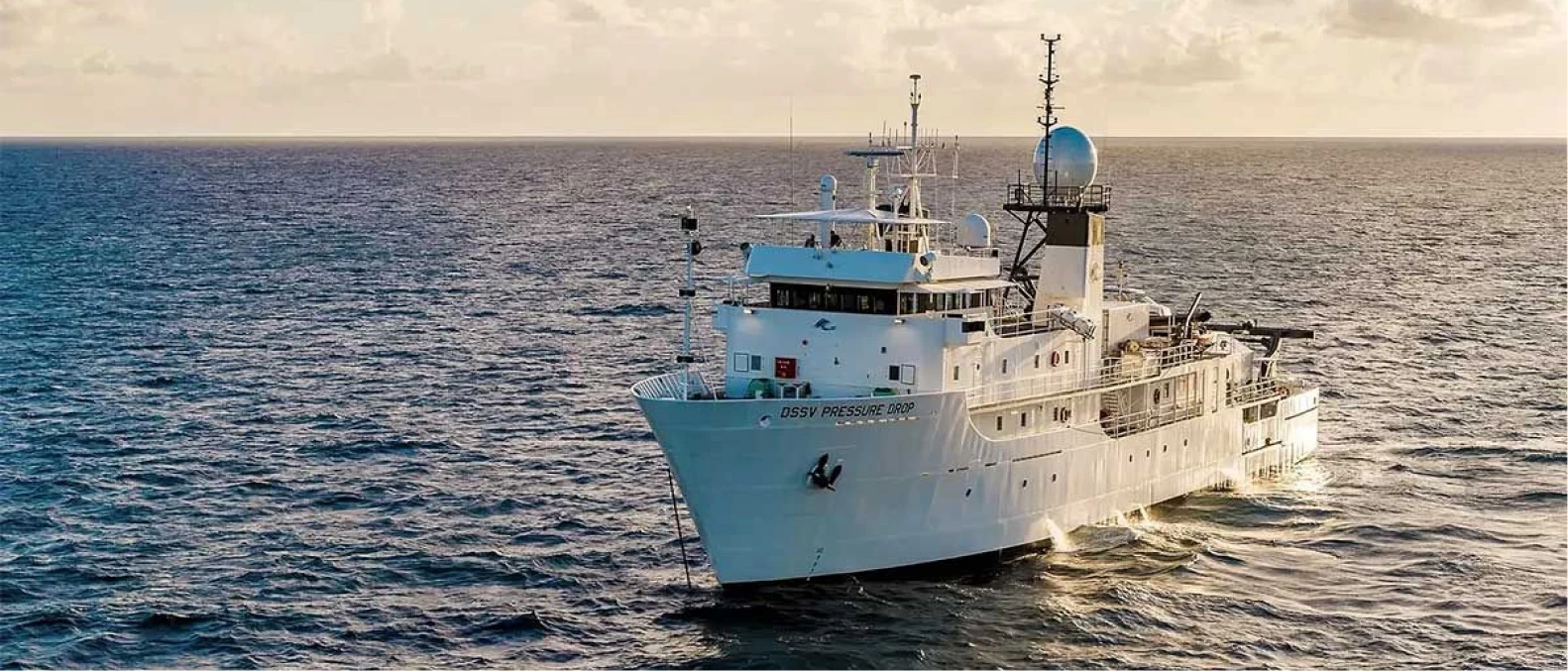
The vessel supports the world's only fully ocean-depth rated and classed manned submersible. It is one of a very small number of platforms capable of putting people on the floor of any ocean on earth, and it does so from an electrical plant that was designed and built decades before the submersible existed.
MJR Power & Automation and ELSYS were contracted to modernise that plant end to end: the main 600V propulsion switchboard and DC drive line-ups, the 450V ships services and emergency switchboards, generator control, the 24VDC and UPS systems, the bridge and engine control room desks, and a complete vessel-wide automation and power management system.
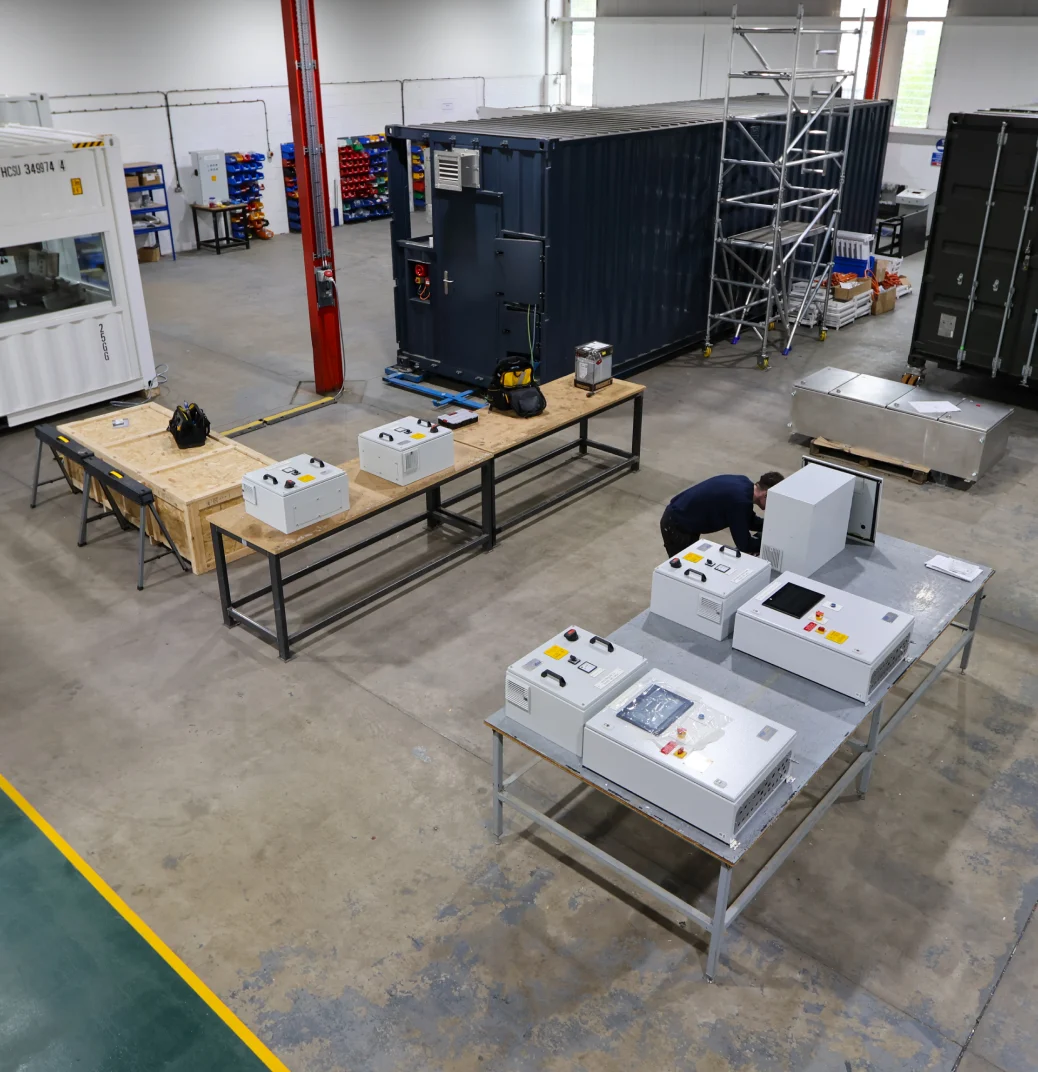
MJR carried out the basic and detailed design through 2024, manufactured the electrical hardware at its Teesside facilities and took responsibility for ABS approval of the full electrical power and automation design. ELSYS manufactured the automation system in Vigo. Installation and commissioning ran through late 2025 and early 2026 at Astican Shipyard in Las Palmas de Gran Canaria.
The vessel was redelivered to her owner in March 2026 with full ABS approval and certification.
Project significance A vessel supporting manned submersible operations in the deepest parts of the ocean has no realistic prospect of assistance. That single fact is behind every redundancy decision in this scope — propulsion armature and field drives, bow thruster feeds, battery chargers, DC distribution and the automation network itself, each rebuilt with a second path. What looks like over-engineering from the quayside is the minimum from the seabed.
The challenge
Forty-year-old equipment that nobody makes any more
The main 600V switchboard was built around General Electric equipment of a physical form factor that has no modern equivalent. Modern drives and circuit breakers simply do not fit where the originals sat, which meant significant internal reconfiguration rather than a like-for-like swap. Obsolescence of this kind is what forces a life extension: the plant still works until the day a part fails and there is no part.
A rebuild that had to happen inside the ship
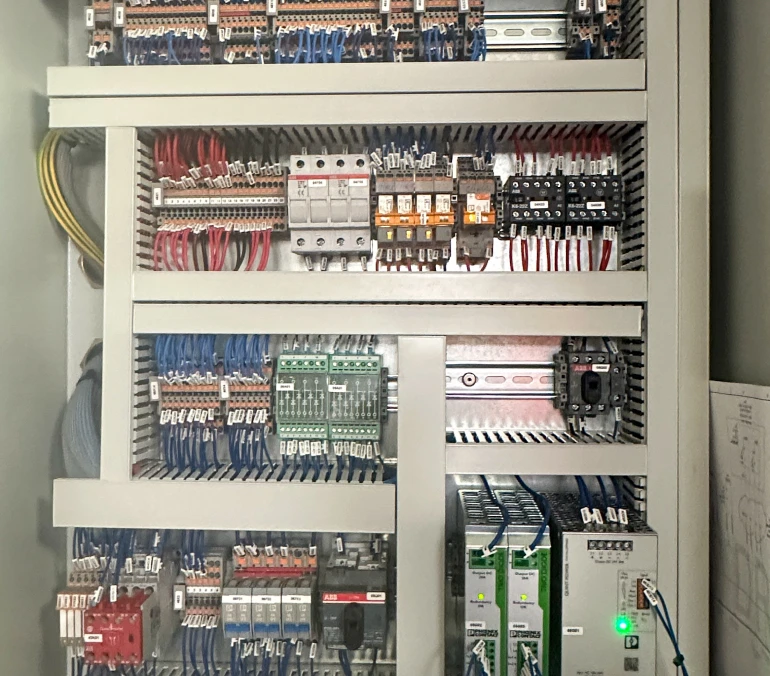
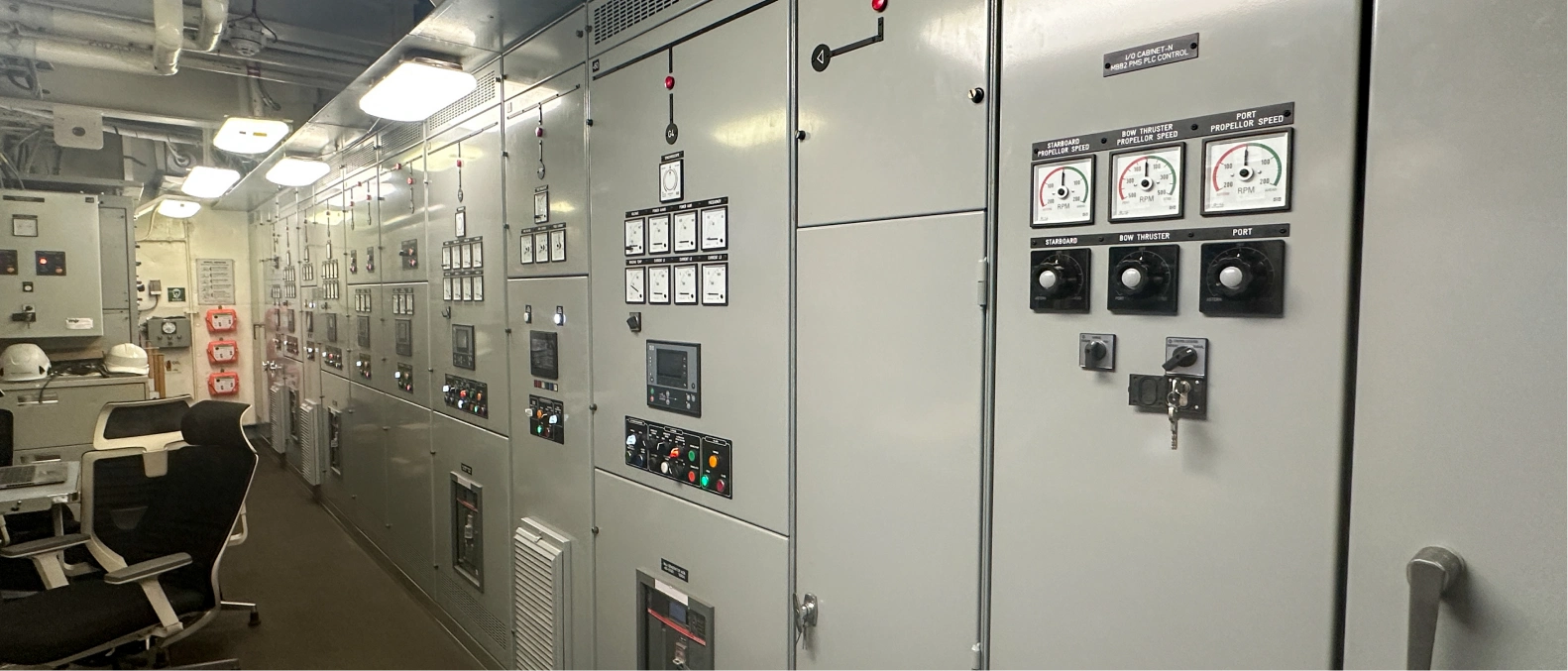
The main switchboard was rebuilt in situ. It could not be removed, replaced as a unit and reconnected — the switchgear, control gear, instrumentation and even the switchboard doors were changed out inside an existing hull, in an existing space, around existing cable terminations. New armature changeover contactor frames were designed and fabricated on site.
Harmonics
Large DC drives on a generator-fed supply distort the waveform, and the vessel's electrical system is small enough that the propulsion load dominates it. Modernising the drives without addressing harmonics would have moved the problem rather than solved it.
Redundancy on a vessel that operates alone
A vessel supporting manned submersible operations in the deepest parts of the ocean has no realistic prospect of assistance. Every significant system in the scope,propulsion armature and field drives, bow thruster feeds, battery chargers, DC distribution, the automation network itself, was rebuilt with a second path.
Class approval across the whole design
MJR carried the ABS approval of the full electrical power and automation design, not just of its own equipment. On a project replacing propulsion control, generator protection, power management and the integrated automation system simultaneously, that is a substantial engineering and documentation scope in its own right.
Scope of Work
Design, manufacture, installation, commissioning and class approval of:
- Full upgrade of the main 600V switchboard, including in-situ rebuild and reconfiguration of the main bus
- Full upgrade of the 450V ships services switchboard
- Full upgrade of the 450V emergency switchboard
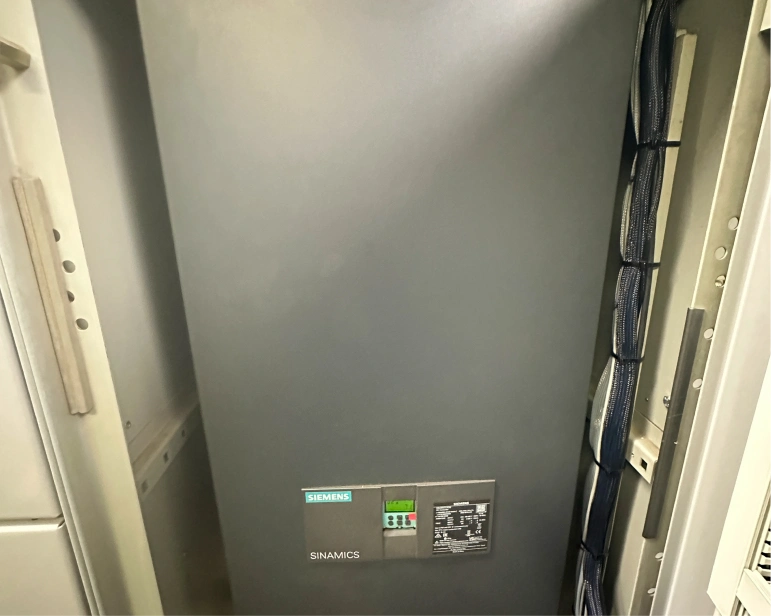
- Full upgrade of the propulsion system — main propulsion and bow thruster DC variable-speed drives
- Generator control and protection for all four main generators and the emergency generator
- Power management system replacement
- Integrated automation and machinery control system replacement — VAMOS
- New extension alarm system and new dead man alarm system
- 24VDC automation supply, battery chargers, DC distribution and UPS systems
- Bridge centre console, bridge wing and engine control room desks
- A dedicated VFD power conversion solution for the LARS hydraulic power unit starter
Design and engineering deliverables
MJR carried out the basic and detailed design throughout 2024:
- Single line diagram
- General arrangement drawings and layouts
- Main switchboard electrical schematics
- Short circuit calculations
- Protection study
- Load balance
- Harmonic compensation
- I/O list
- Alarm list
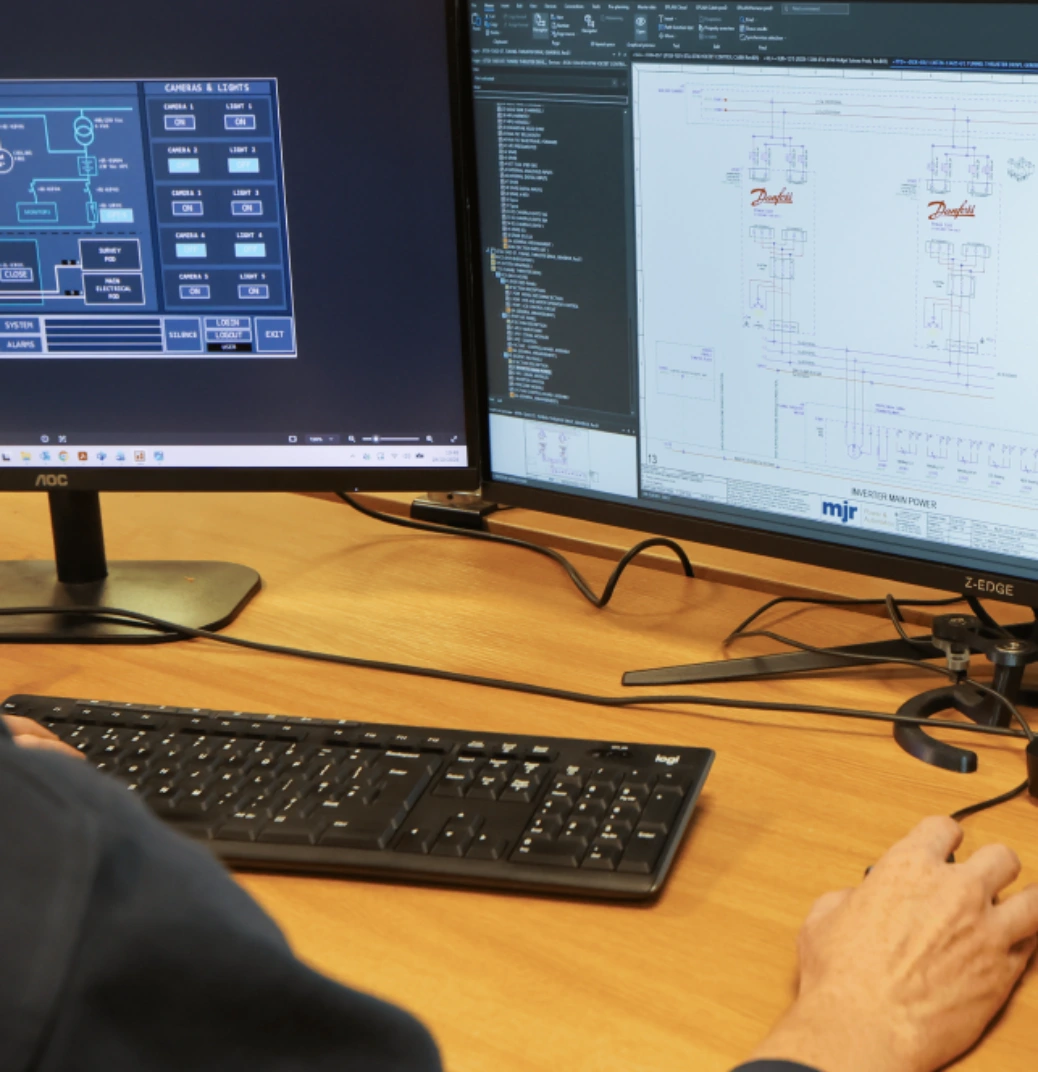
- IAS mimic screen design
- PMS system design
- DC drives replacement
Solutions Delivered
Main 600V switchboard and propulsion DC drive line-ups
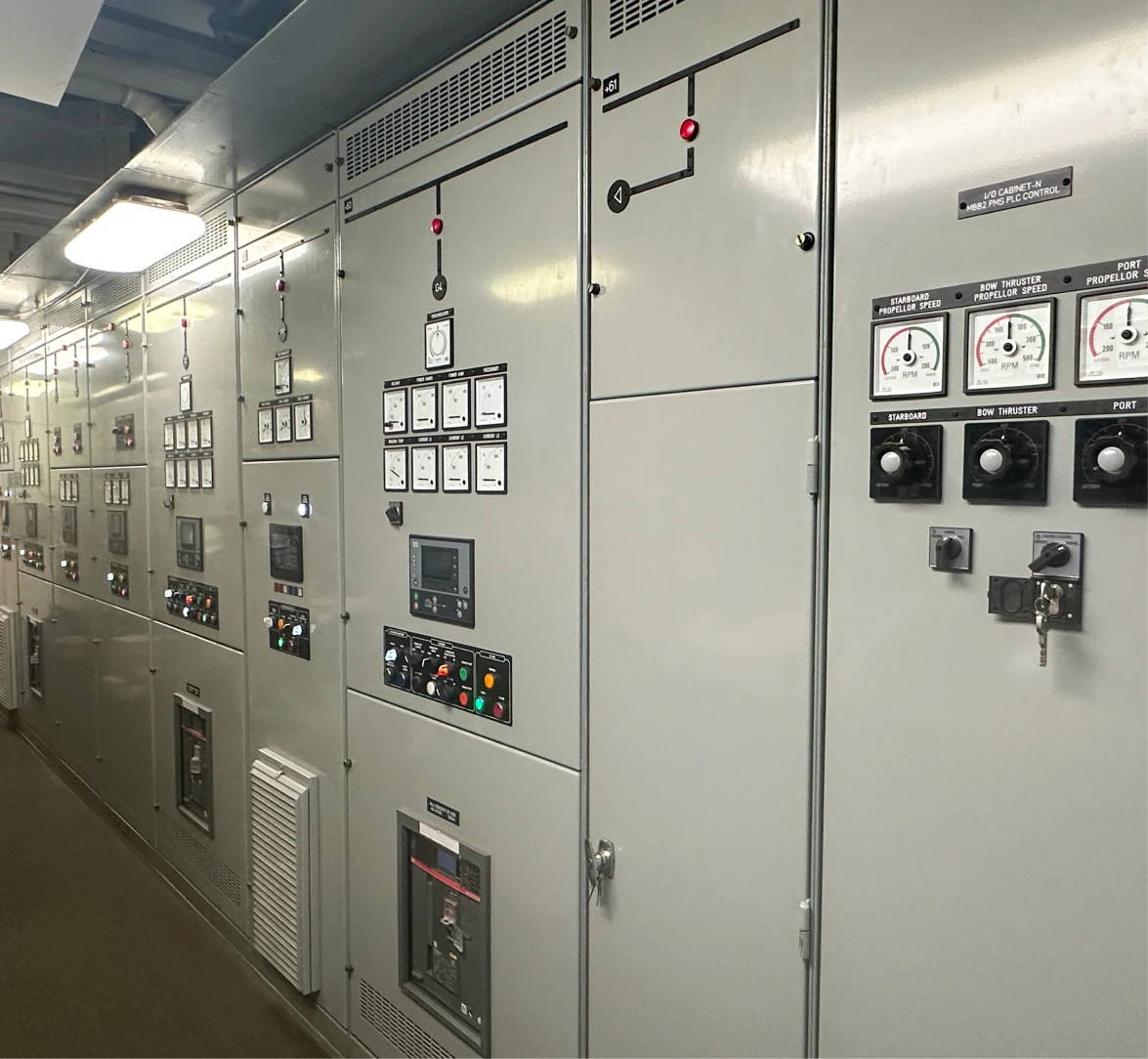
All switchgear, control gear, instrumentation and switchboard doors were replaced. Because the original General Electric equipment was of a different physical form factor to modern drives and circuit breakers, the boards required significant internal reconfiguration rather than a component-for-component substitution.
The main bus was reconfigured to include remotely and automatically operated bus-tie circuit breakers, fully integrating the bus ties with the power management system and the integrated automation system — so the vessel's bus configuration is now managed by the automation rather than by hand.
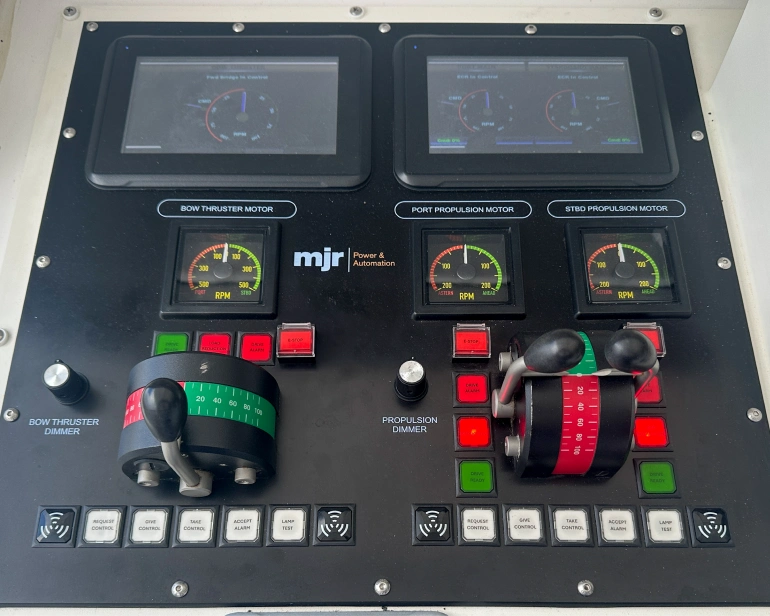
The main propulsion and bow thruster DC variable-speed drive systems were replaced with enhanced redundancy:
- Each propulsion motor has duty and standby field drives. Failure of the duty field drive immediately inhibits the armature drive, and changeover to the standby is made with the motor stopped
- New dedicated armature changeover contactor frames were designed, fabricated on site and installed for both port and starboard propulsion circuits, retaining the ability to run both motors from a single armature drive if a drive fails
- A new air circuit breaker was added to the 600V main switchboard so the bow thruster can be fed from either the port or starboard bus, with new crossover cables installed via a dedicated cable ladder and switchboard transit
Power management system
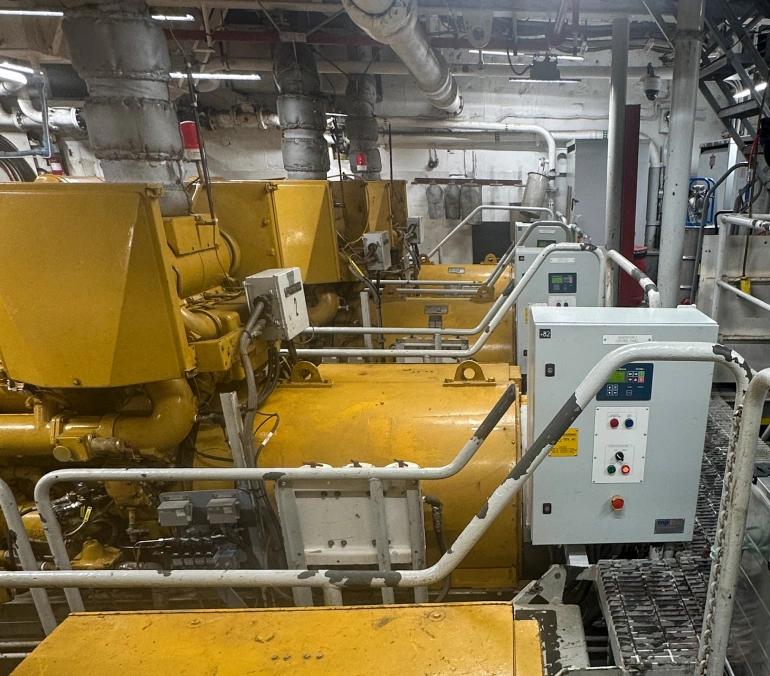
The new PMS provides automatic synchronisation and paralleling for the four 600V, 600kW main generators, together with:
- Symmetrical and asymmetrical active and reactive load sharing
- Load-dependent automatic start and stop
- Heavy consumer start blocking
- Fast propulsion load reduction for blackout prevention
- Bus tie automation
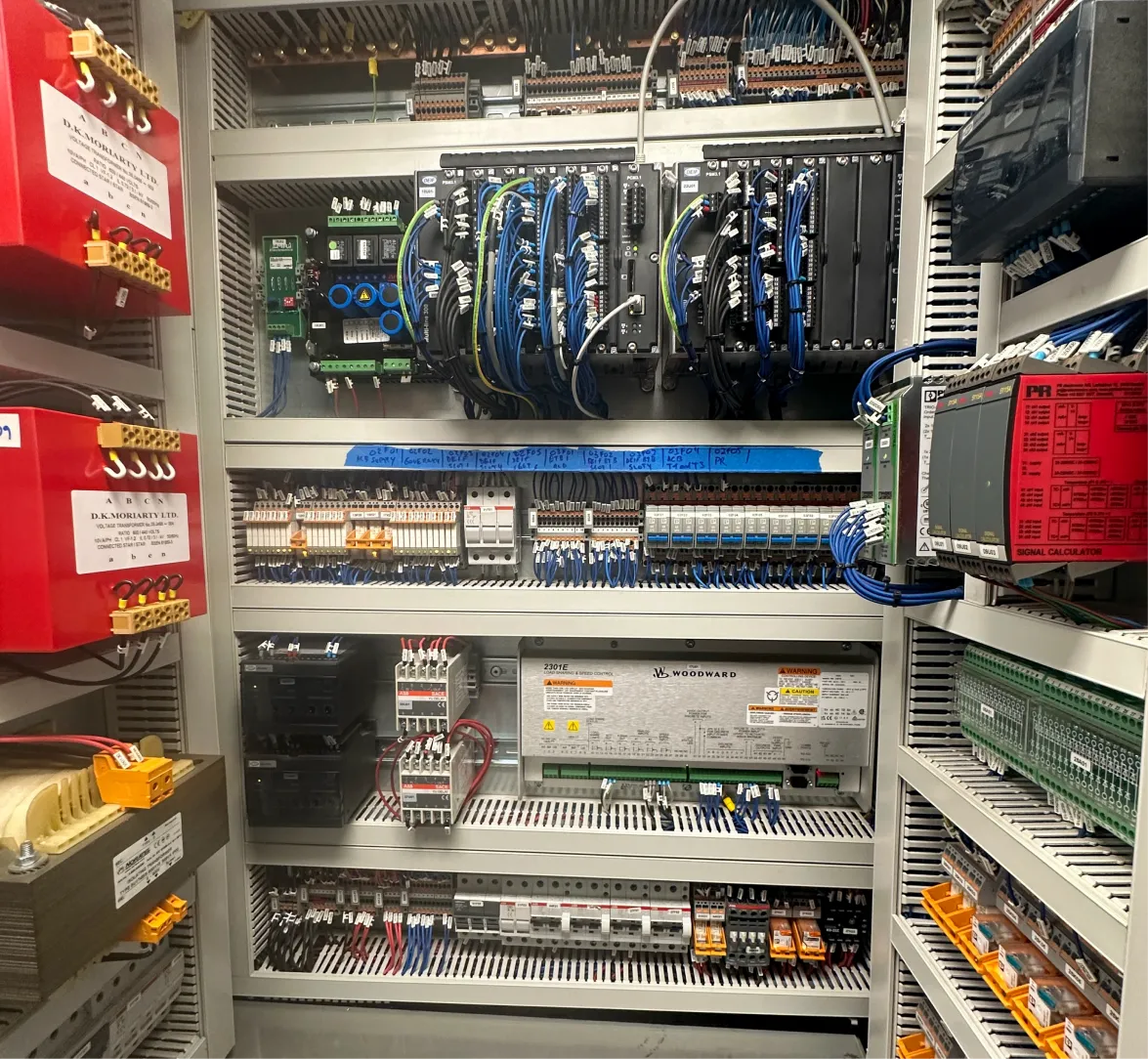
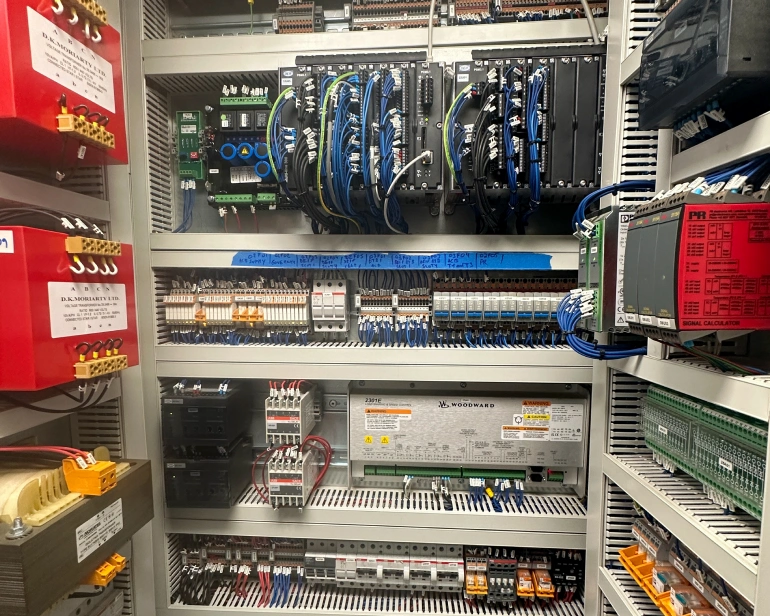
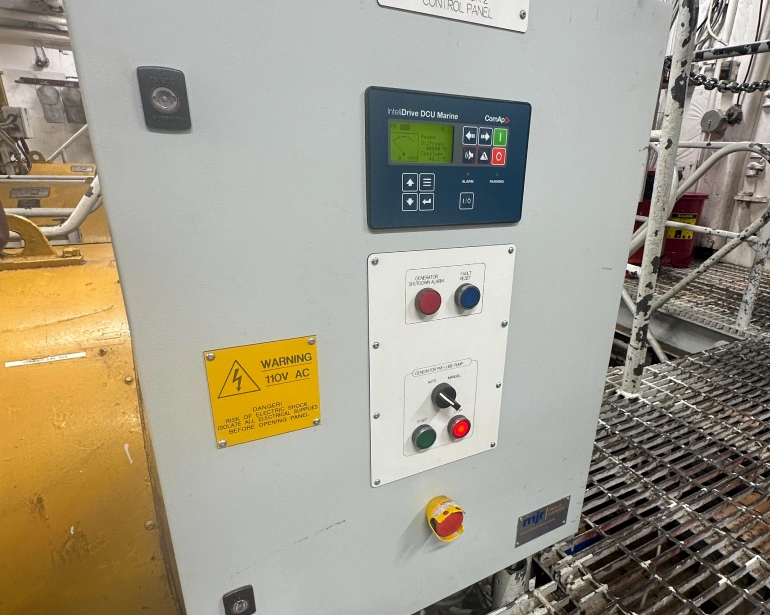
New electronic governors and replacement AVRs were fitted to all four main generators and integrated with the PMS, providing isochronous load sharing with droop backup and remote voltage trim for kVAr sharing. The emergency generator AVR was also replaced and the emergency switchboard integrated into the PMS.
Harmonic mitigation
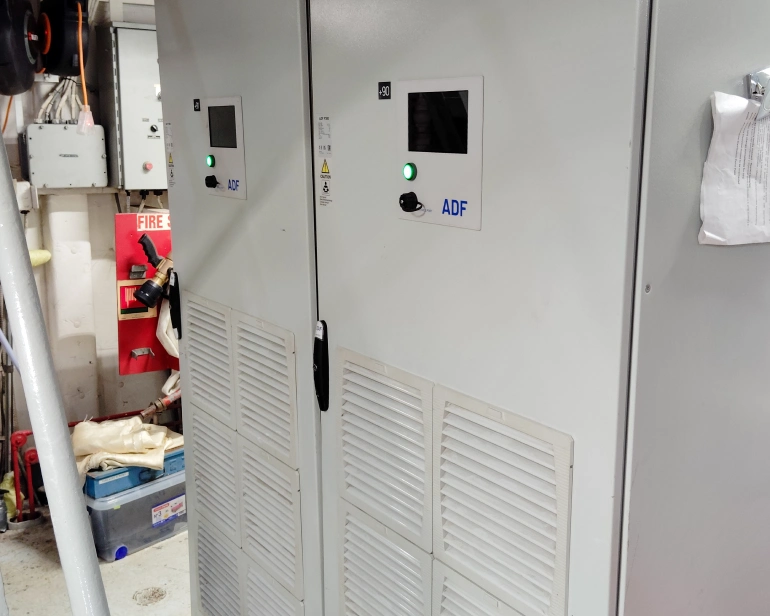
Two active harmonic filter units were installed adjacent to the 600V main switchboard, supplemented by 4% passive line reactors in series with each armature drive feeder.
450V ships services and emergency switchboards
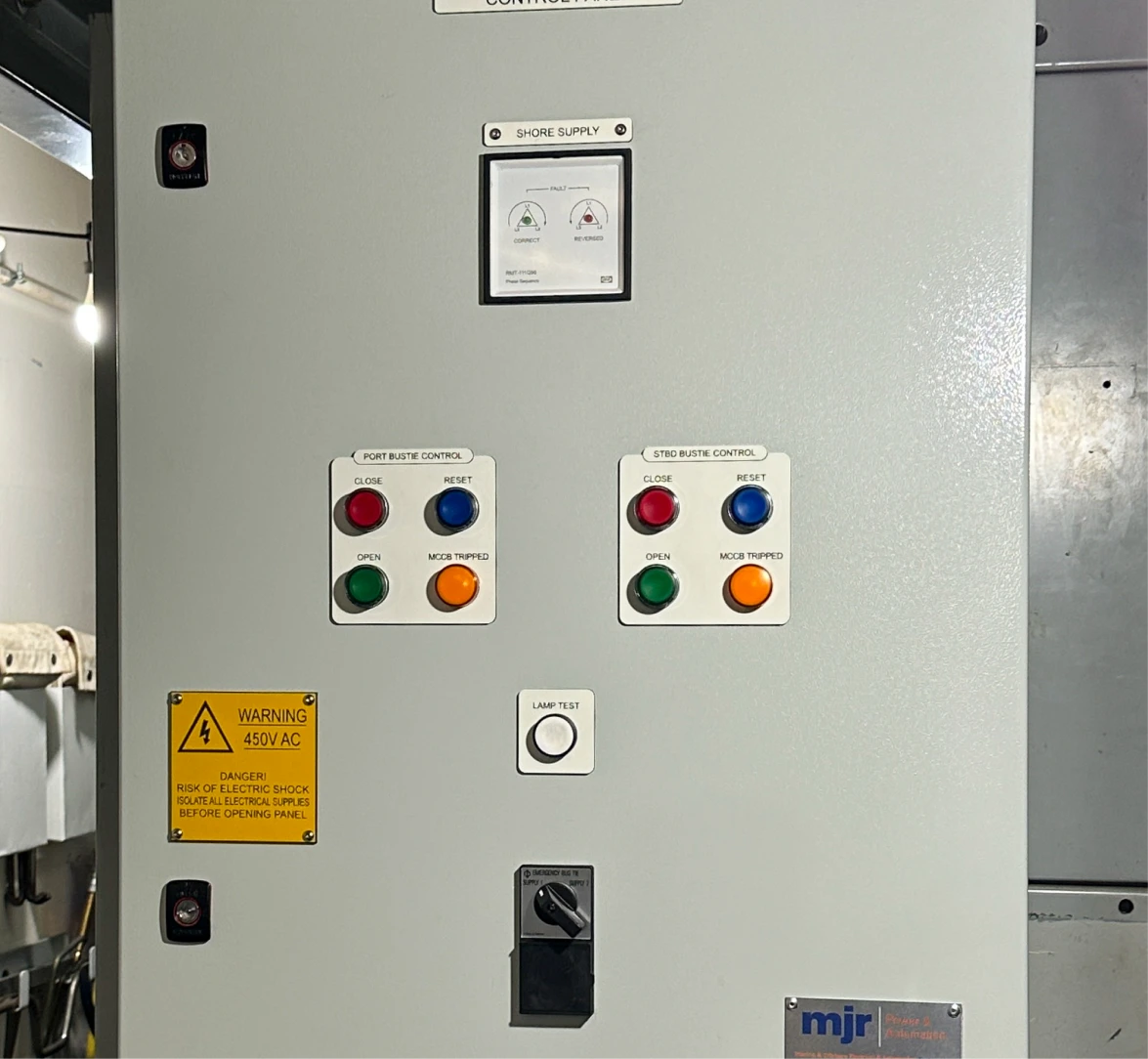
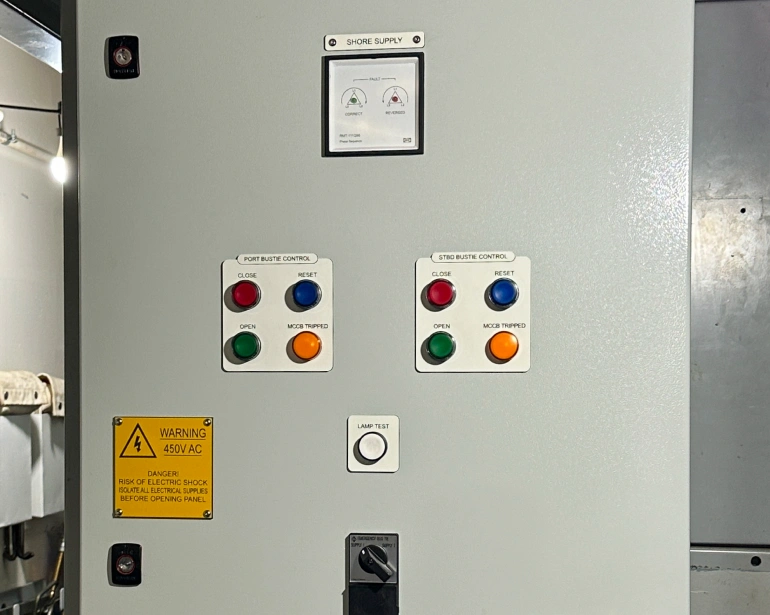
All main switchgear and control gear on the ships services switchboard were replaced and the board fully integrated into the PMS. On the emergency switchboard, switchgear, control gear, instrumentation and door plates were replaced, the emergency generator AVR renewed, and the board integrated into the PMS.
24VDC and UPS systems
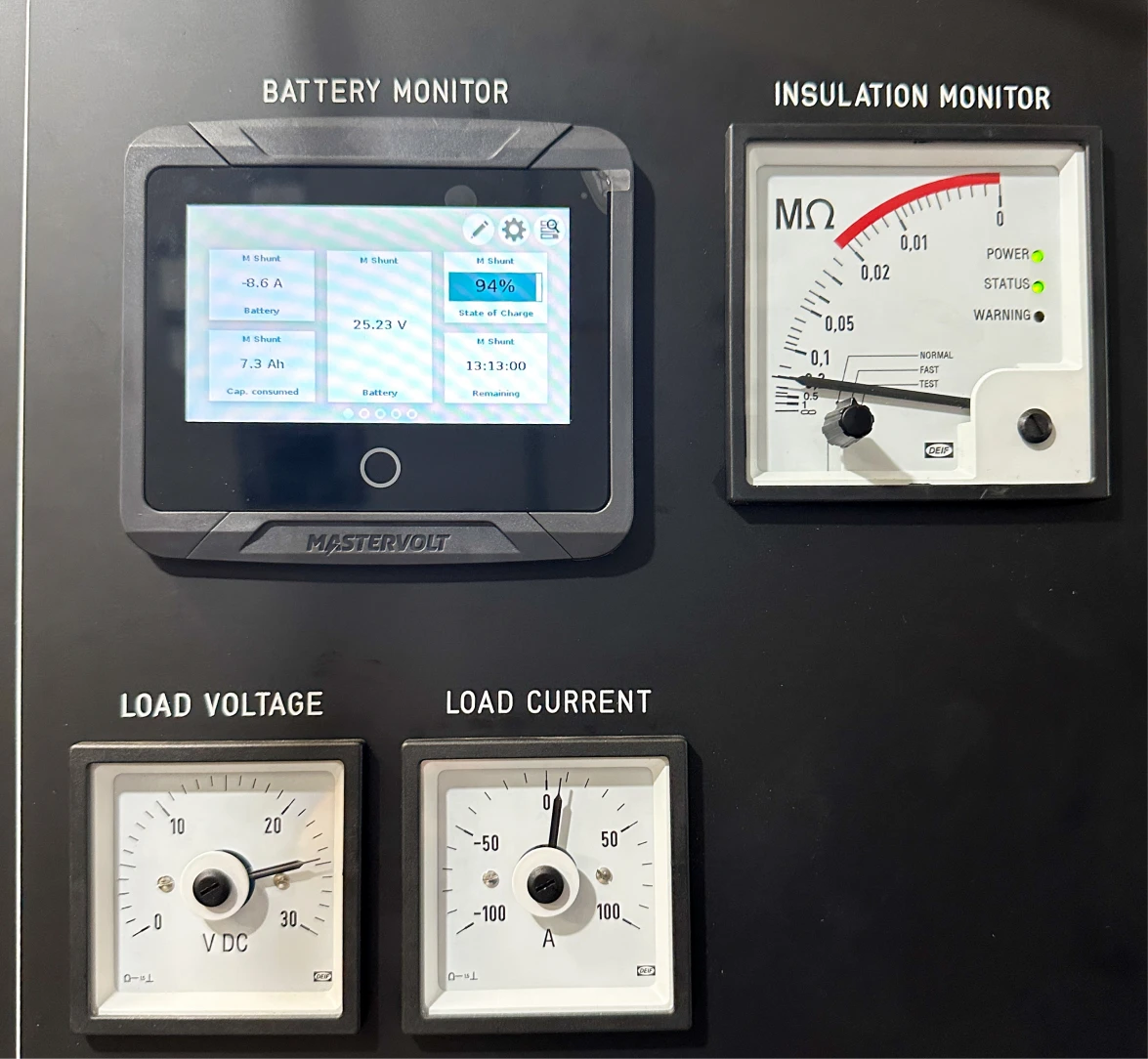
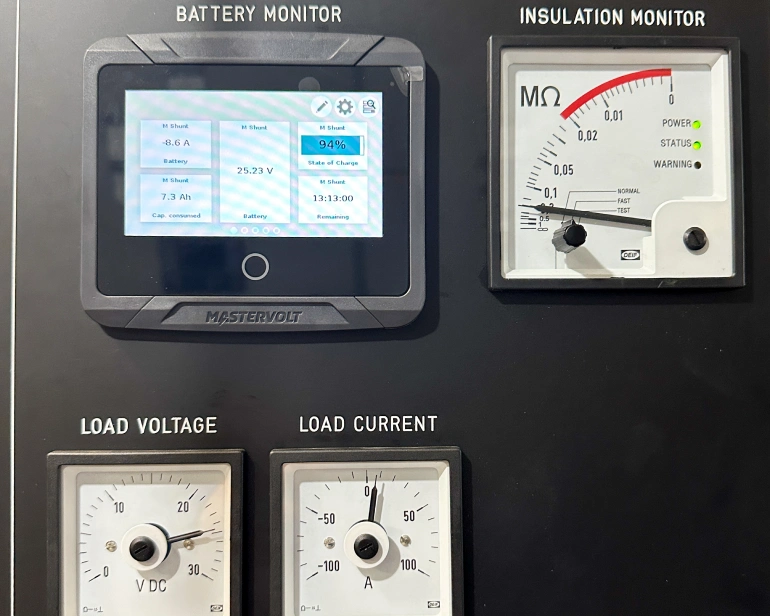
A new 24VDC automation system supplies control power to the generator control panels, the PMS, the IAS and the other automation consumers around the vessel, comprising new batteries, battery chargers and a DC distribution board.
- Two battery chargers with independent AC supply feeds, with charger #2 and the ECR UPS fed from the emergency switchboard if the main 450V ships services supply is lost
- The original 24VDC system in the emergency generator room retained and integrated with the new DC distribution, both connected to the generator control panels through diode redundancy units for dual-supply redundancy
- A new 120V emergency distribution board for automation consumers that must remain powered after loss of main supply
- A 24VDC insulation monitoring instrument in the ECR console for continuous earth fault monitoring of the DC network
- New UPS systems at the ECR and on the bridge, protecting the automation servers, IAS operator stations and associated control and monitoring equipment
Integrated automation and machinery control system — VAMOS
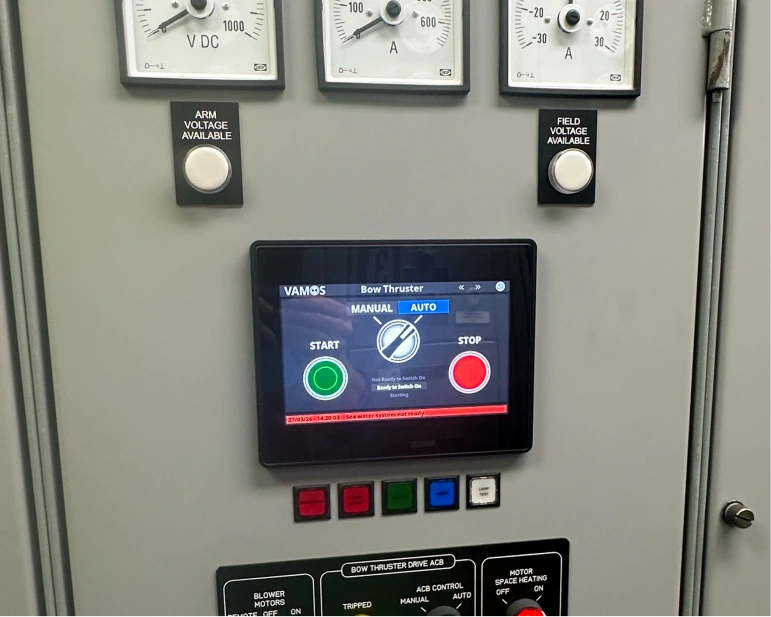
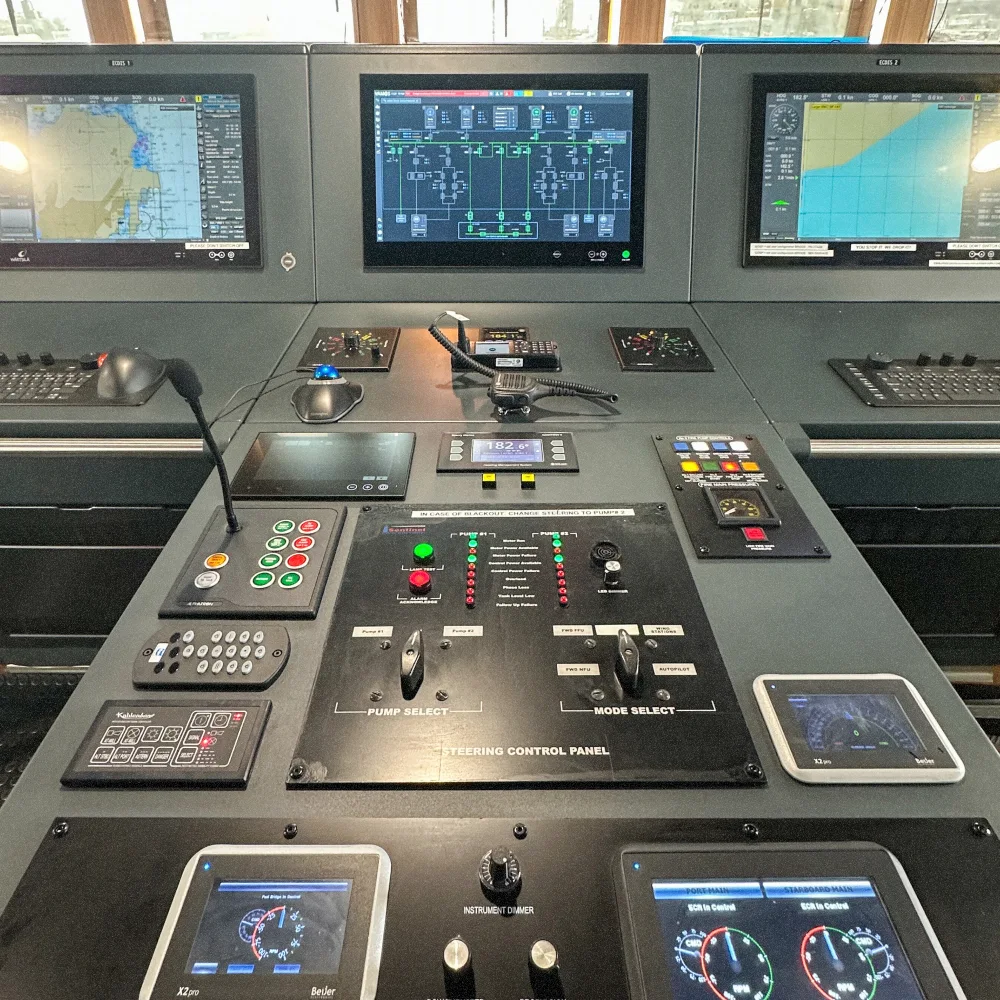
The existing integrated automation and machinery control system was replaced with the VAMOS platform — Vessel Automation and Machinery Operating System — delivered by ELSYS. It provides integrated power and energy management together with alarm, monitoring and control coverage across generation, propulsion, bilge, watertight doors, fridge and freezer spaces, fire detection and general ship services.
The architecture uses two redundant fibre-optic ring networks: one for operator stations and engineer alarm stations, one for the PLC and distributed I/O. No two servers or operator stations share a common network switch, so there is no single point of failure across critical communications. The system runs four main operator stations around the vessel and five cabin alarm panels for the extension alarm system.
Generator control and integration
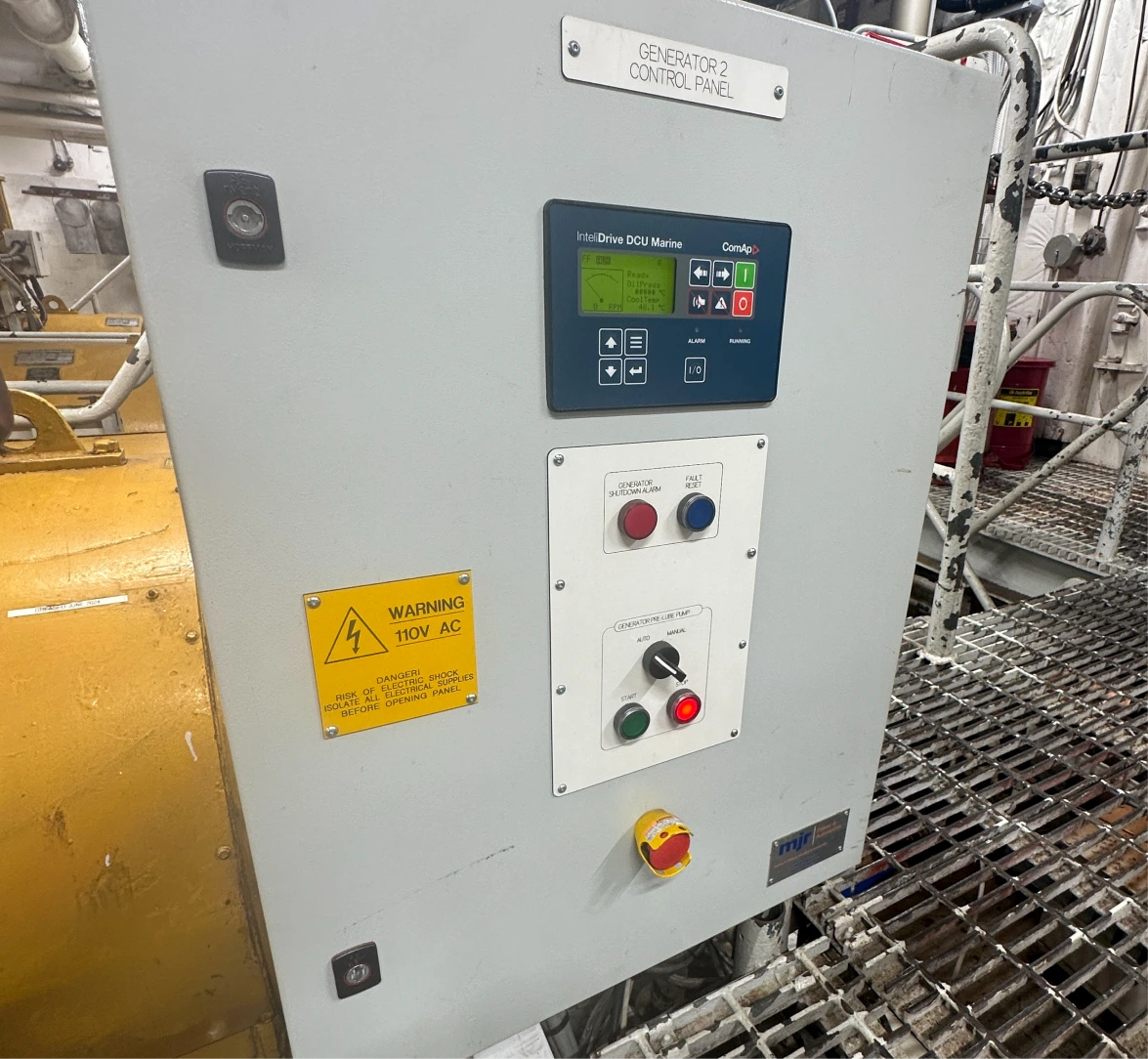
The main and emergency generator control systems and panels were completely replaced, with new PMS controllers and generator control panels supplied and installed. New generator switchboard cells were fitted with per-machine instrumentation for voltage, power in kW and kVAr, frequency, winding temperature and phase current on the 600V main switchboard. Power management controller units in each generator cell provide local indication of generator parameters, load sharing status, protection functions and synchronising displays. Sensor wiring looms were manufactured and installed for all four main generators.

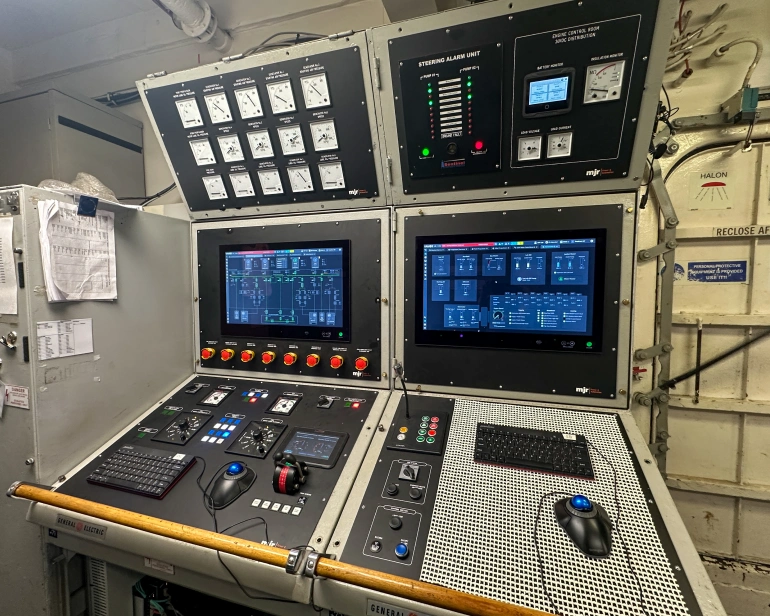
Bridge and engine control room desks
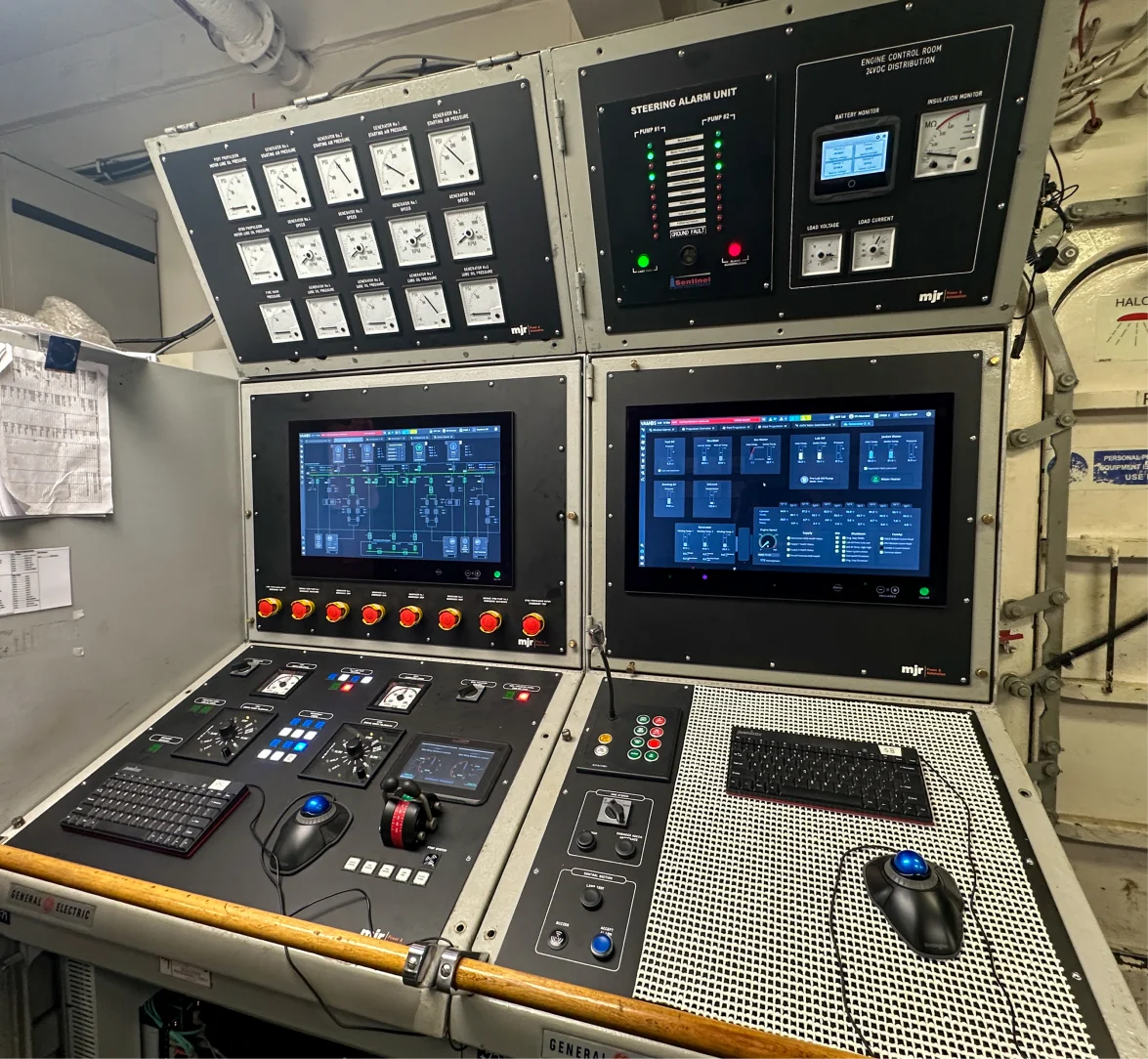
The main and emergency generator control systems and panels were completely replaced, with new PMS controllers and generator control panels supplied and installed. New generator switchboard cells were fitted with per-machine instrumentation for voltage, power in kW and kVAr, frequency, winding temperature and phase current on the 600V main switchboard. Power management controller units in each generator cell provide local indication of generator parameters, load sharing status, protection functions and synchronising displays. Sensor wiring looms were manufactured and installed for all four main generators.
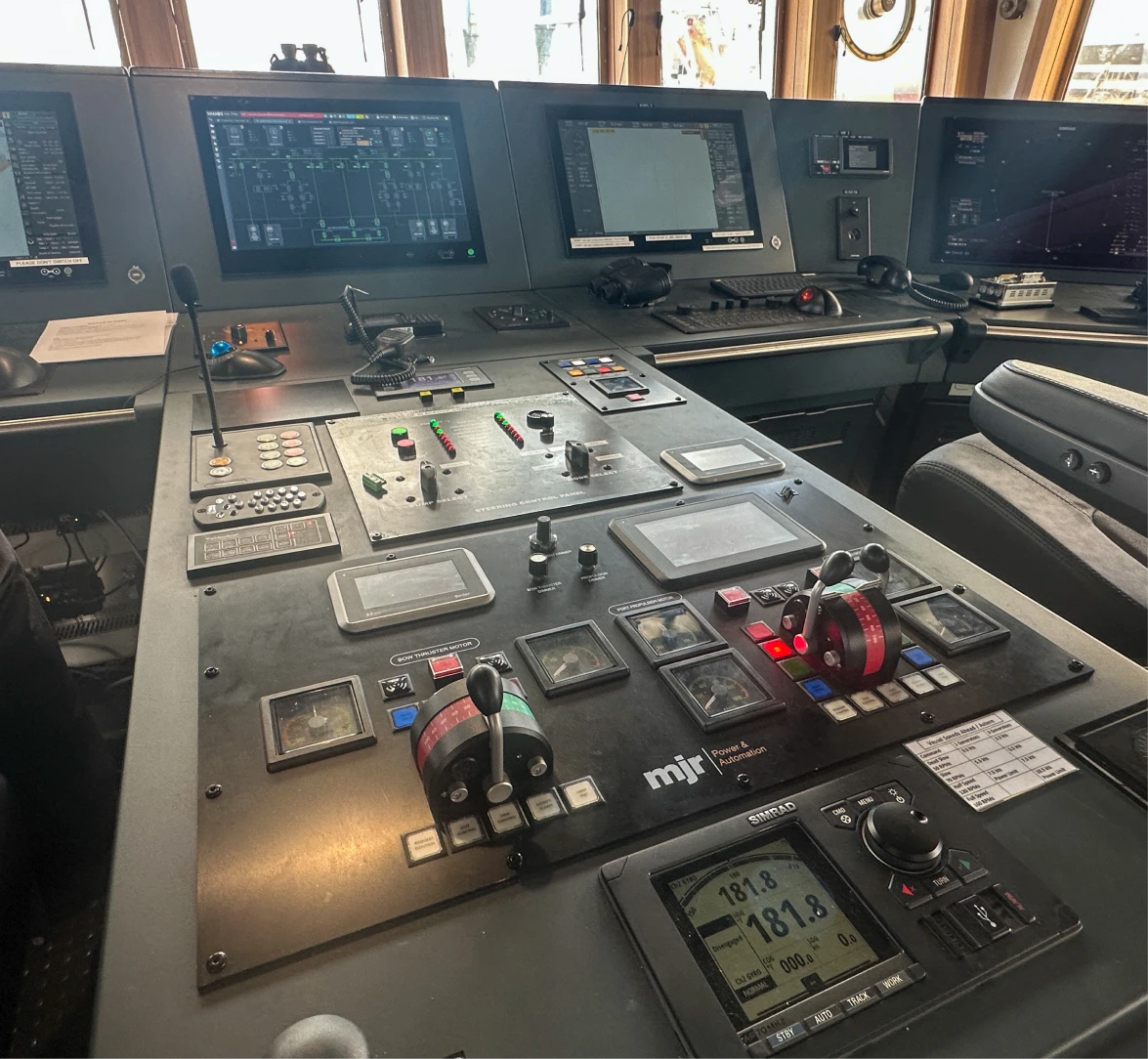
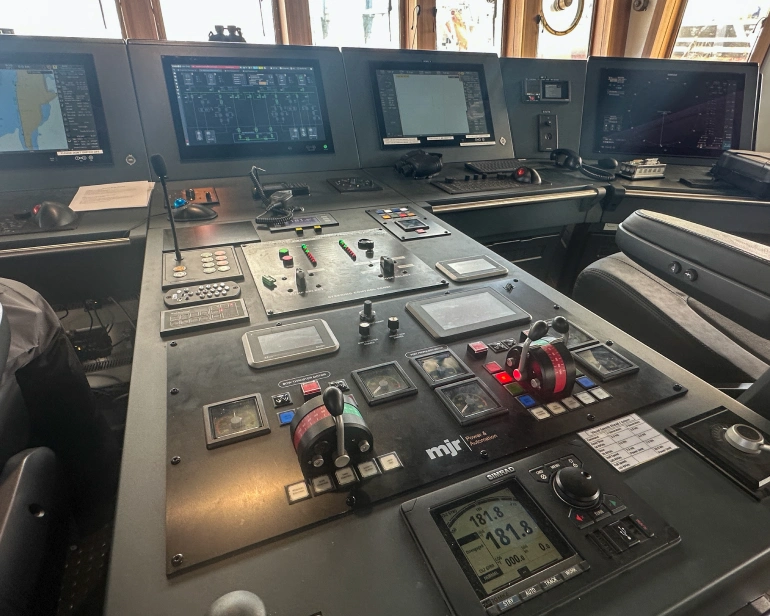
The bridge centre console received new backplates and control equipment providing updated interfaces for propulsion control, steering gear and vessel monitoring, along with the IAS operator station and server PCs, with network connections commissioned and tested. Both bridge wings were fitted with new HMI panels for main propulsion, bow thruster and rudder angle indication.
LARS hydraulic power unit starter
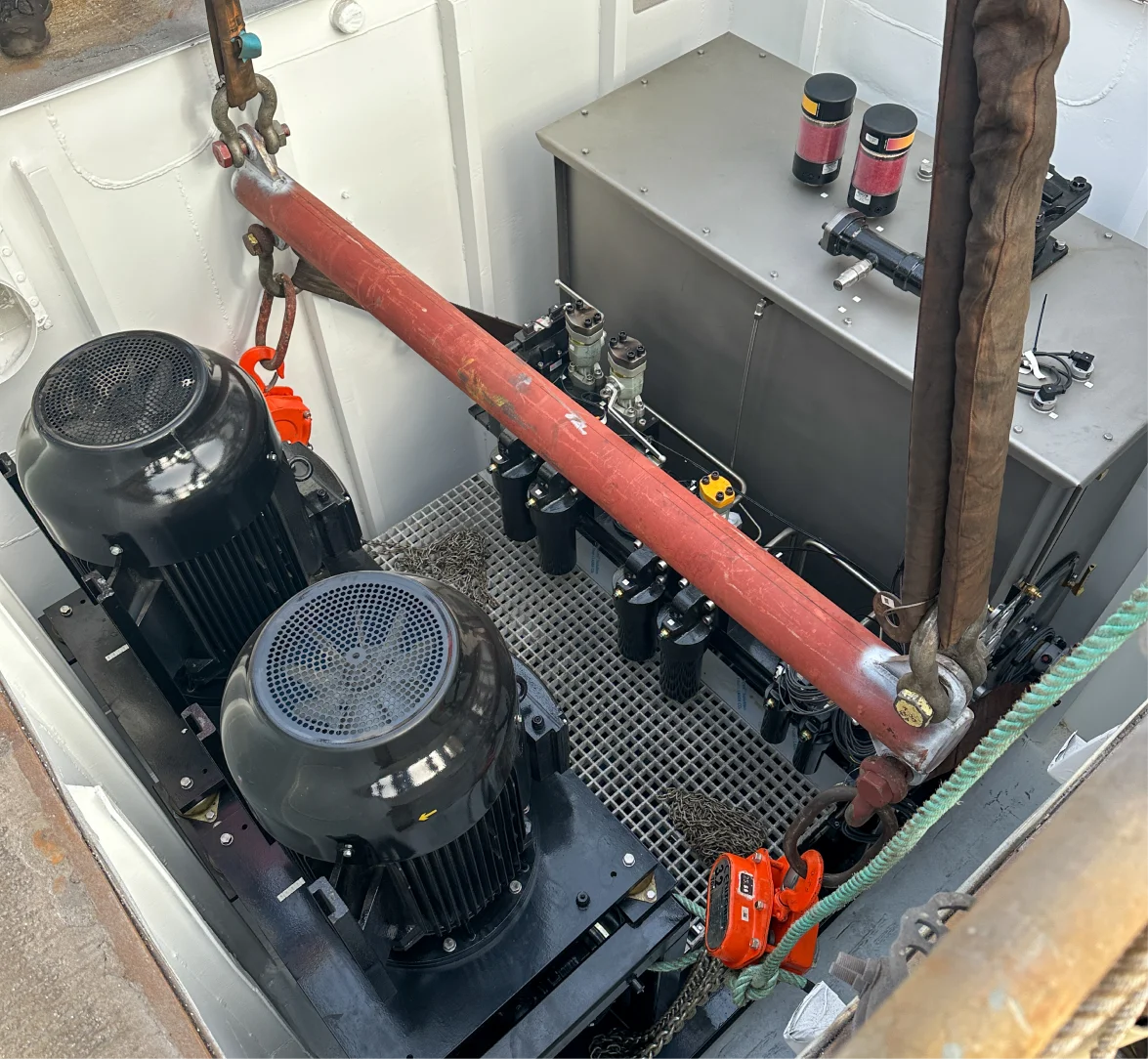
A dedicated VFD power conversion solution was developed for the launch and recovery system's hydraulic power unit starter, eliminating motor-starting current transients when operating large motor loads from generator-fed supplies.
Delivery & Approval
The project ran to just under two years from the start of detailed design to redelivery:
- 2024 — basic and detailed design carried out by MJR Power & Automation
- Electrical hardware manufactured at MJR's Teesside facilities; automation system manufactured at ELSYS in Vigo, Spain
- IAS and PMS factory acceptance testing carried out at ELSYS in Vigo
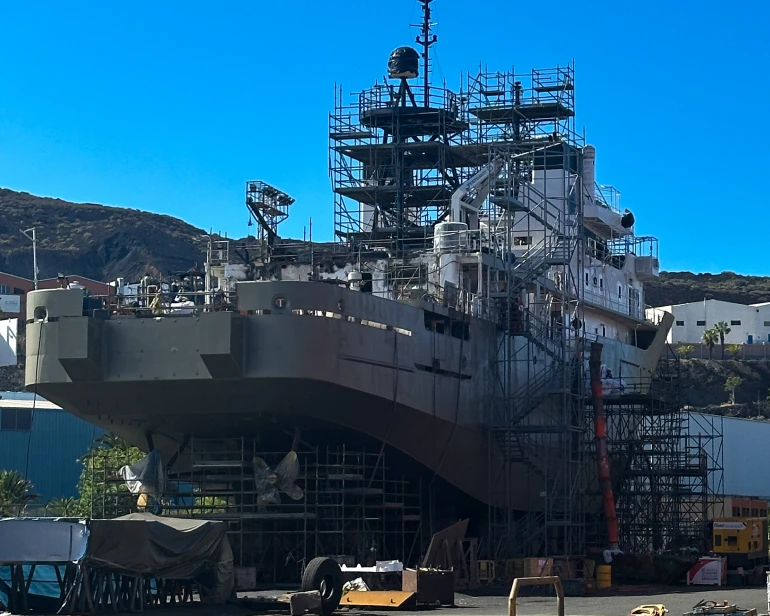
- Late 2025 to early 2026 — installation and commissioning at Astican Shipyard, Las Palmas de Gran Canaria
- March 2026 — vessel redelivered to the owner with full ABS approval and certification
MJR Power & Automation was responsible for ABS approval of the full electrical power and automation design.
Technical Summary
- Vessel Specialist deep-ocean research vessel [name subject to the decision above]
- Role Support vessel for the world's only fully ocean-depth rated and classed manned submersible
- Classification society ABS
- Main generation Four generators, 600V, 600kW each — 2.4MW installed
- Main distribution 600V main propulsion switchboard; 450V ships services switchboard; 450V emergency switchboard
- Bus configuration Remotely and automatically operated bus-tie circuit breakers, integrated with PMS and IAS
- Propulsion DC main propulsion, port and starboard, with duty and standby field drives and armature changeover
- Bow thruster DC drive with dual redundant feeds from either main bus via added ACB
- Power management Automatic synchronising and paralleling, active and reactive load sharing, load-dependent start/stop, heavy consumer blocking, fast propulsion load reduction, bus tie automation
- Generator control New electronic governors and AVRs on all four main generators; isochronous load sharing with droop backup; remote voltage trim for kVAr sharing
- Harmonic mitigation Two active harmonic filters plus 4% passive line reactors in series with each armature drive feeder
- Automation platform VAMOS (ELSYS) — four operator stations, five cabin alarm panels
- Network architecture Two redundant fibre-optic ring networks; no shared network switch between any two servers or operator stations
- Control positions Bridge centre console, port and starboard bridge wings, engine control room
- DC and UPS New 24VDC system, dual chargers on independent feeds, diode redundancy units, 120V emergency board, insulation monitoring, ECR and bridge UPS
- Other New extension alarm system; new dead man alarm system; LARS HPU VFD starter
- Design period 2024
- Installation Late 2025 – early 2026, Astican Shipyard, Las Palmas de Gran Canaria
- Redelivery March 2026, with full ABS approval and certification
- Partners ELSYS (Elephant Systems SL), Vigo, Spain — automation system
Project Outcomes
The source lists five outcomes. Four of them are qualitative and one is a date. They are restated below with what each actually means for the owner, which is what an outcomes section is for.
- ABS-approved redelivery completed in March 2026 — the vessel returned to service with class approval covering the full electrical power and automation design, not just individual items of equipment
- Complete modernisation of electrical propulsion, automation and power management, replacing equipment that could no longer be supported with systems that can be maintained for the vessel's remaining life
- Extended operational life for a platform that would otherwise have been limited by the obsolescence of its electrical plant rather than by its hull or its mission capability
- Improved redundancy at every level — duty and standby field drives, armature changeover, dual bow thruster feeds, dual battery chargers on independent supplies, and an automation network with no shared single point of failure
- Improved maintainability and long-term supportability, with current-generation equipment, documented design and instrumentation on every machine
- Modern systems successfully integrated into legacy marine infrastructure — in situ, inside an existing hull, around existing cable
A vessel built in one era now runs on the electrical and automation systems of another, without leaving the hull it was built in — and can go back to putting people on the floor of the ocean.
Gallery
Share your vessel, equipment and interface requirements with MJR.
VAMOS the marine automation platform for vessel control, alarms, monitoring, power management and operational visibility.
Marine electrical design, FEED studies, calculations and system engineering developed around vessel, offshore and project requirements.
Integrated electrical power, switchboard, control and automation systems engineered, built and tested for demanding marine and offshore applications.
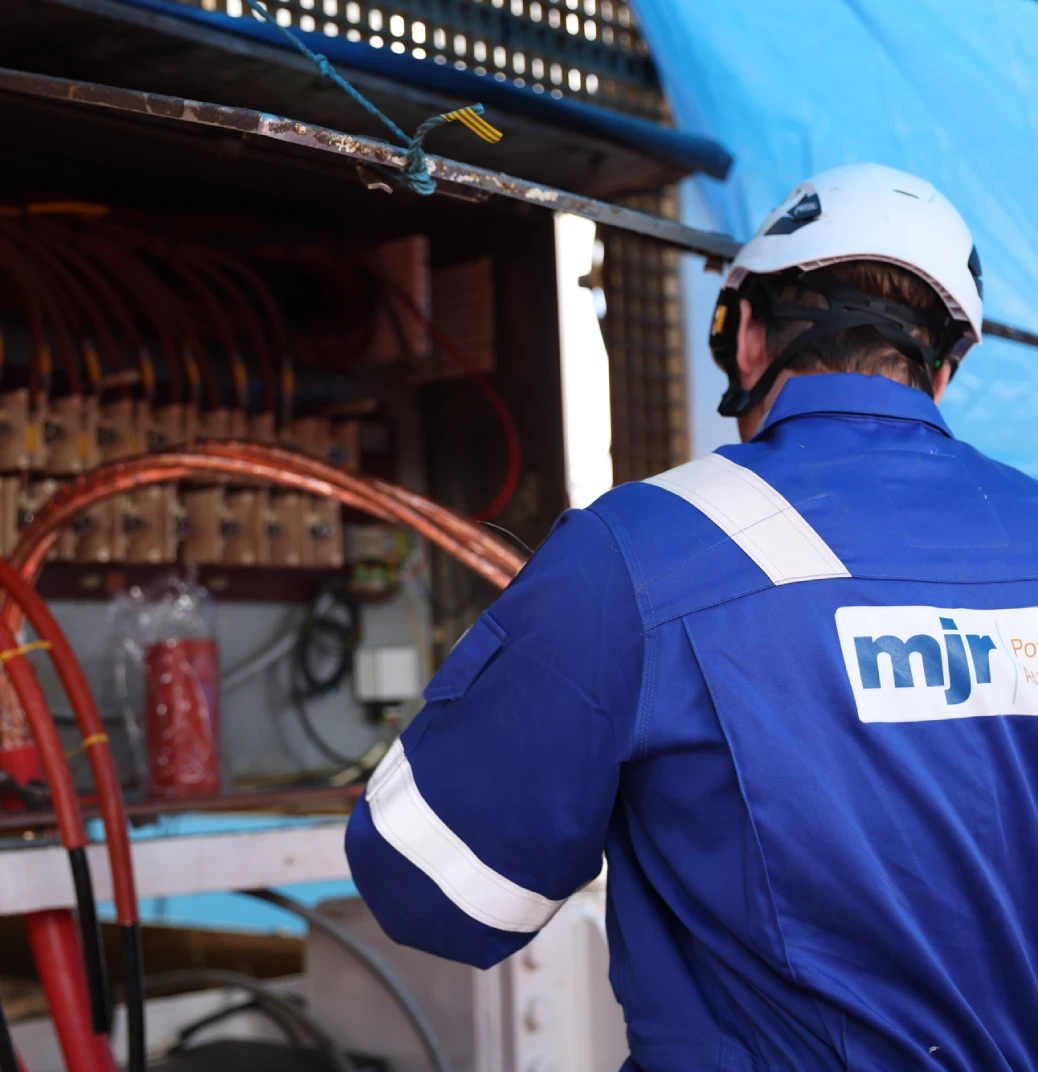
Marine electrical installation, onboard integration, vessel commissioning and functional testing through to technical handover.
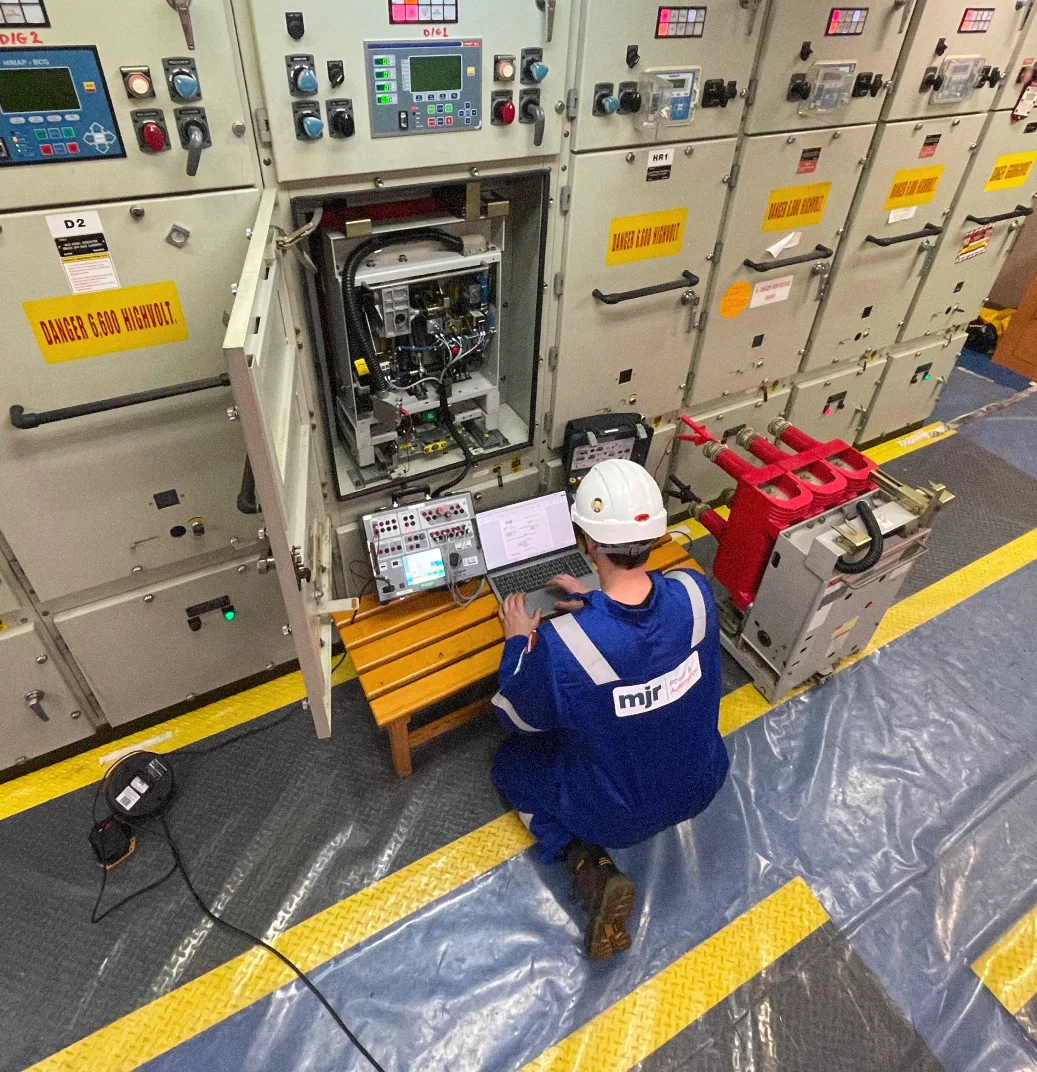
Marine electrical service, fault-finding, repair, testing, retrofit and lifecycle support for vessels and offshore assets.
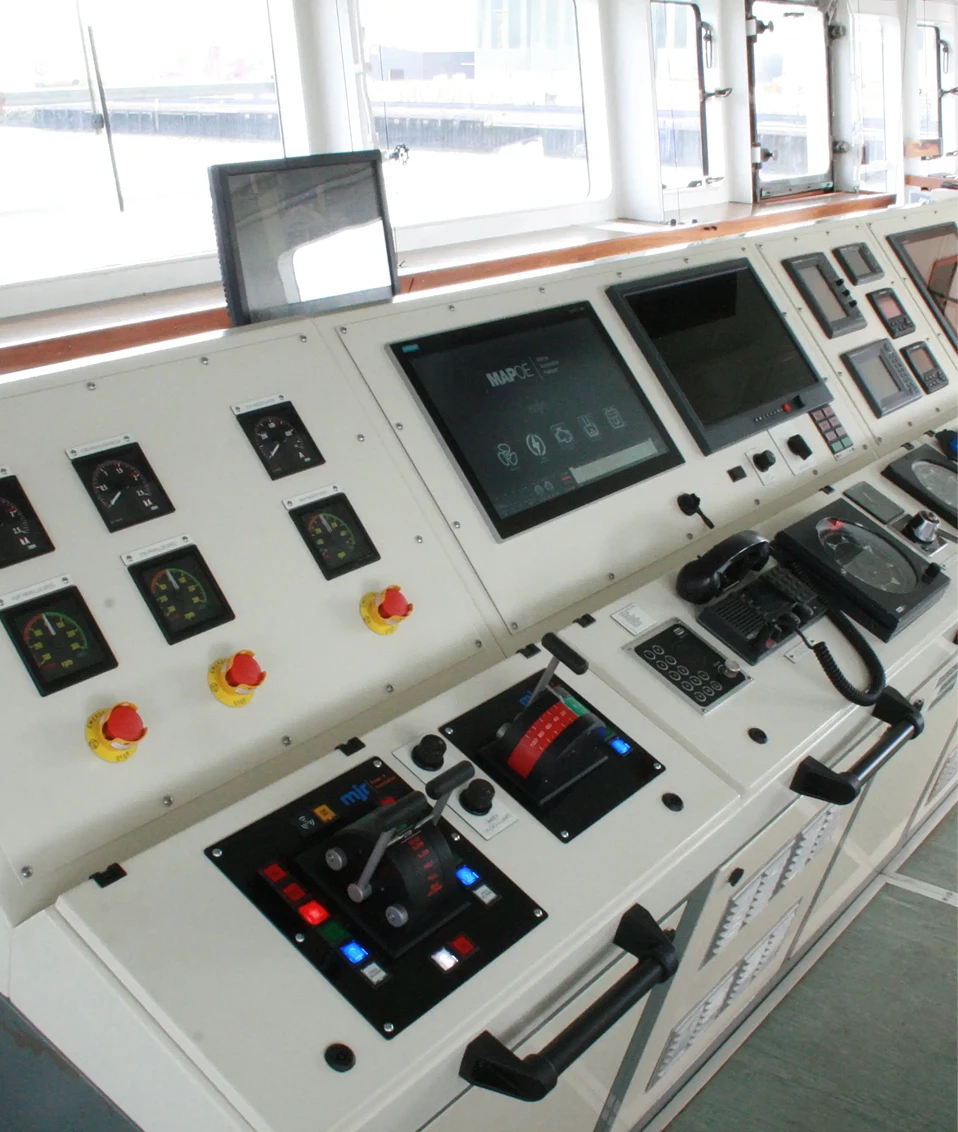
Integrated marine propulsion systems covering electric drives, propulsion control, drive integration, retrofit engineering and commissioning for newbuild and existing vessels.
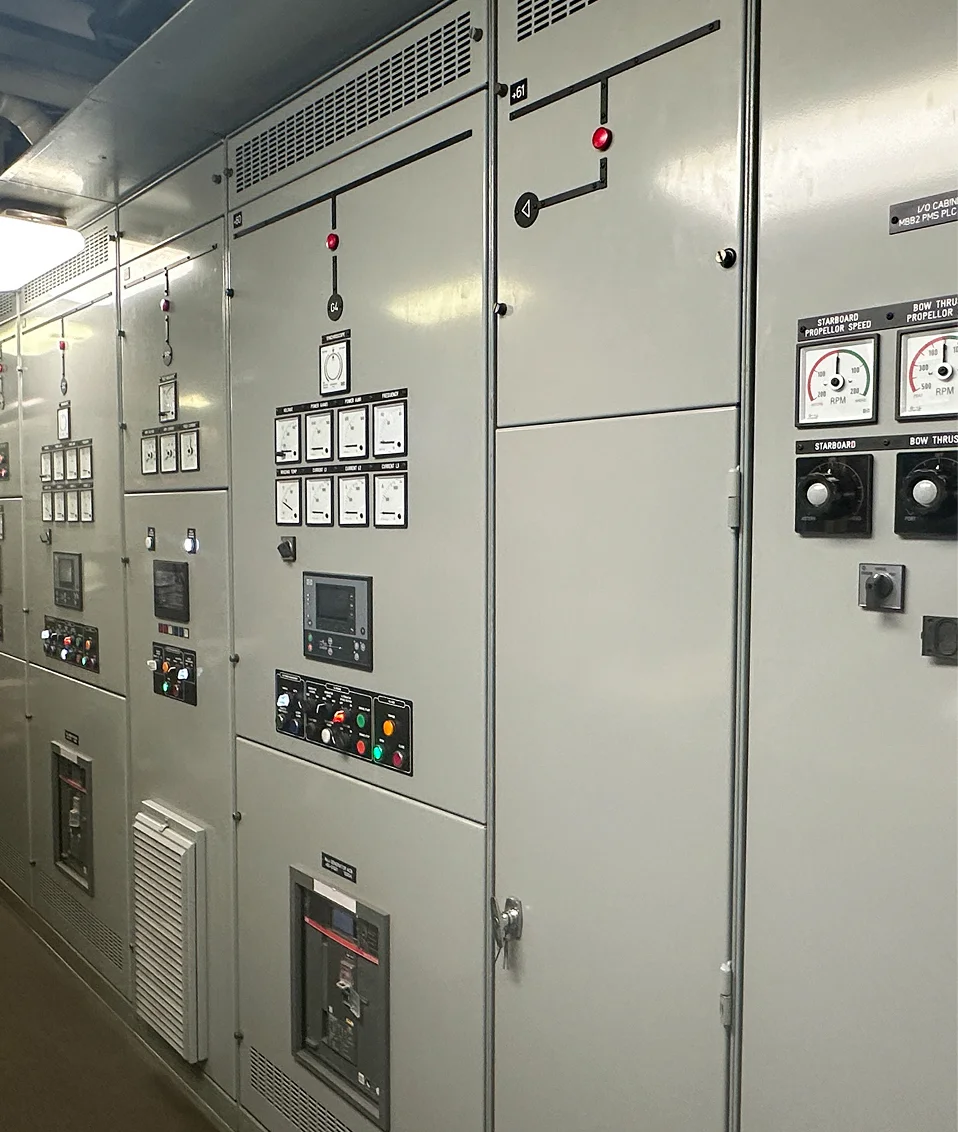
Marine power distribution systems covering generation, switchboards, power management systems, load sharing, protection and electrical distribution.
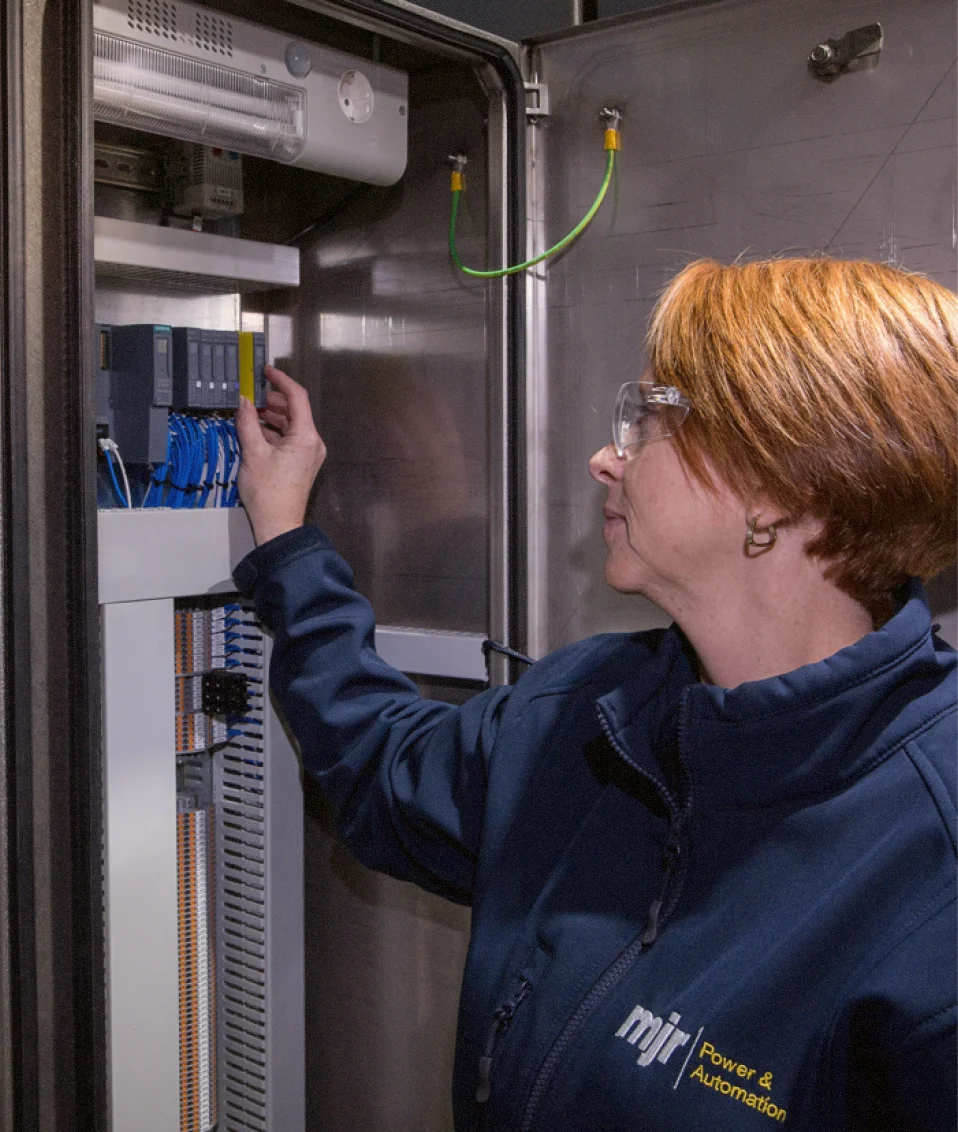
Marine automation systems integrating PLC, DCS, HMI, alarm monitoring, data logging, power management and vessel or offshore control.
Relevant Project Experience
Explore MJR projects involving vessel automation, monitoring, control and power management across newbuild, retrofit and upgrade programmes.
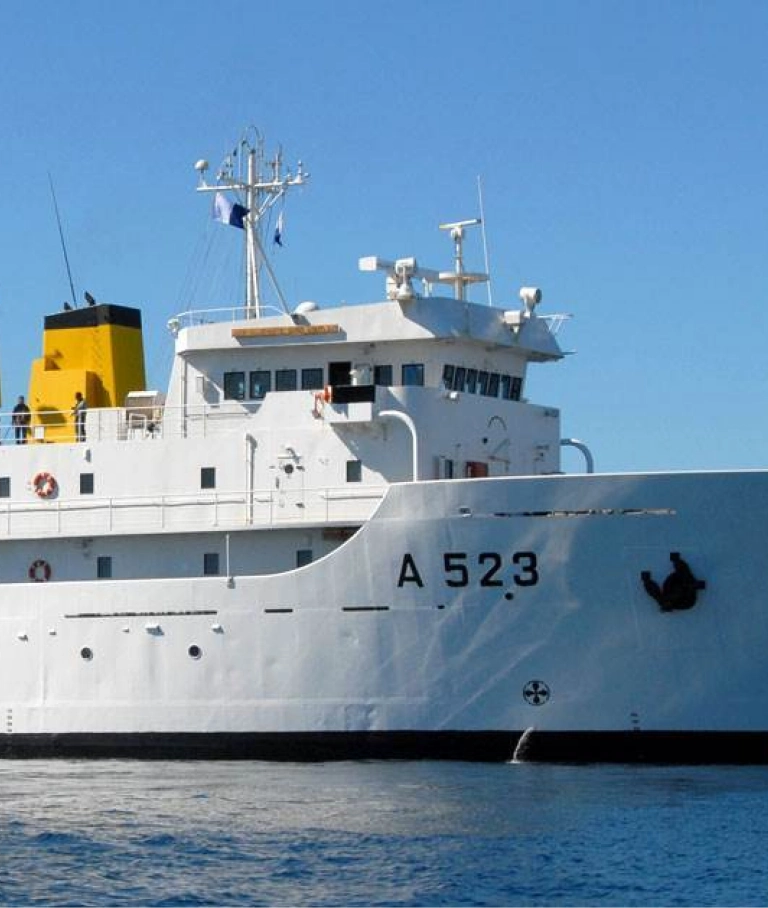
Obsolete DC propulsion drives replaced, existing switchboard cubicles retained.
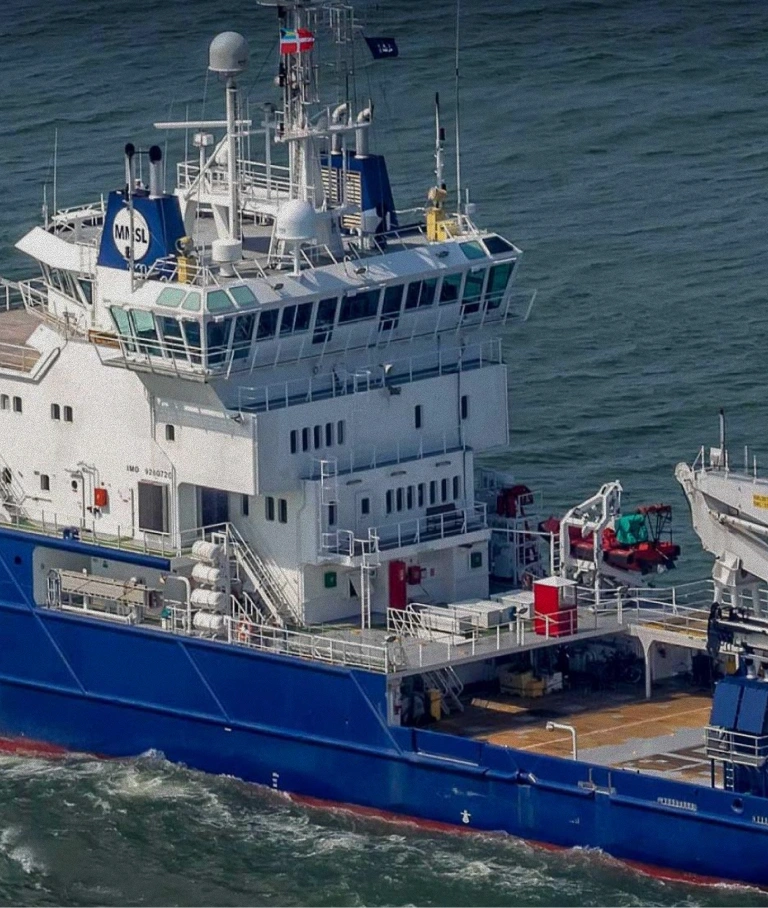
Propulsion Drive and Control System Retrofit — Without Rewiring the Ship
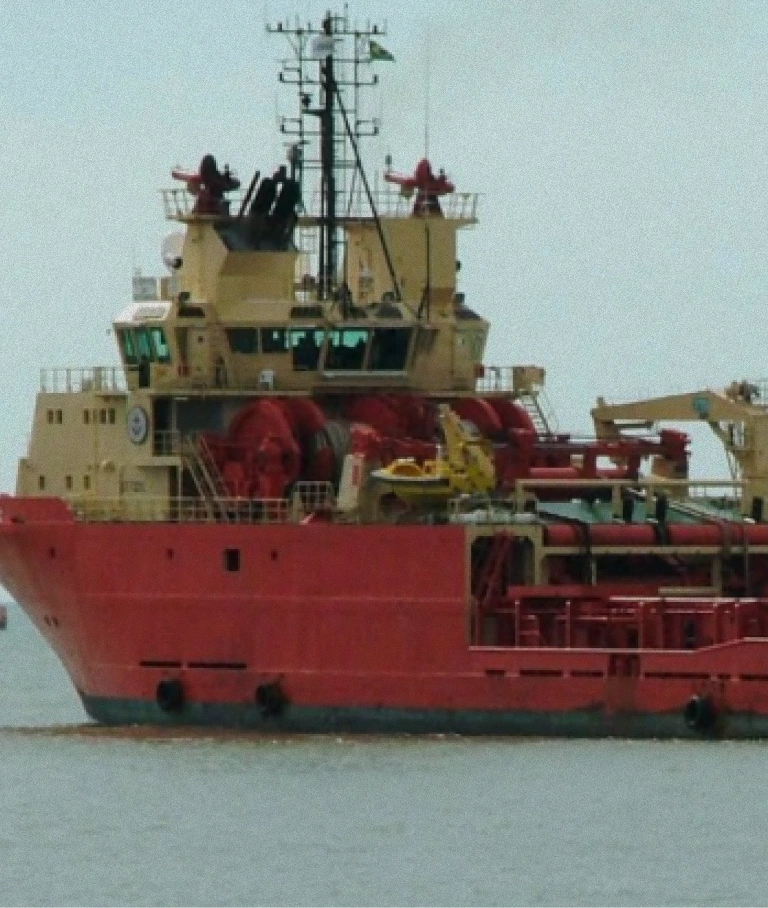
AHTS Battery Hybrid Conversion — Switchboard Rebuild, PMS & Automation Replacement
The Questions We Get Asked Most
Find answers to common questions about the project, including the systems involved, engineering approach, technical challenges and how the solution was delivered.