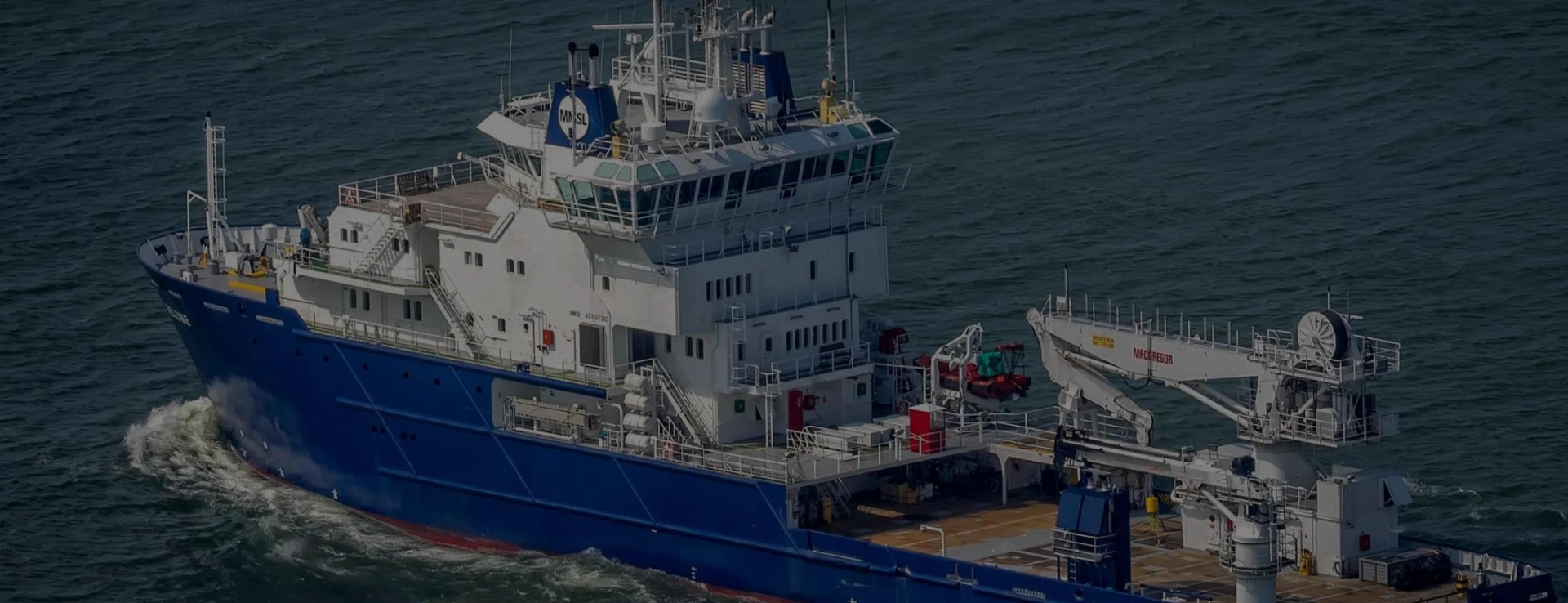
Futureproofing Propulsion Performance: OSV Relume Drive & Control System Upgrade
Propulsion Drive and Control System Retrofit — Without Rewiring the Ship
Project Overview
Drive and Control System Upgrade for OSV Relume
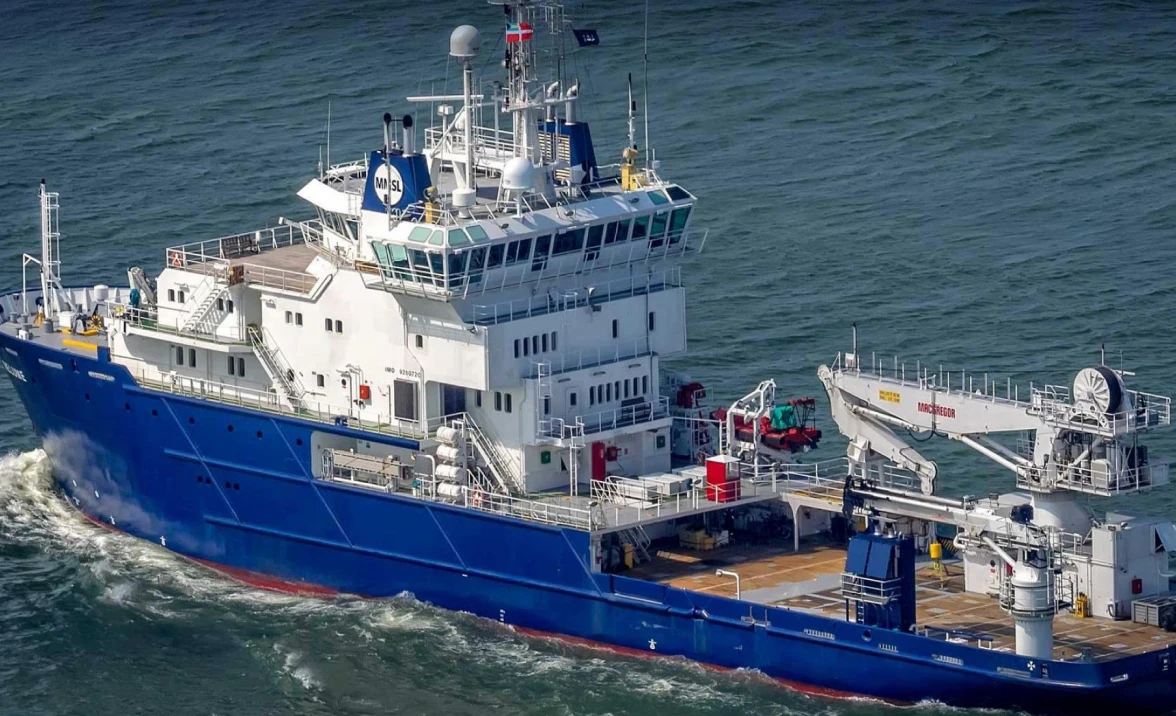
A turnkey drive and control retrofit for OSV Relume that improved propulsion reliability and futureproofed performance.
OSV Relume needed a major propulsion upgrade. Her existing liquid-cooled propulsion drives were reaching the point where both port and starboard systems were at risk of reliability issues, and spare parts availability had become increasingly limited.
That is a particular kind of problem. Nothing had failed, so there was no immediate crisis, but the vessel was accumulating risk with every voyage, and the point at which a failure could not be repaired was getting closer. Class compliance depends on the propulsion system being supportable, not just working.
MJR Power & Automation delivered a turnkey engineering solution, retrofitting the vessel with a modern power and propulsion system: new liquid-cooled drives, replacement PLCs communicating with the drives over PROFINET while hardwired safety signals were retained, enhanced diagnostics, and new operator interfaces, with control retained at the bridge, the engine control room and the local drive control panels.
The upgrade integrated with the vessel's existing thruster, DP and joystick control systems, and avoided major rewiring or infrastructure changes.
Project significance Replacing propulsion drives on a DP vessel means touching the systems that hold her on position. Everything downstream, thruster control, DP, the joystick, has to behave exactly as it did before, on new hardware, or the vessel loses a capability she is chartered for. The measure of success is that the crew notice better diagnostics and nothing else.
The challenge
Replacing the Drives Without Disturbing Anything They Connect To Obsolescence on both propulsion systems at once.
Port and starboard were both at risk. This was not a redundancy problem where one side covers the other, the same exposure applied across the whole propulsion plant.
Spares increasingly unavailable.
Once spare parts availability becomes limited, a repairable fault becomes an unrepairable one. The vessel was operating on borrowed time rather than on a fault.
Class compliance to maintain.
Continued compliance with class requirements depended on the propulsion system remaining supportable, so the upgrade was a compliance matter as well as a reliability one.
Everything downstream had to keep working.
The drives feed into thruster control, DP and joystick control. New drive and PLC technology had to integrate with all of it through the existing analogue and digital signalling, without altering how the vessel handles.
Operator positions had to stay where they were.
Control at the bridge, the ECR and the local drive control panels all had to be retained, so the upgrade could not simplify the arrangement by consolidating it.
No appetite for rewiring.
Major rewiring or infrastructure change was to be avoided, which meant the new equipment had to work with the cabling, cooling and protection already installed.
Scope of Work
Turnkey Drive, PLC and Operator Interface Retrofit
- Replacement of the outdated propulsion drives with modern liquid-cooled units, retaining the braking choppers, cooling cabinets, pipework and protection devices where feasible
- Replacement of the existing PLCs with modern PLCs
- PLC to drive communication via PROFINET, with hardwired safety signals retained
- Enhanced diagnostic capabilities and operator interfaces, with control retained at bridge, ECR and local drive control panels
- Full integration of PLC and drive technology with the thruster, DP and joystick control systems via analogue and digital signalling
- New HMIs at the drive cabinets for local operation and diagnostics
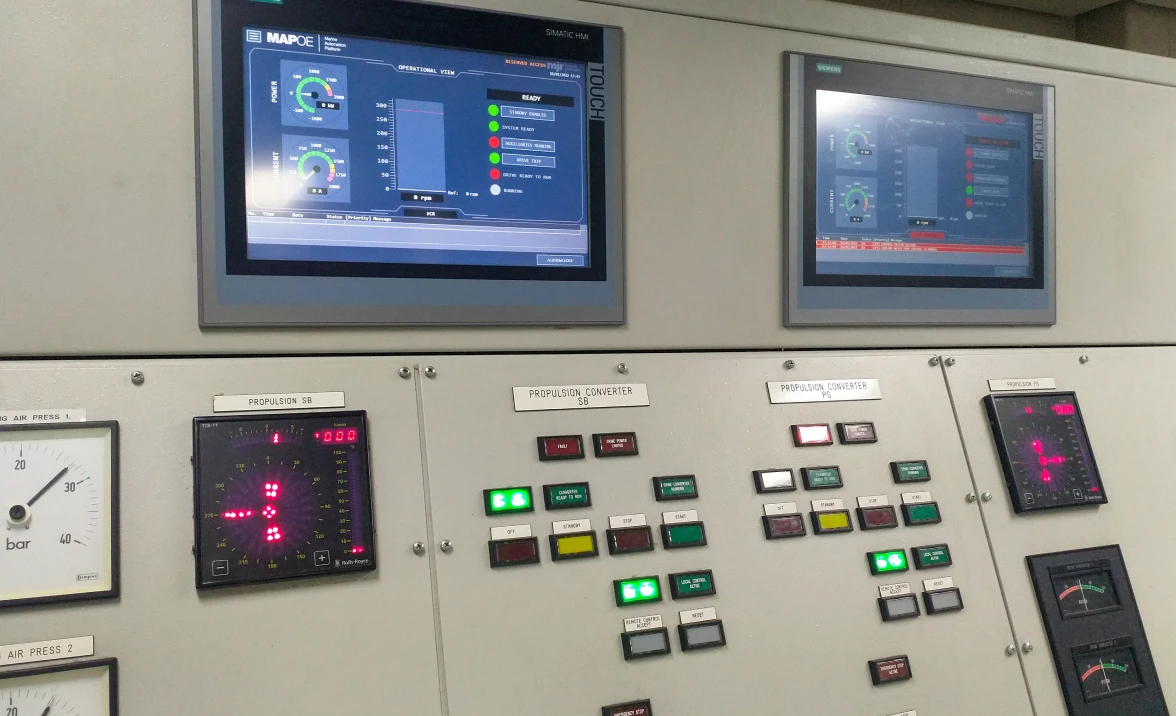
- 15" graphical touchscreen consoles in the ECR providing status, diagnostics and alarm history
The Solution.
The Drives — Modern units into an existing cooling system
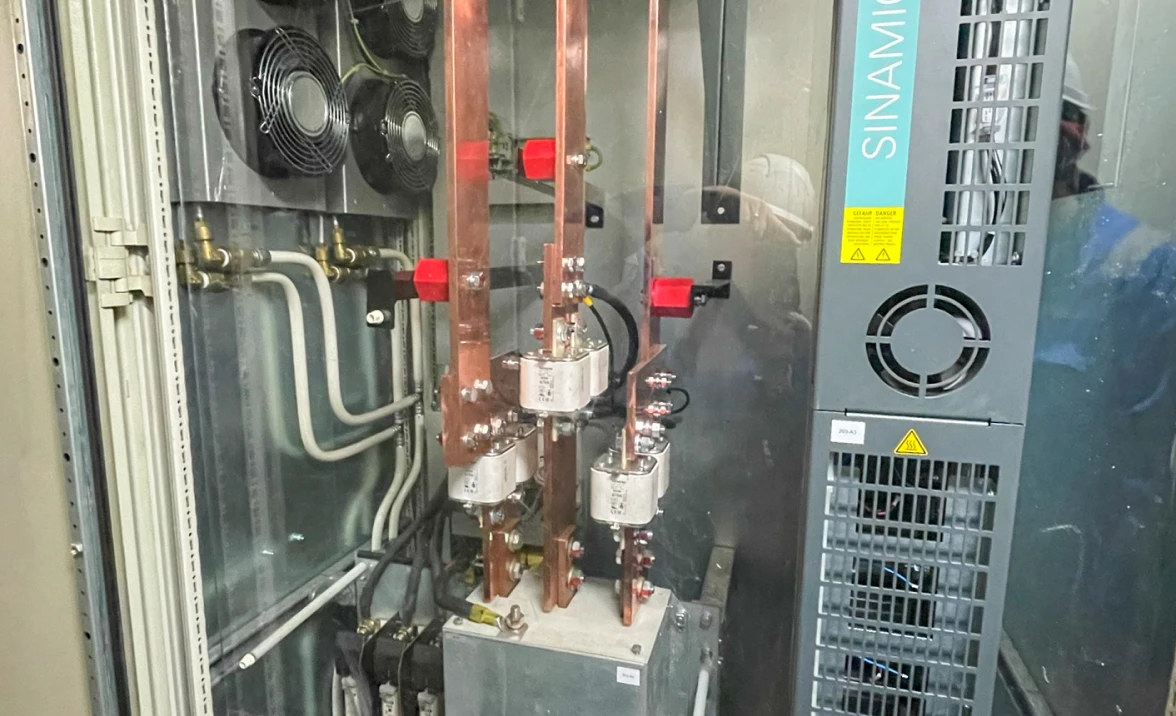
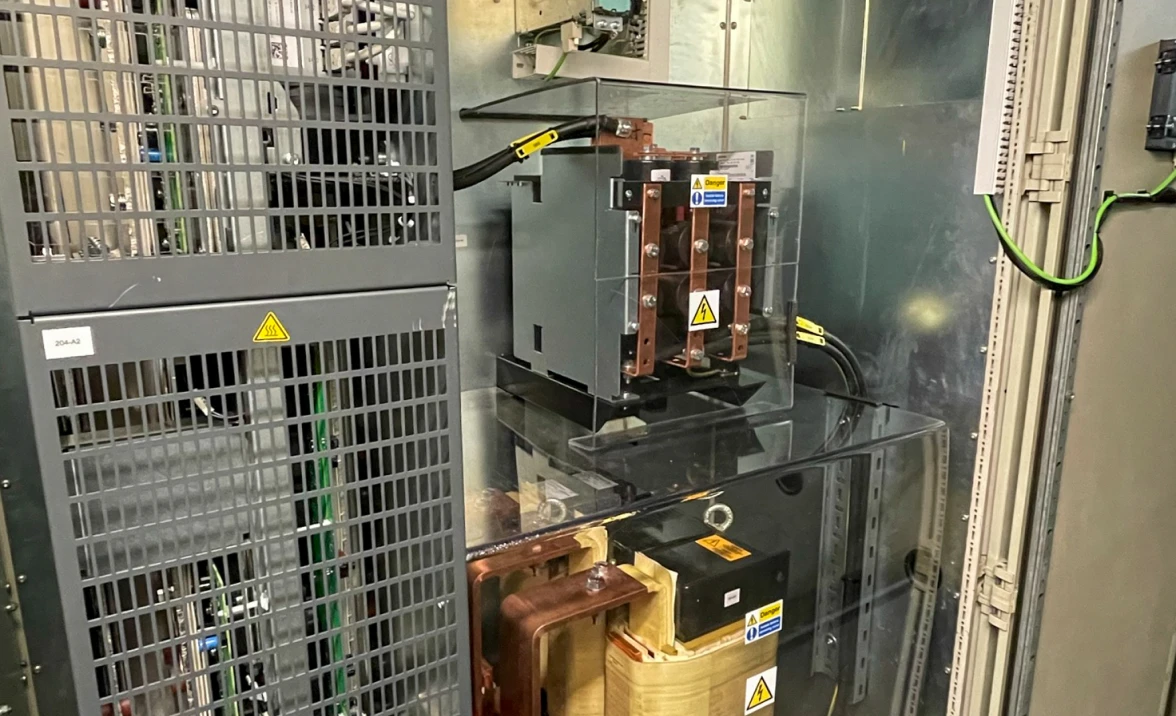
The outdated propulsion drives were replaced with modern liquid-cooled units, with the braking choppers, cooling cabinets, pipework and protection devices retained where feasible.
Keeping the cooling infrastructure is the significant decision. Liquid cooling means pipework, pumps, heat exchangers and the space they occupy, and replacing all of it alongside the drives would have turned an electrical retrofit into a mechanical project. Designing the new drives to work with what was already installed kept the scope, cost and disruption down.
The Controls — PROFINET for control, hardwiring for safety
New PLCs replaced the existing controllers, communicating with the drives over PROFINET. Hardwired safety signals were retained rather than moved onto the network.
That split is deliberate and is good practice. Networked communication gives the control system far more information than discrete signalling can, which is where the improved diagnostics come from, while safety functions stay on dedicated hardwired circuits that do not depend on a network being healthy.
The Integration — Nothing downstream changed
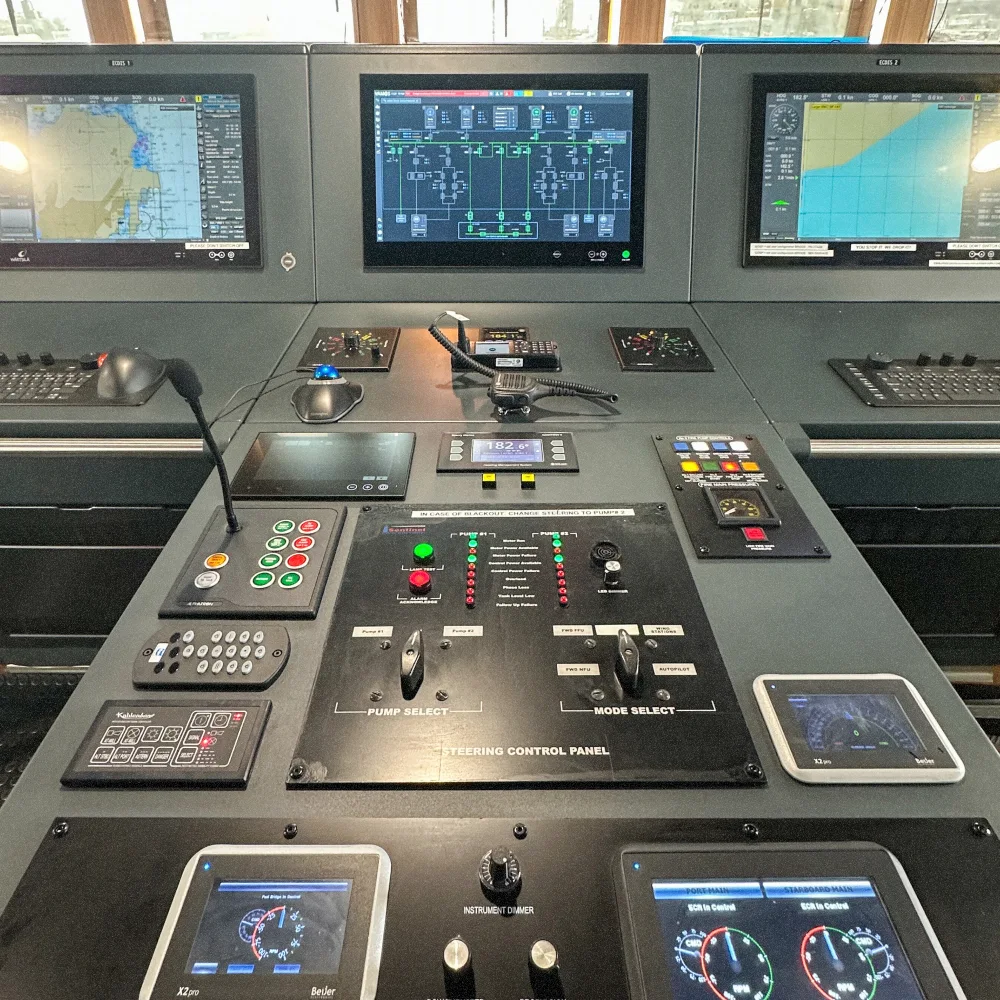
The new PLC and drive technology was fully integrated with the vessel's thruster, DP and joystick control systems through the existing analogue and digital signalling. Operator control remained at the bridge, the engine control room and the local drive control panels.
For the crew, the vessel handles as she did. What changed is what the system can tell them when something is wrong.
The Interfaces — Diagnostics where they are needed
New HMIs were fitted at the drive cabinets, allowing local operation and diagnostics at the equipment itself, alongside 15" graphical touchscreen consoles in the ECR providing status, diagnostics and alarm history.
Alarm history in particular changes how a fault is investigated. An intermittent problem that used to be described by whoever happened to be on watch is now a record.
Delivery & Approval
Delivered Without Major Rewiring or Infrastructure Change
The upgrade delivered enhanced reliability, diagnostics and ease of maintenance through modern drives, PLCs and HMI systems, integrated with the vessel's existing systems and avoiding major rewiring or infrastructure changes.
Technical Summary
- Vessel OSV Relume — offshore support vessel
- Sector Offshore Construction & Subsea
- Driver Reliability risk and limited spare parts availability on both propulsion systems
- Retained Braking choppers, cooling cabinets, pipework and protection devices where feasible
- Control New PLCs; PLC to drive communication over PROFINET
- Safety Hardwired safety signals retained
- Integration Thruster, DP and joystick control via existing analogue and digital signalling
- Operator positions Bridge, ECR and local drive control panels — all retained
- Local interfaces New HMIs at drive cabinets
- ECR interface 15" graphical touchscreen consoles — status, diagnostics and alarm history
- Approach No major rewiring or infrastructure changes
Project Outcomes
Obsolescence risk removed from both propulsion systems.
Modern drives and PLCs replaced equipment whose spares were becoming unavailable, on port and starboard alike.
Class compliance maintained.
Continued compliance with class requirements, which was one of the stated reasons for acting when the vessel was still working normally.
Substantially better diagnostics.
PROFINET communication between PLCs and drives, local HMIs at the cabinets and alarm history in the ECR give the crew far more information than the previous arrangement could.
No major rewiring or infrastructure change.
Achieved by retaining the braking choppers, cooling cabinets, pipework and protection devices, and by integrating with existing signalling to the thruster, DP and joystick systems.
Operator arrangements unchanged.
Control retained at bridge, ECR and local panels, so the crew's working practice did not have to change with the equipment.
Easier maintenance.
Modern, supportable equipment with local diagnostics at the drive cabinets.
Gallery
Share your vessel, equipment and interface requirements with MJR.
VAMOS the marine automation platform for vessel control, alarms, monitoring, power management and operational visibility.
Marine electrical design, FEED studies, calculations and system engineering developed around vessel, offshore and project requirements.
Integrated electrical power, switchboard, control and automation systems engineered, built and tested for demanding marine and offshore applications.
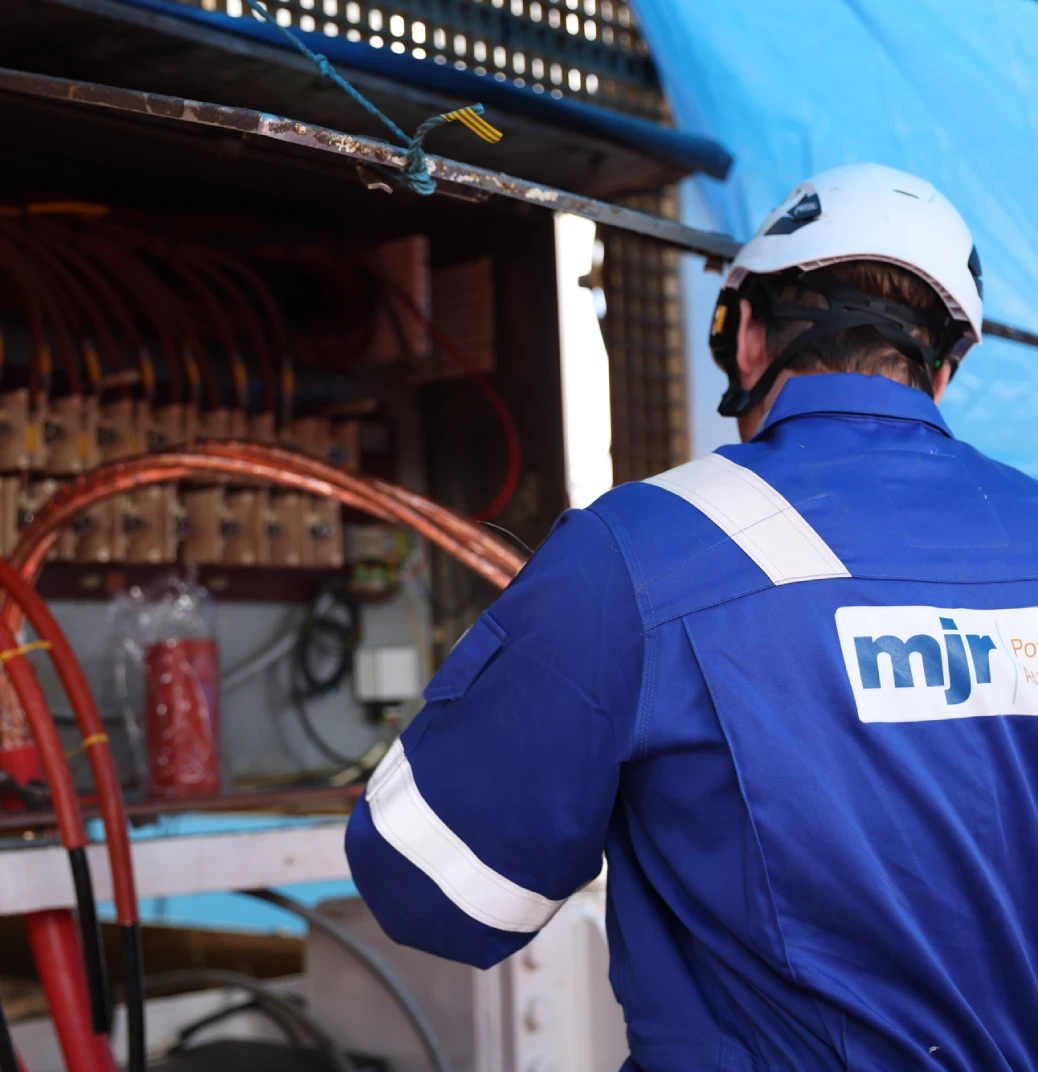
Marine electrical installation, onboard integration, vessel commissioning and functional testing through to technical handover.
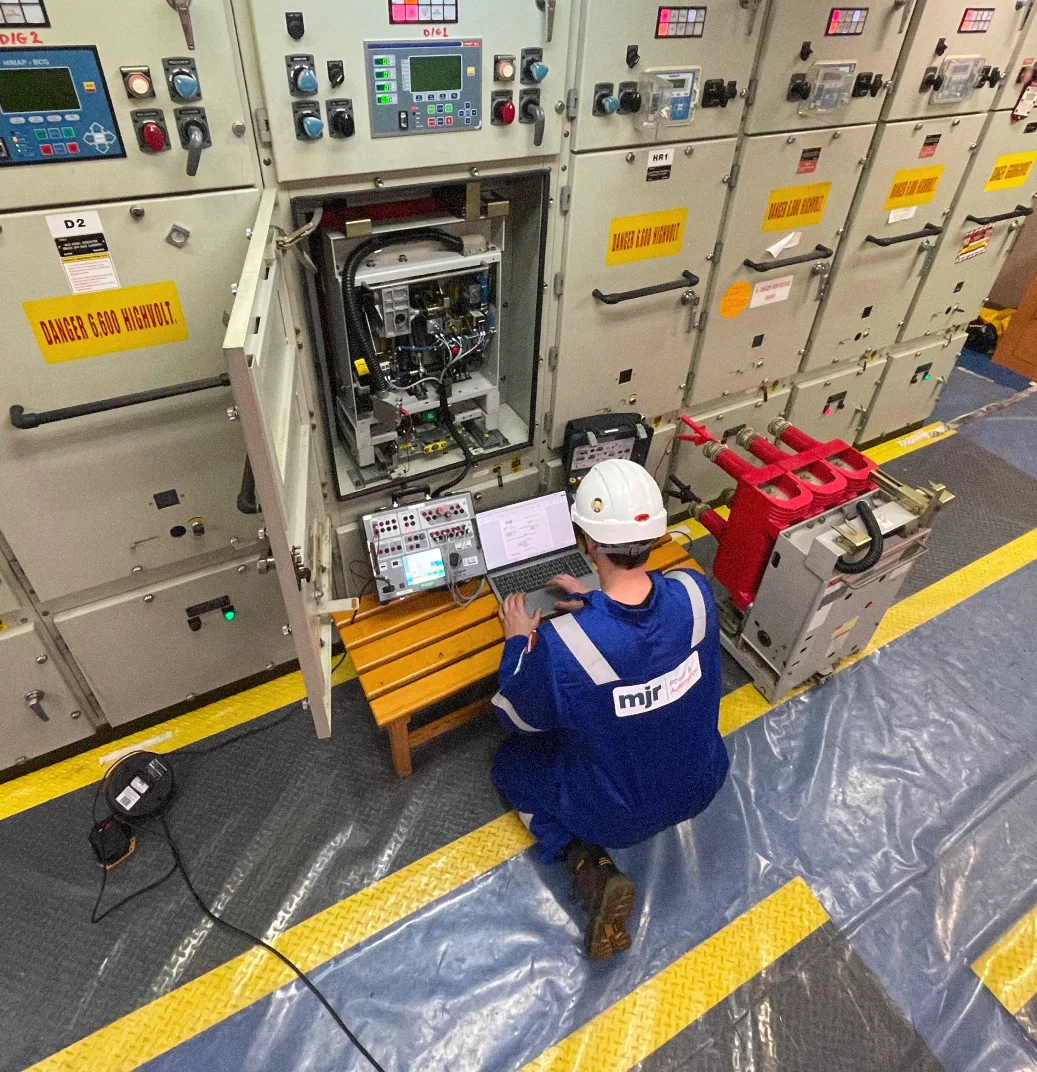
Marine electrical service, fault-finding, repair, testing, retrofit and lifecycle support for vessels and offshore assets.
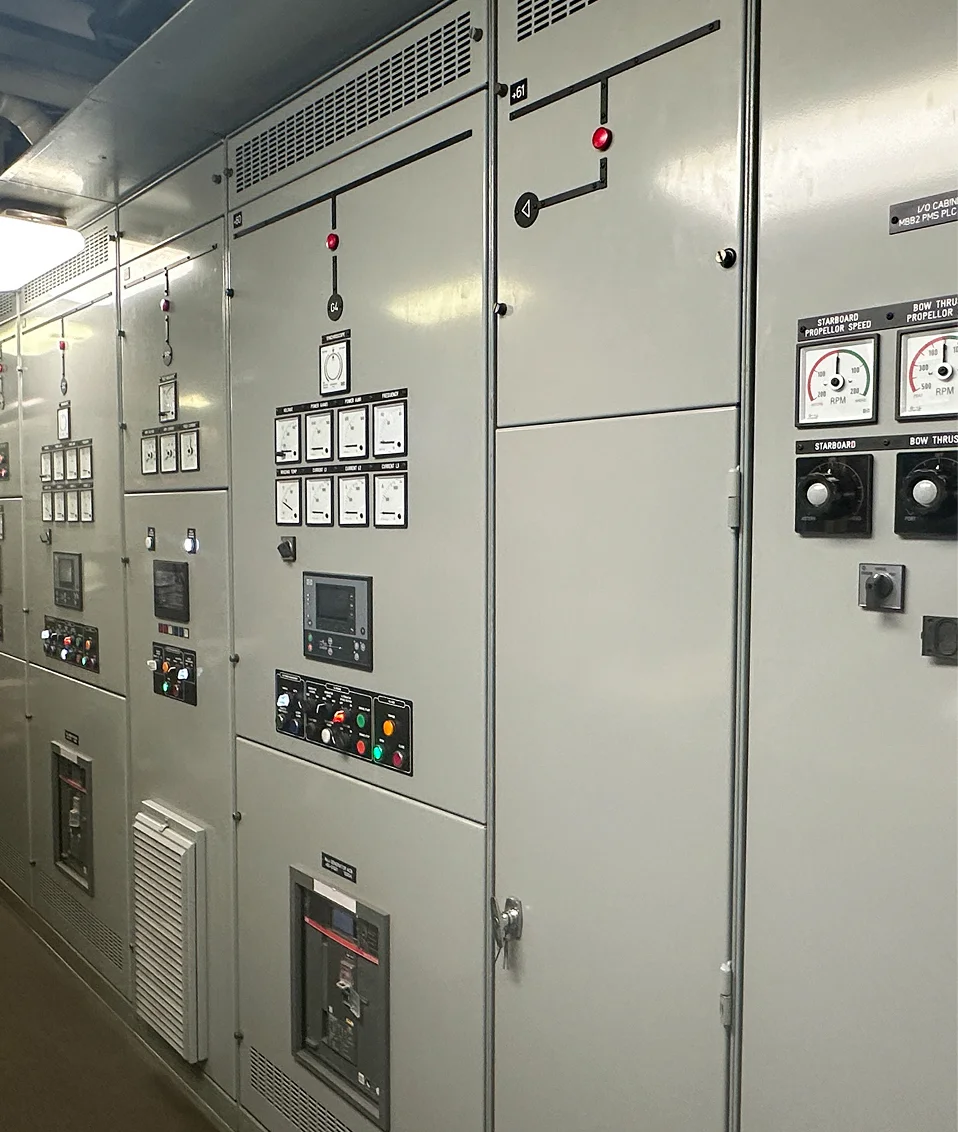
Marine power distribution systems covering generation, switchboards, power management systems, load sharing, protection and electrical distribution.
Sectors we are Powering
Follow MJR project updates, company news and technical insight covering marine electrical engineering, automation, shore power, offshore vessel charging and vessel electrification.
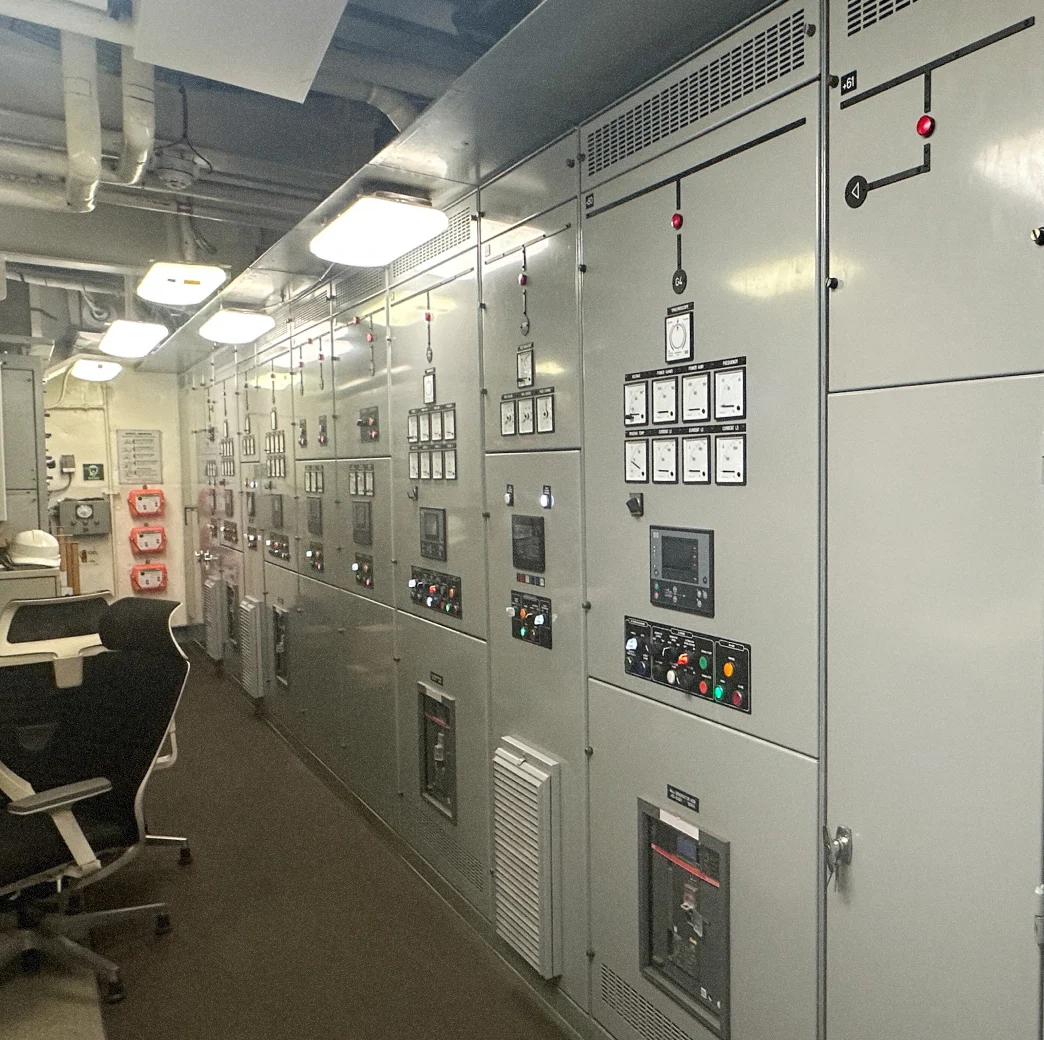
Show how MJR designs, installs, commissions and supports product systems.
Show how MJR designs, installs, commissions and supports product systems.
Relevant Project Experience
Explore MJR projects involving vessel automation, monitoring, control and power management across newbuild, retrofit and upgrade programmes.
Obsolete DC propulsion drives replaced, existing switchboard cubicles retained.

Dredger Life Extension — Power, Propulsion, Dredging & Automation
Ballast Control System Replacement — Installed In Service

Five-Year Electrical Healthcare and Drive Maintenance — Six Countries, Four Continents
The Questions We Get Asked Most
Find answers to common questions about the project, including the systems involved, engineering approach, technical challenges and how the solution was delivered.