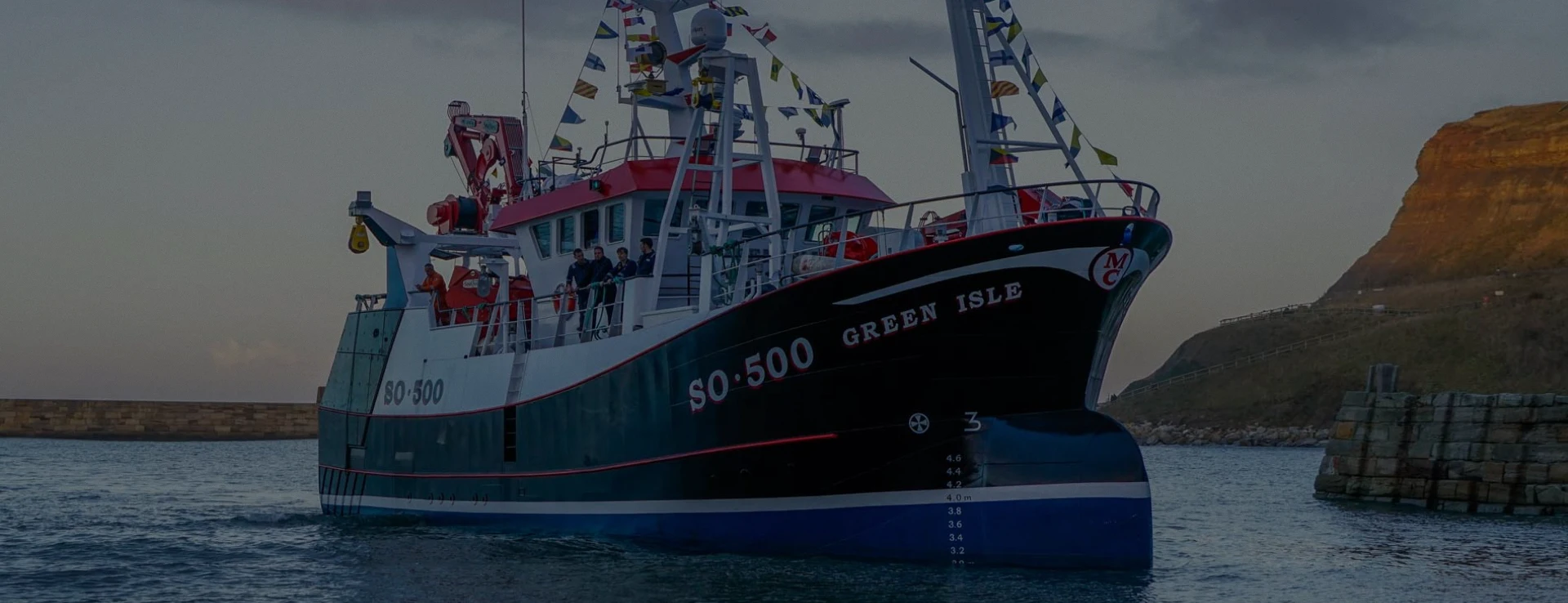
Parkol New Build Trawler – Main Switchboards, Automation and Installation
Complete Main and Auxiliary Power Plant for a 22.2m New Build Trawler
Project Overview
MJR Power & Automation Delivers the Complete Electrical Power Plant for Parkol's Trawler Green Isle
Design, manufacture, installation and commissioning of every switchboard on the vessel, main, RSW, harbour and auxiliary, as a single turnkey scope.
Parkol Marine Engineering builds and repairs fishing vessels at its yards in Whitby. Green Isle is a 22.2-metre trawler built there as a new vessel, and Parkol contracted MJR Power & Automation to provide the complete main and auxiliary power plant.
The scope covered main power generation, distribution and automation integration across the whole vessel: dual 400VAC main switchboards, a dedicated switchboard for the refrigerated seawater plant, a harbour generator and shore power interface, and the 230VAC and 24VDC distribution boards feeding everything from the galley to the navigation equipment. MJR Power & Automation designed and manufactured all of it, then installed and commissioned it on board.
On a boat this size, the electrical system is not a subsystem, it is what makes the catch worth landing. The refrigerated seawater plant, the deck machinery, the navigation and communications equipment and the crew accommodation all run off it, and there is no shoreside engineer to call when it stops.
Project significance A 22-metre hull has no switchroom. Every cubicle has to be dimensioned to the space the vessel can give it rather than the space the equipment would prefer, in an engine room that is already full, hot and moving, and an engineer still has to be able to open a door and work in front of it at sea. The constraints on a small working boat are harder than on a large vessel, not easier.
The challenge
The vessel required an advanced, robust electrical architecture capable of handling multi-generator operation, onboard automation and system redundancy, all within the tight footprint and environmental demands of a working trawler.
Space
A 22.2-metre hull has no switchroom. Switchboards go where there is room for them, which usually means an engine room that is already full, hot and moving. Every cubicle has to be dimensioned to what the vessel can give it rather than what the equipment would prefer.
Environment
Salt-laden air, constant vibration, wash-down water and a working deck are the normal operating environment, not the worst case. The RSW switchboard in particular sits close to seawater plant, which is why it was housed in corrosion-resistant enclosures.
Continuity
A fishing vessel with a hold full of chilled catch cannot afford a blackout. Losing the RSW plant is not an inconvenience, it is the value of the trip. That is the reason for the interlocked bus-tie arrangement, the essential and non-essential segregation, and the no-break transfer between generators and shore supply.
Scope of Work
MJR Power & Automation provided a turnkey electrical switchboard package covering:
- Design and manufacture of all main and auxiliary switchboards
- Control system integration for the generators, the RSW plant and auxiliary equipment
- Dual 400VAC main switchboards with generator protection, circuit breakers and interlocked bus-tie sections
- A dedicated RSW switchboard in corrosion-resistant enclosures with local instrumentation and controls
- A 40 kVA, 415V/50Hz harbour generator and shore power switchboard with full metering and interlocked changeover
- 230VAC galley, cabin and wheelhouse distribution panels for hotel and domestic systems
- 24VDC essential and non-essential boards for emergency lighting, communications, navigation and fire safety
- Onboard installation of all switchboards, distribution panels and control cubicles
- Full cable routing, termination and identification across the vessel
- Functional testing and certification to Marine Survey Office and Bureau Veritas standards
Solutions Delivered
Main switchboards
More than 800 metres of new marine power cable was supplied, installed and terminated to serve the upgraded automation system, replacing the existing power distribution cabling on the routes involved.
The Network — 900 metres of ethernet and 350 metres of fibre
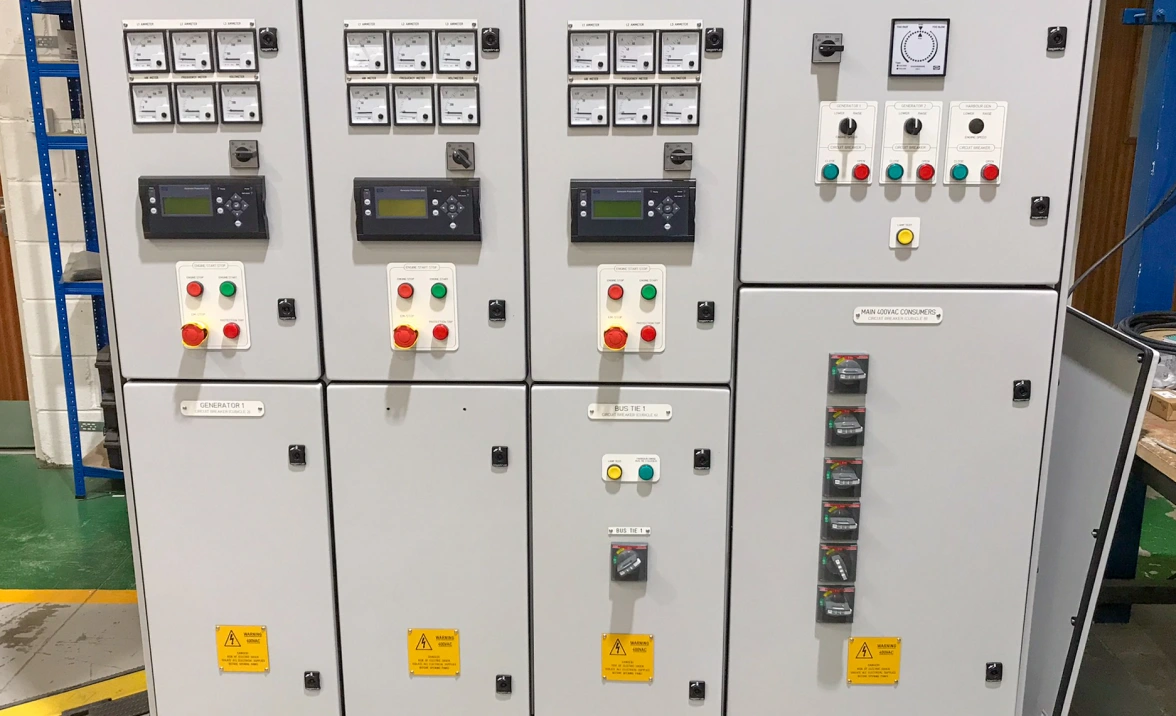
Two 400VAC switchboards form the backbone of the vessel's electrical infrastructure. They are built as modular cubicles housing generator control, circuit breakers and interlocked bus-tie sections, so the two boards can run isolated from one another or tied in parallel depending on what the vessel is doing.
Generator protection relays are integrated into the boards for overload protection and system monitoring, and the boards provide synchronisation and no-break transfer between the main generators and shore power. The vessel can move between its own generation and the quayside supply without dropping the load.
RSW (refrigerated seawater) switchboard
A dedicated switchboard provides control and distribution for the refrigerated seawater system, serving the vacuum pump, the refrigeration plant and the ice machine. It is housed in corrosion-resistant enclosures and fitted with local instrumentation and controls, so the plant can be operated and monitored at the equipment rather than only from the wheelhouse.
RSW is what keeps the catch at temperature from the moment it comes aboard until it is landed. It is the system that determines what the trip is worth, and it is the reason a trawler's electrical design is not simply a scaled-down version of a workboat's.
Harbour generator switchboard
A 40 kVA, 415V/50Hz switchboard forms the shore and harbour power interface. It carries a full metering suite for voltage, current and phase monitoring, with interlock-protected changeover between the onboard and shore power systems so the two supplies cannot be paralleled unintentionally.
Auxiliary distribution
230VAC distribution panels serve the galley, cabins and wheelhouse for hotel and domestic systems. Separate 24VDC essential and non-essential boards supply emergency lighting, communications, navigation equipment and fire safety systems.
Essential and non-essential supplies are segregated throughout, so that a fault or a shed load on the domestic side cannot take navigation, communications or fire safety with it. On a vessel that operates well offshore with a small crew, that segregation is a safety measure rather than a convenience.
Automation and control
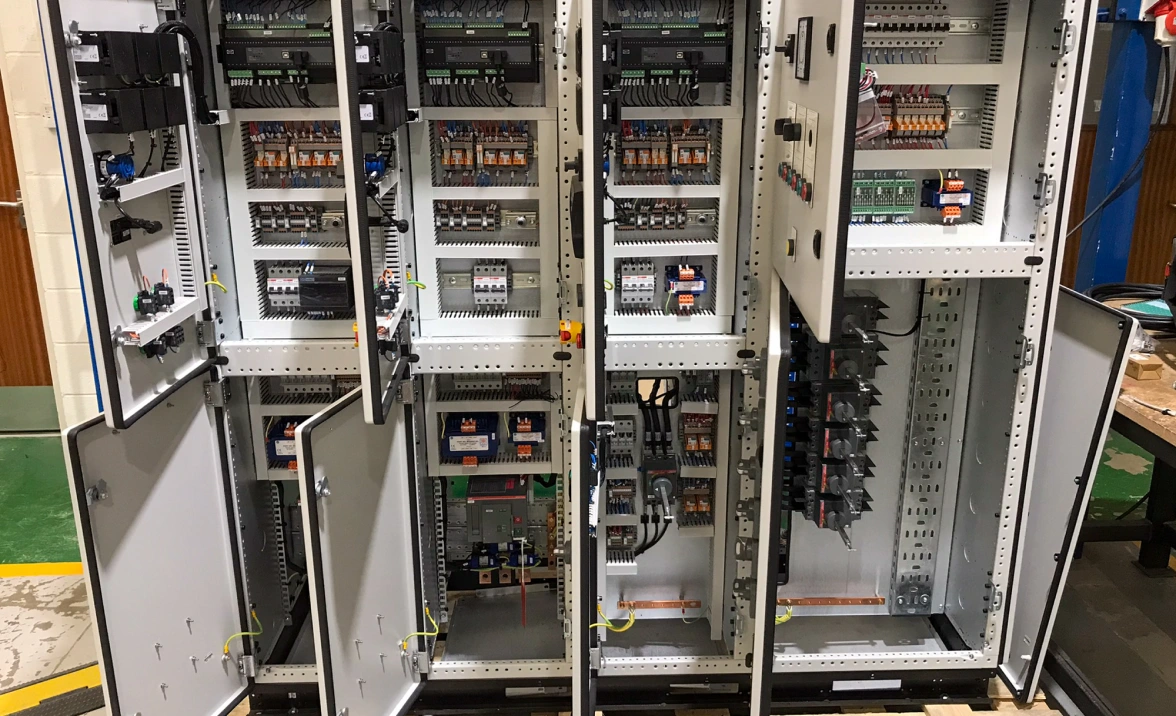
There is no PLC on Green Isle. Power management is built from dedicated protection units and hardwired relay logic, with no software layer between a fault and the breaker that clears it. Each of the three sets, two main generators and the harbour set, has a control cubicle built around a generation protection unit covering reverse power, overcurrent, over- and undervoltage and frequency, and inhibiting closure onto the bus until the set is within limits.
A dedicated synchronisation cubicle handles the transfer between supplies. A check synchronising relay confirms the two are in step before release to motor operators on the generator breakers, with the bus tie interlocks wired to enforce their own sequence. The generators synchronise for the moment of changeover rather than running in parallel sharing load, which is what makes the no-break transfer possible without a load-sharing scheme this vessel would rarely use.
If a set reports a protection fault, a preferential trip sheds the RSW feeder and signals the ship's alarm system. Shedding the most valuable load first looks wrong until you follow it through: a hold of chilled fish has thermal inertia measured in hours, while a board that goes down takes navigation and communications with it.
Delivery & Approval
MJR Power & Automation deployed its electrical engineering team to Parkol's Whitby shipyard and to the Port of Middlesbrough, working alongside Parkol's production team through the installation phase.
On board, MJR installed all switchboards, distribution panels and control cubicles, carried out full cable routing, termination and identification across the vessel, and integrated the generator protection, RSW and auxiliary systems. The installation was then functionally tested and certified.
Technical Summary
- Client Parkol Marine Engineering
- Vessel Green Isle — new build stern trawler
- Length overall 22.2 metres
- Sector Commercial fishing
- Main distribution Dual 400VAC main switchboards, modular cubicle construction
- Bus arrangement Interlocked bus-tie sections permitting isolated or parallel operation
- Generation Two main generators, 188 kVA / 150 kW and 187 kVA / 149 kW, 400V 3ph 50Hz at 0.8 pf; harbour generator 40 kVA / 32 kW, 415V; 63A shore inlet
- Generator protection Integrated protection relays for overload protection and system monitoring
- Shore interface Synchronisation and no-break transfer between main generators and shore power
- Harbour / shore board 40 kVA, 415V/50Hz, full voltage, current and phase metering, interlocked changeover
- RSW switchboard Dedicated control and distribution for vacuum pump, refrigeration plant and ice machine; corrosion-resistant enclosures; local instrumentation
- AC distribution 230VAC galley, cabin and wheelhouse panels
- DC distribution 24VDC essential and non-essential boards — emergency lighting, communications, navigation, fire safety
- Segregation Essential and non-essential supplies segregated for redundancy and safety
- Automation Hardwired relay logic and dedicated protection units; no PLC, no HMI, no unattended machinery space capability
- Certification Marine Survey Office and Bureau Veritas standards
- Installation locations Parkol shipyard, Whitby; Port of Middlesbrough
- MJR scope Design, manufacture, supply, installation, commissioning and certification
Project Outcomes
- A complete electrical power plant delivered by a single supplier, from concept design through to certified commissioning, leaving the yard with one point of responsibility rather than several
- Multi-generator operation with interlocked bus-tie sections, allowing the vessel to run split or parallel to suit steaming, fishing and harbour conditions
- No-break transfer between ship's generation and shore supply, so the refrigerated seawater plant stays running through changeover
- Segregated essential and non-essential supplies, keeping navigation, communications and fire safety independent of domestic and hotel loads
- Dedicated RSW control and distribution, purpose-built and corrosion-protected for the vessel's most commercially critical system
- Installation and certification completed at the yard to Marine Survey Office and Bureau Veritas standards, with no third-party interface for Parkol to manage
Gallery
Share your vessel, equipment and interface requirements with MJR.
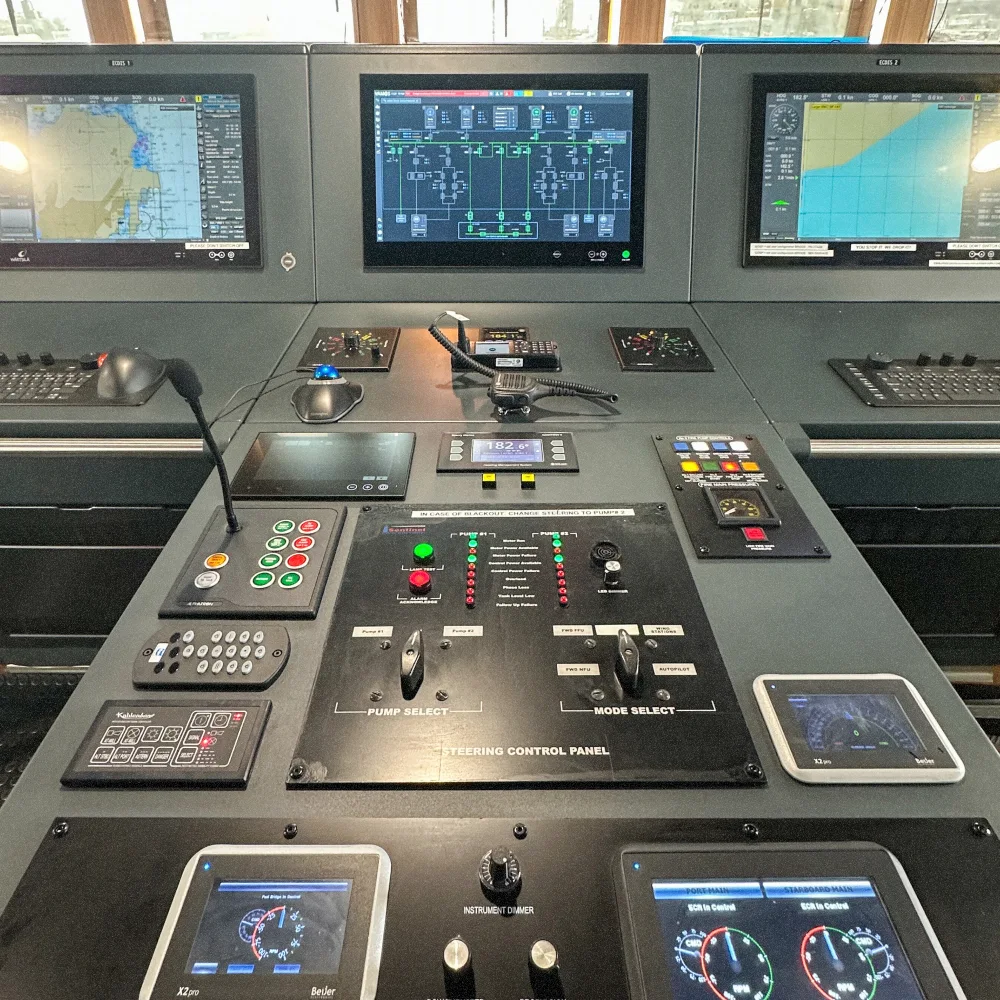
VAMOS the marine automation platform for vessel control, alarms, monitoring, power management and operational visibility.
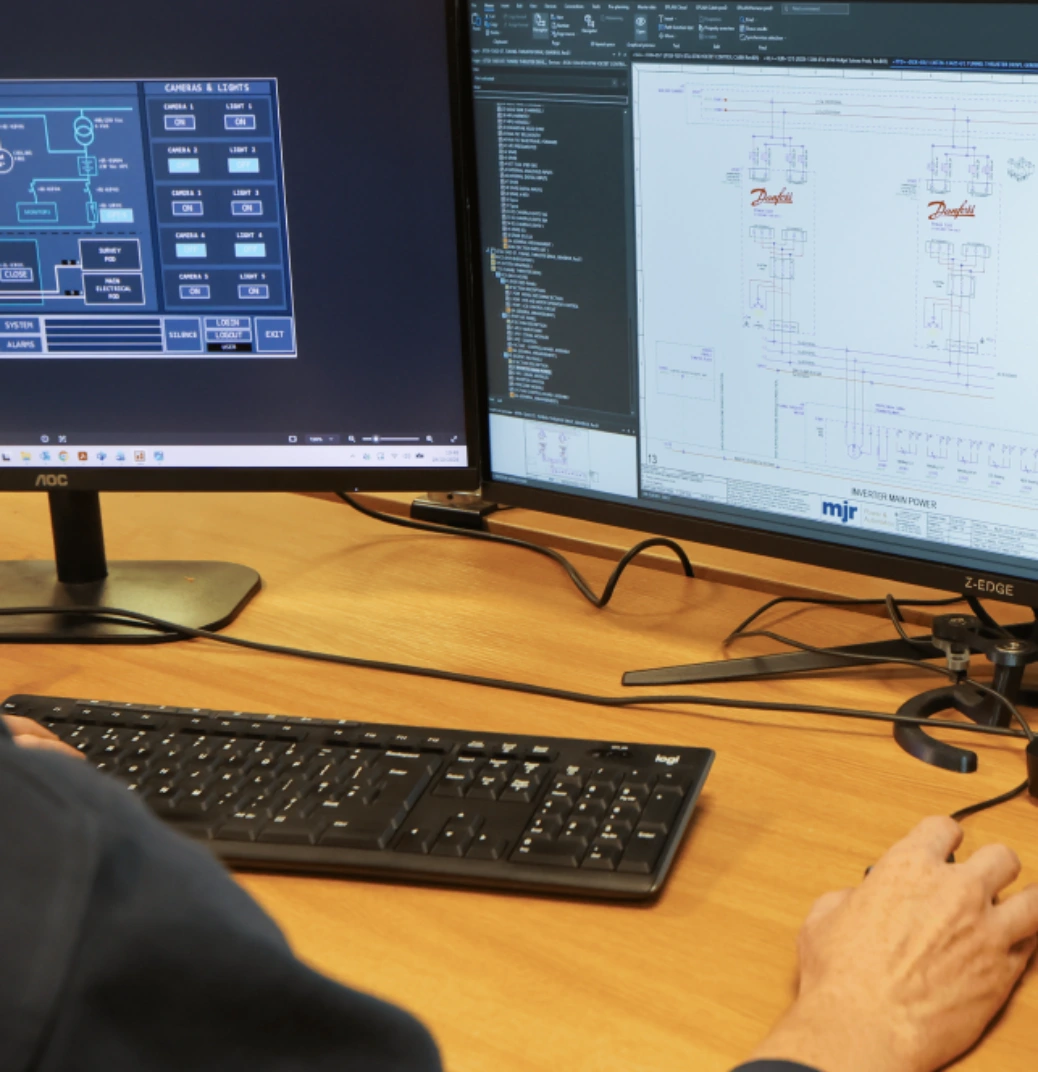
Marine electrical design, FEED studies, calculations and system engineering developed around vessel, offshore and project requirements.
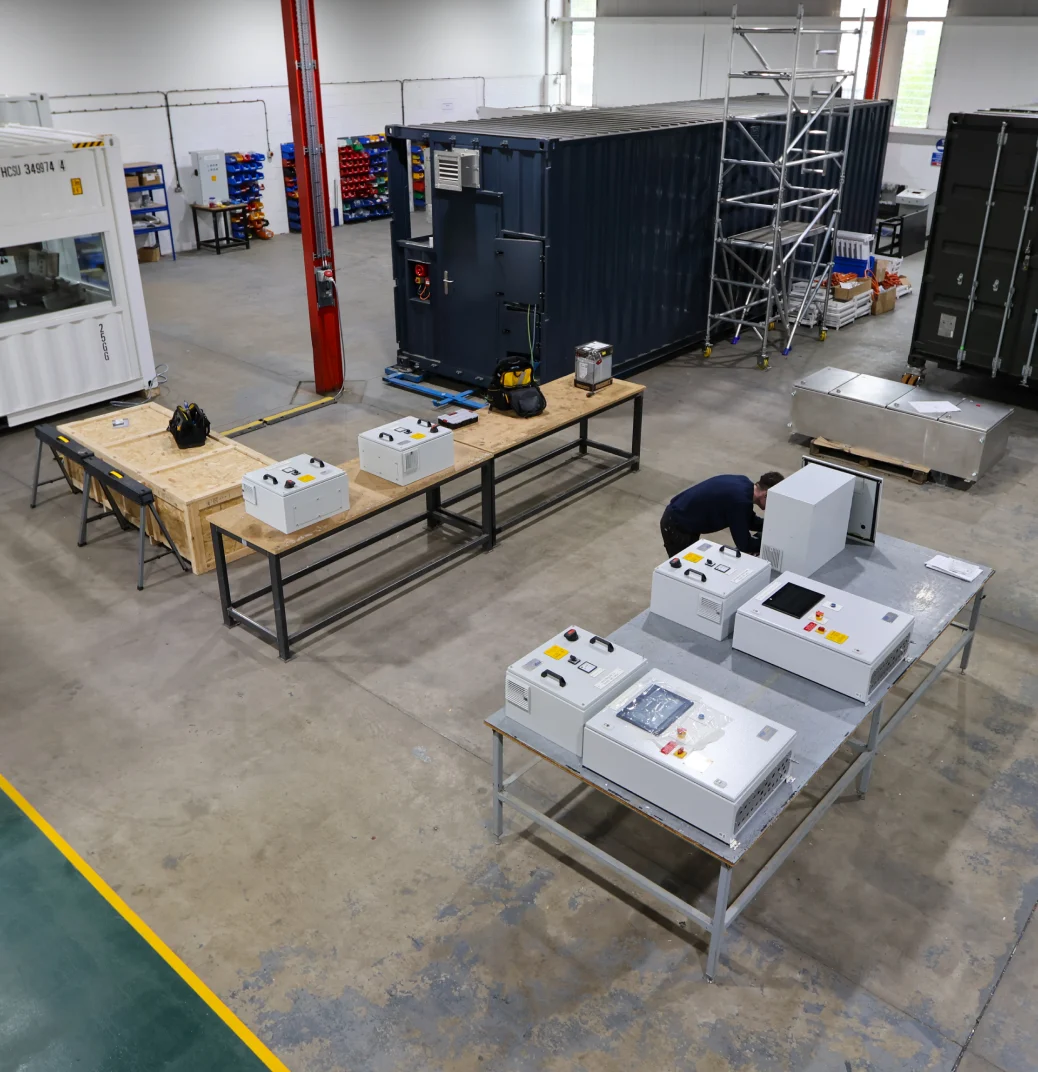
Integrated electrical power, switchboard, control and automation systems engineered, built and tested for demanding marine and offshore applications.
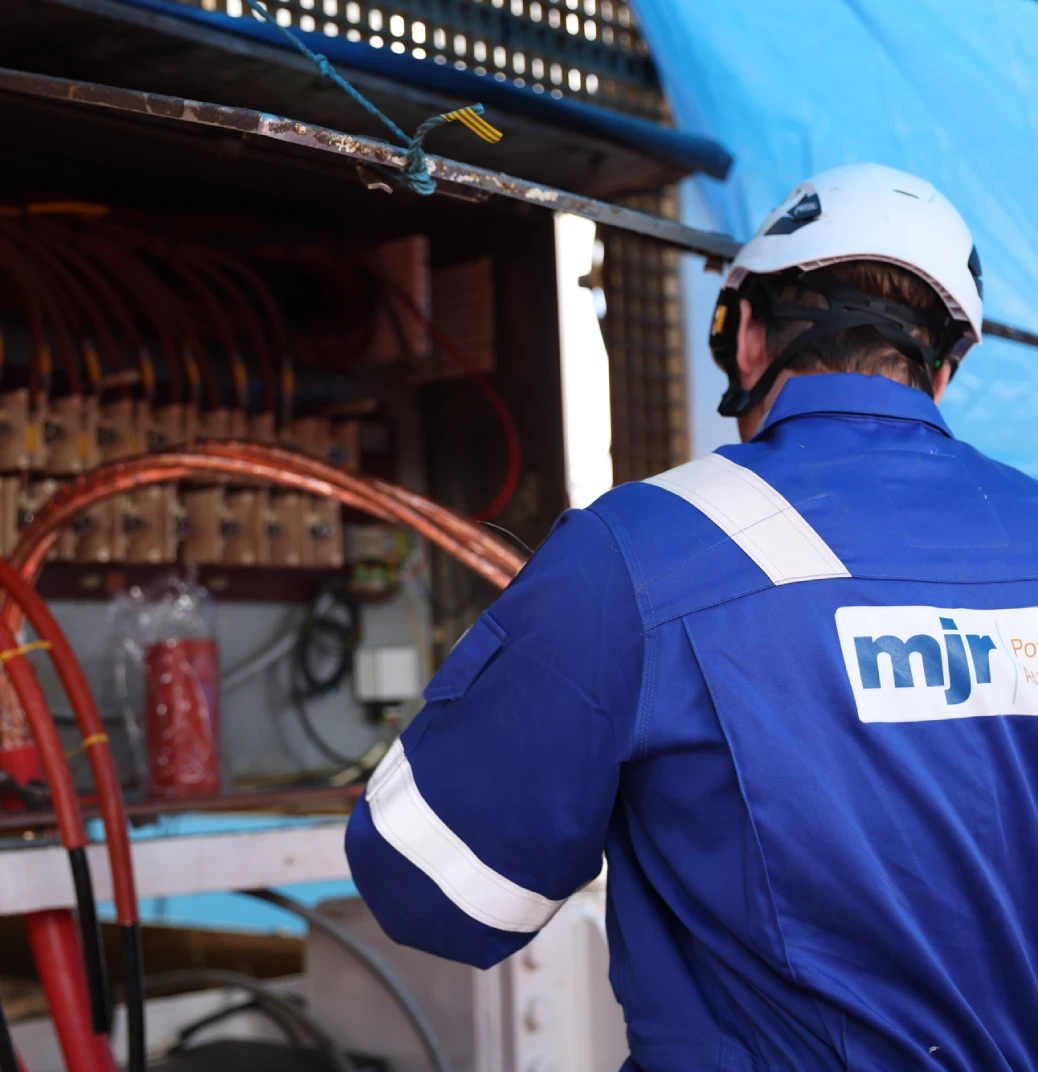
Marine electrical installation, onboard integration, vessel commissioning and functional testing through to technical handover.
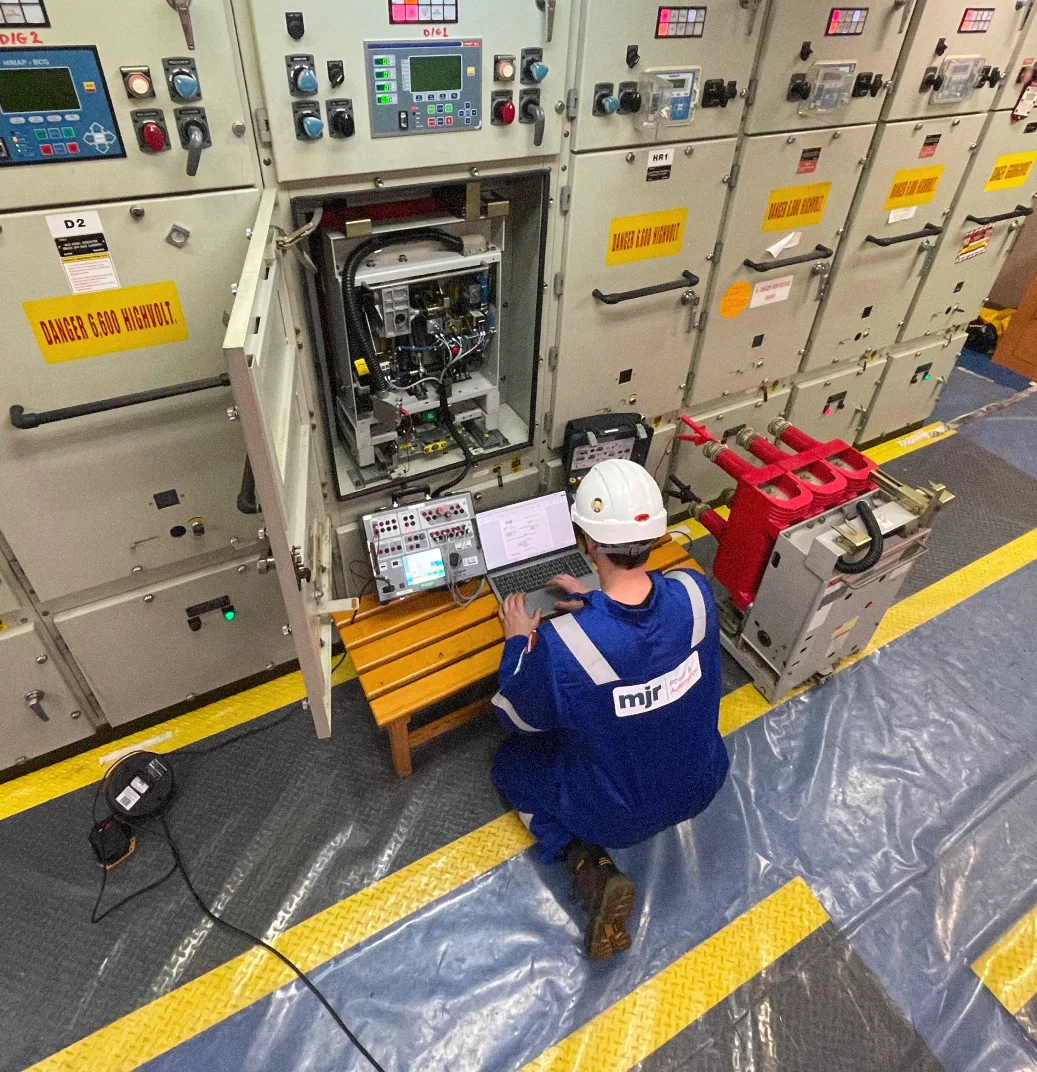
Marine electrical service, fault-finding, repair, testing, retrofit and lifecycle support for vessels and offshore assets.
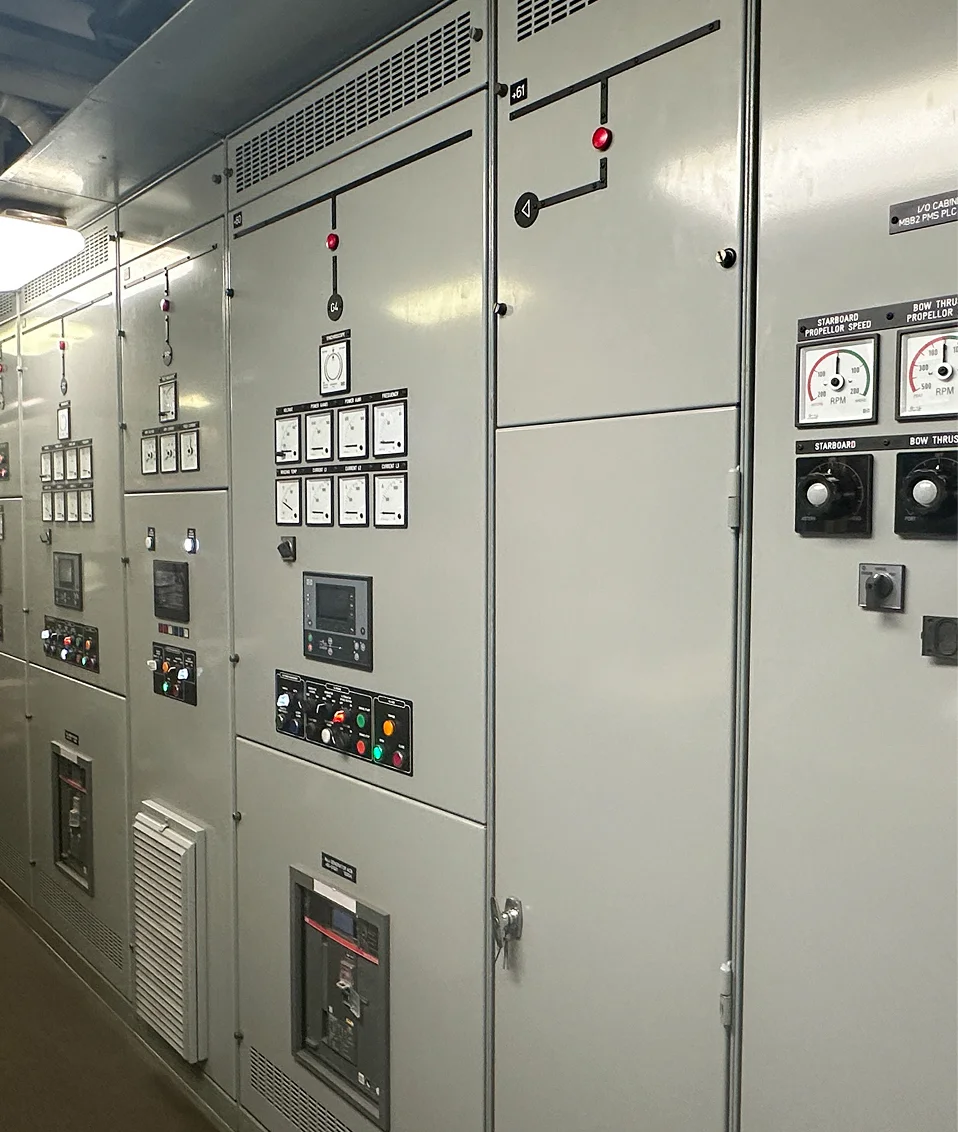
Marine power distribution systems covering generation, switchboards, power management systems, load sharing, protection and electrical distribution.
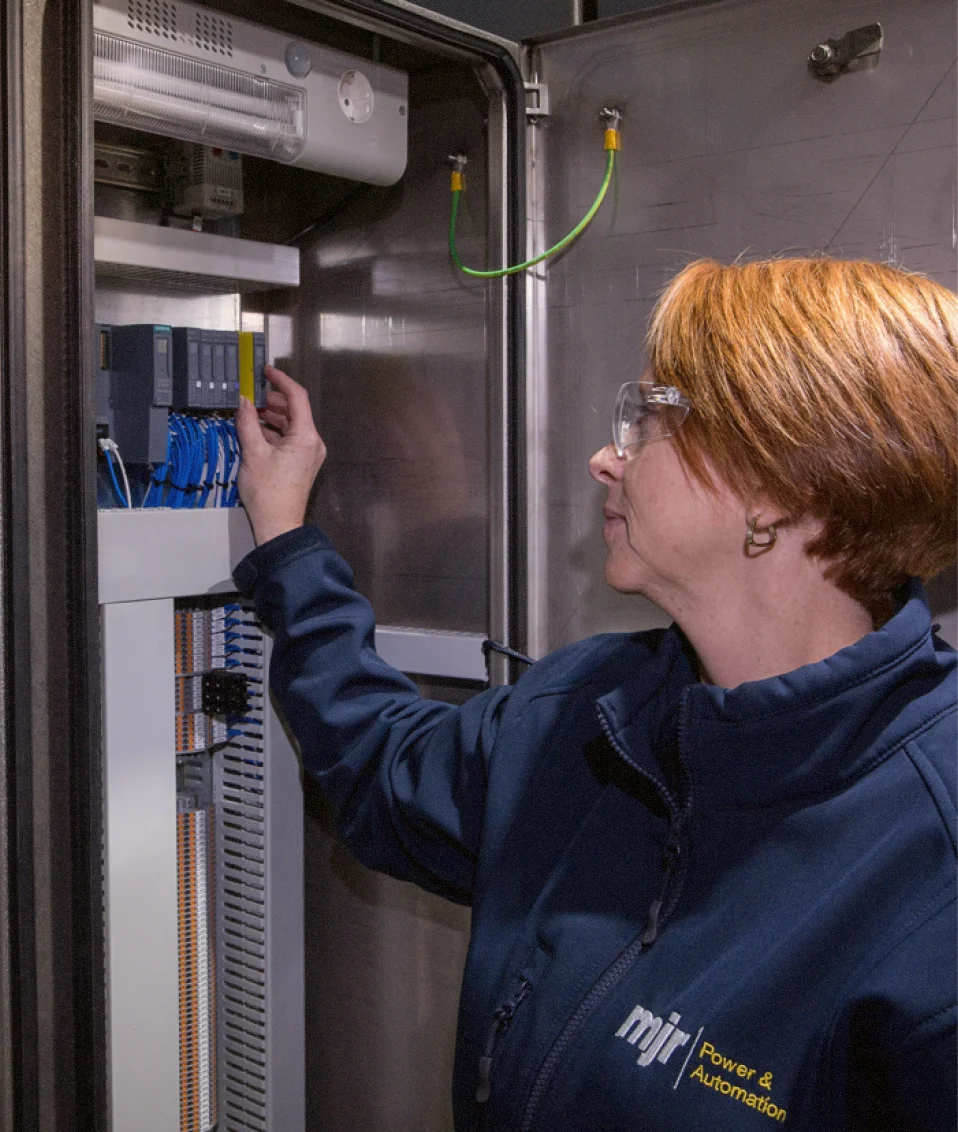
Marine automation systems integrating PLC, DCS, HMI, alarm monitoring, data logging, power management and vessel or offshore control.
Sectors we are Powering
Follow MJR project updates, company news and technical insight covering marine electrical engineering, automation, shore power, offshore vessel charging and vessel electrification.
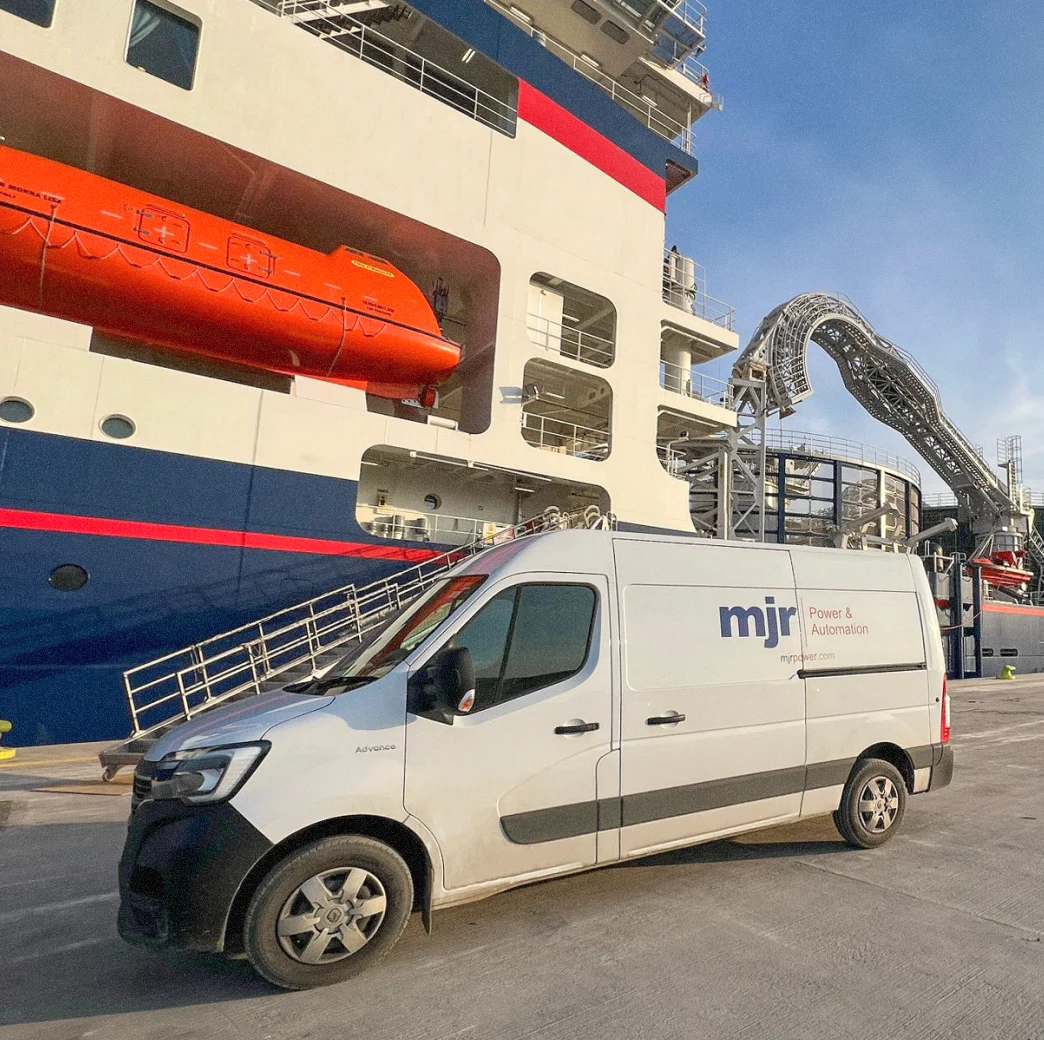
Show how MJR designs, installs, commissions and supports product systems.
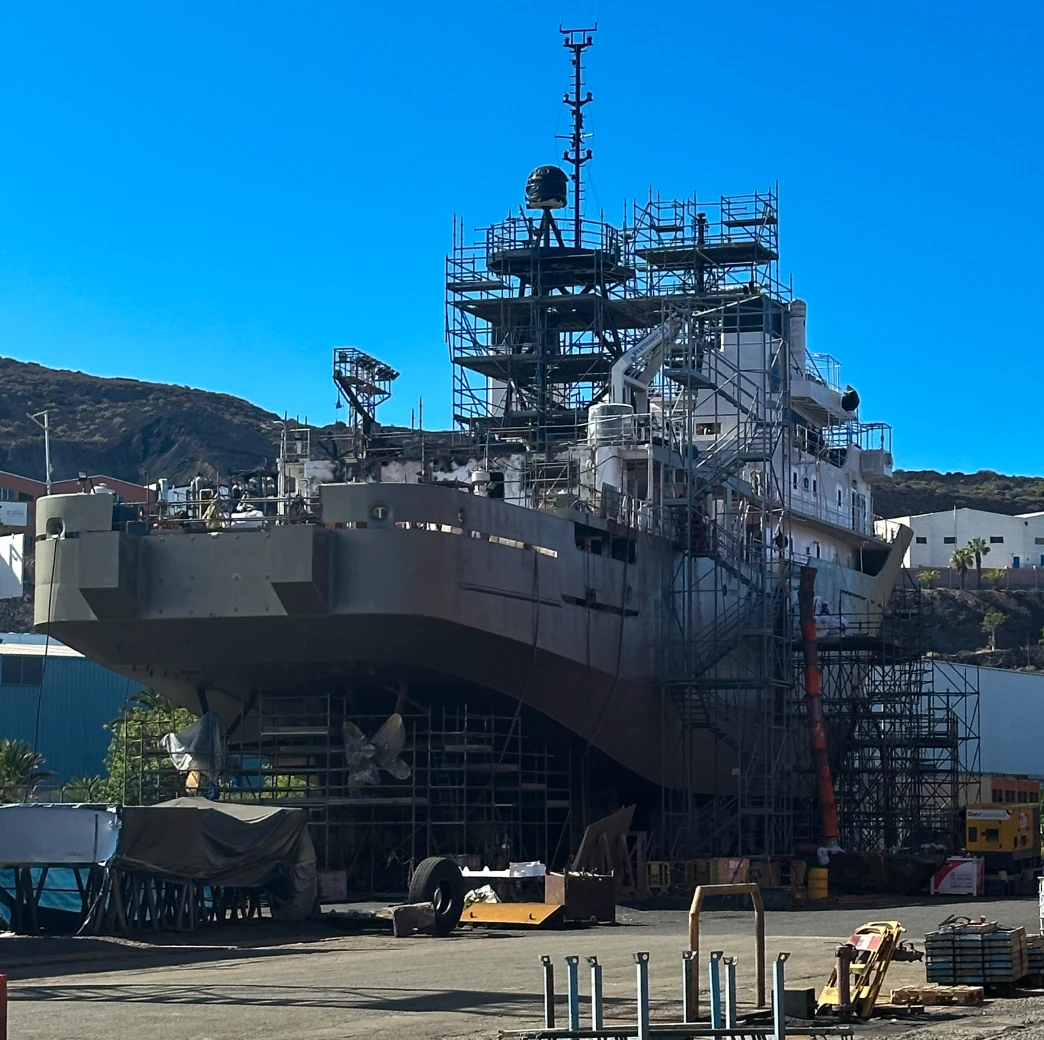
Show how MJR designs, installs, commissions and supports product systems.
Relevant Project Experience
Explore MJR projects involving vessel automation, monitoring, control and power management across newbuild, retrofit and upgrade programmes.
Electrical Installation for an Active Heave Compensated Crane — Across Three Countries
ABS-Approved Life Extension & Repowering — Power, Propulsion, Automation and Control

Dredger Life Extension — Power, Propulsion, Dredging & Automation
The Questions We Get Asked Most
Find answers to common questions about the project, including the systems involved, engineering approach, technical challenges and how the solution was delivered.